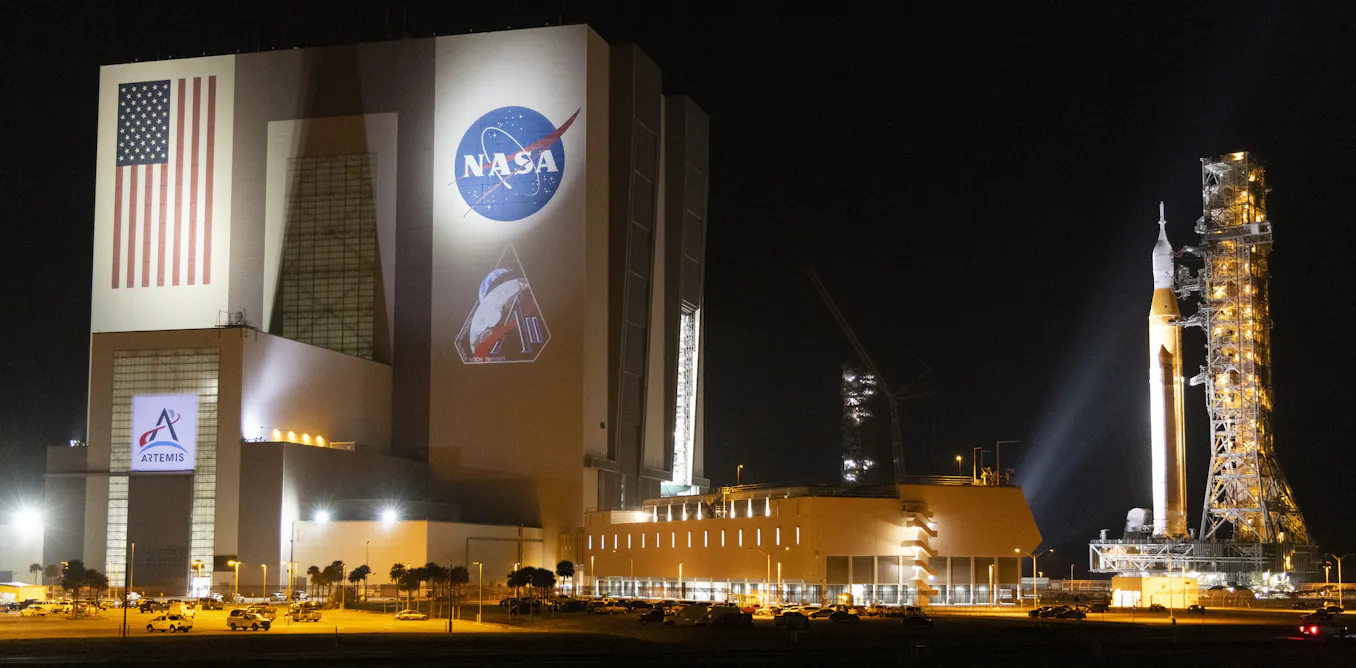
NASA has reset Artemis to prioritize a repeatable, sustained lunar presence, with a new intermediate crewed test mission in 2027 (docking and life‑support checks in LEO) and a first south‑pole landing targeted for 2028; Artemis II launch windows are planned for early April 2026. The program now emphasizes multibillion‑dollar investments in lunar habitats, power and surface infrastructure, shifts focus from the Gateway to surface systems, and integrates commercial landers from SpaceX and Blue Origin. Expect long‑run upside for aerospace/defense contractors, commercial space partners and terrestrial tech spinoffs (life support, energy storage, comms), while strategic competition and law/regulatory norms around sustained lunar activity will shape market structure over years.
A sustained, cadence-driven lunar program is a multi-year service and aftermarket story more than a one-off capex spike; that shifts valuation leverage from rocket OEMs to recurring-revenue suppliers (power systems, life‑support consumables, comms relays, precision machining and software ops). Expect selective suppliers to see 5–15% incremental revenue CAGR over 2026–2032 as recurring mission ops, spares and software support replace one‑time hardware wins, compressing cyclicality for aftermarket leaders while amplifying working-capital needs for smaller subcontractors.
Second-order supply-chain effects matter: specialized alloys, radiation-hardened electronics and high-density energy storage will become bottlenecks that favor low-volume, high-margin producers with ITAR compliance and U.S. manufacturing footprints. That creates a policy-biased moat — companies that can pass U.S. export control audits and demonstrate domestic build capacity will win share, while foreign or purely commercial providers face higher capital intensity to meet government specs.
Geopolitical and legal dynamics create optionality: whoever operates sustained logistics on or near the Moon writes operational norms that translate into long-term service contracts and standards (communications, navigation, deconfliction). This converts strategic presence into recurring revenue and regulatory inertia that disadvantages late entrants — a 2–4 year head start in standards adoption could translate to multi-year contract tails and premium multiples for early ecosystem builders.
Key risks: partner execution and budget politics are single‑event reversers — a high-profile lander failure or a U.S. budget pivot could compress industry multiples 20–40% in months. Monitor near-term contract awards, FY27 budget language and first in-orbit docking milestones as 3–12 month catalysts; structural revenue realization and margin expansion play out over 3–7 years.
AI-powered research, real-time alerts, and portfolio analytics for institutional investors.
Request DemoOverall Sentiment
moderately positive
Sentiment Score
0.35
