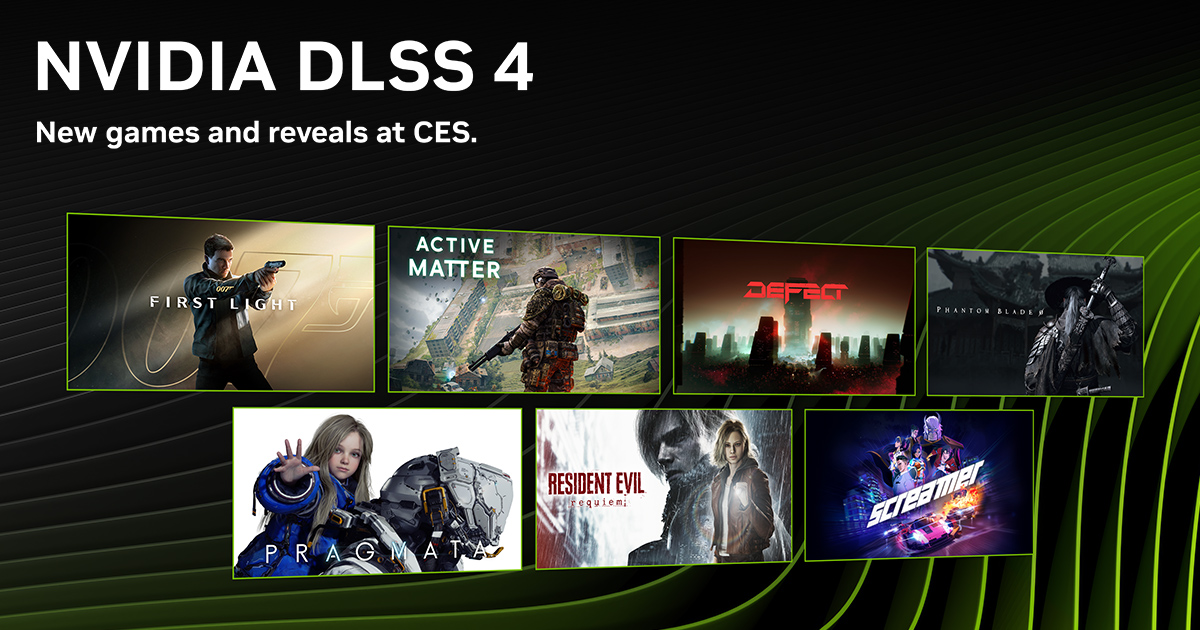
NVIDIA announced widespread expansion of its RTX ecosystem and a new generation of its DLSS technology at CES 2026: over 800 RTX-enabled games/apps exist, DLSS 4 now supports 250+ titles, and DLSS 4.5 introduces a 2nd‑gen transformer super resolution plus 6X Dynamic Multi Frame Generation targeting smooth 240+ FPS 4K path-traced gaming. The company has enabled an NVIDIA app beta for DLSS 4.5 (full release Jan 13) and timed GPU/software rollouts and partnerships across high-profile PC launches (007 First Light, Resident Evil Requiem, PRAGMATA, Phantom Blade Zero, Screamer) and cloud streaming via GeForce NOW. These technical advances and developer integrations could support incremental GPU demand, software/streaming engagement, and differentiated competitive positioning for NVIDIA across gaming and AI-driven in-game features.
Market structure: NVIDIA (NVDA) is the direct winner—DLSS 4.5 + Multi Frame Generation and ACE integrations reinforce a differentiated software moat that increases demand for high‑end GeForce RTX 50 Series silicon and raises aftermarket pricing power for NVIDIA and memory suppliers (Micron MU, SK Hynix). Game publishers (EA, TTWO, CAPCOM) and cloud-streaming (GeForce NOW) see revenue upside from better visuals + lower client HW barriers; rivals like AMD (AMD) and Intel (INTC) face pressure in the premium GPU segment because DLSS is proprietary and accelerates a replacement cycle. Expect tighter near‑term GPU supply/demand, 5–15% higher ASPs for top SKUs over next 6–9 months if adoption continues.
Risk assessment: Tail risks include regulatory/antitrust scrutiny on bundling DLSS with RTX (low probability, high impact), sudden channel inventory build (overhang), or a competitor AI upscaler that is free and widely licensed. Immediate (days) catalysts: driver/app beta release Jan 13; short term (weeks–months): spring RTX50 feature rollout; long term (quarters): developer adoption and subscription monetization of GeForce NOW. Hidden dependency: game developer cadence—if top AAA titles defer path tracing, adoption stalls.
Trade implications: Favor concentrated exposure to NVDA and memory names; implement option structures to bias upside while capping cost (see decisions). Rotate overweight to Semiconductors and Games (select AAA publishers) and underweight legacy GPU OEM exposure. Use catalysts (Jan 13 driver, Spring RTX50 rollout, quarterly dev guidance) as 1–3 week trade triggers for sizing adjustments.
Contrarian angles: The market may underappreciate adoption friction—engine integration, QA, and performance budgets mean many studios will delay or limit path tracing, compressing near‑term upside. Also NVDA’s software moat can invite faster licensing or regulation; channel overstock post‑promotion could produce a 20–30% short‑term reprice. Build hedges sized to contain a one‑month 20% gap move.
AI-powered research, real-time alerts, and portfolio analytics for institutional investors.
Request DemoOverall Sentiment
moderately positive
Sentiment Score
0.55
Ticker Sentiment
