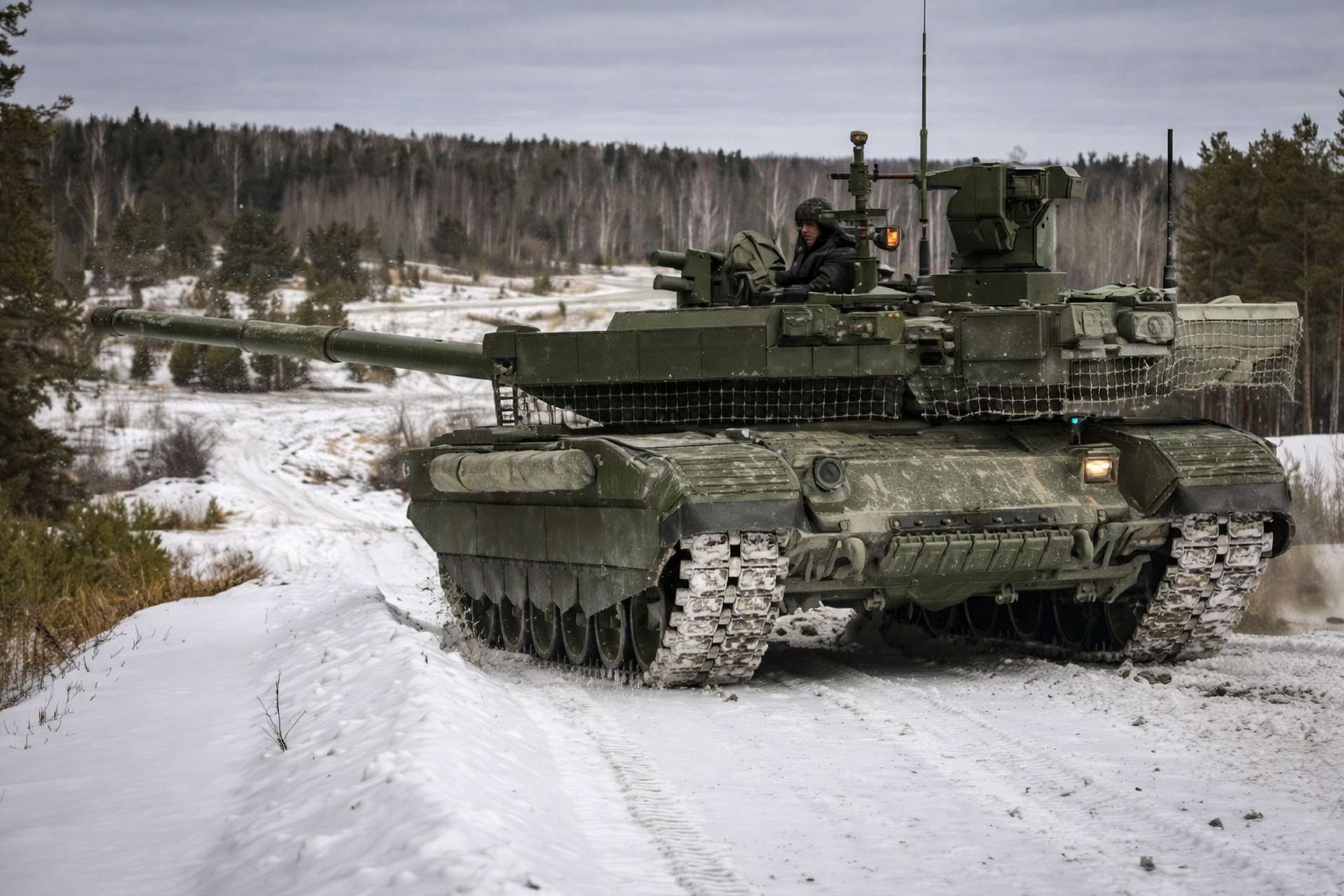
Russia’s Ministry of Defense and Rostec describe a new paired-tank tactic near Sladkoye that pairs overwatch fire with short forward dashes and continuous real-time UAV/FPV drone correction to reduce exposure and compress engagement timelines. Rostec and Uralvagonzavod say upgrades to T-90M, T-80BVM and T-72B3M (anti-FPV nets, reinforced rear protection, improved fire-control and EW systems) support the drill, but the approach increases dependence on UAV links and EW resilience; verification of battlefield effect is limited, though the shift implies sustained demand for counter‑UAV, EW and related defense supply-chain capabilities.
Market structure: The battlefield shift favors suppliers of electronic warfare, sensor datalinks, FPV-countermeasures, fire-control upgrades and precision ammo — expect orderflow concentration toward primes and niche EW/UAV specialists. Revenue for focused EW/ISR vendors could rise by a low-double-digit percentage across 12–24 months as retrofit and sensor kits scale, while pure “thicker-armor” OEMs face margin pressure if they cannot bundle integration services.
Risk assessment: Key tail risks are rapid EW/communications defeat (which would collapse demand for drone-centric kits), wider sanctions that block component supply, or an escalation that reroutes Western aid away from systems supporting drone-saturated tactics. Near-term volatility (days–weeks) will spike around aid votes and contract awards; structural effects play out over quarters to years as supply chains and export controls reconfigure.
Trade implications: Tactical buys should target EW/ISR primes and European armor/ammo names that win retrofit contracts; hedge dependency on semiconductors and comms by favoring companies with in-house chip sourcing or U.S./EU supply lines. Use directional equity plus defined-risk options (6–12 month call spreads) around anticipated aid/contract catalysts; commodities impact is modest—steel and specialty alloys could see a 3–8% demand bump over 12 months.
Contrarian angles: Consensus will overweight large, well-known primes and miss small-cap EW specialists and Israeli integrators (asymmetric upside of 20–40% on contract wins). The market underprices the single-point vulnerability: datalink/chip suppliers — a targeted export control could create fast, outsized winners among domestic-foundry-linked suppliers and losers among vendors reliant on foreign chips.
AI-powered research, real-time alerts, and portfolio analytics for institutional investors.
Request DemoOverall Sentiment
mildly negative
Sentiment Score
-0.25
