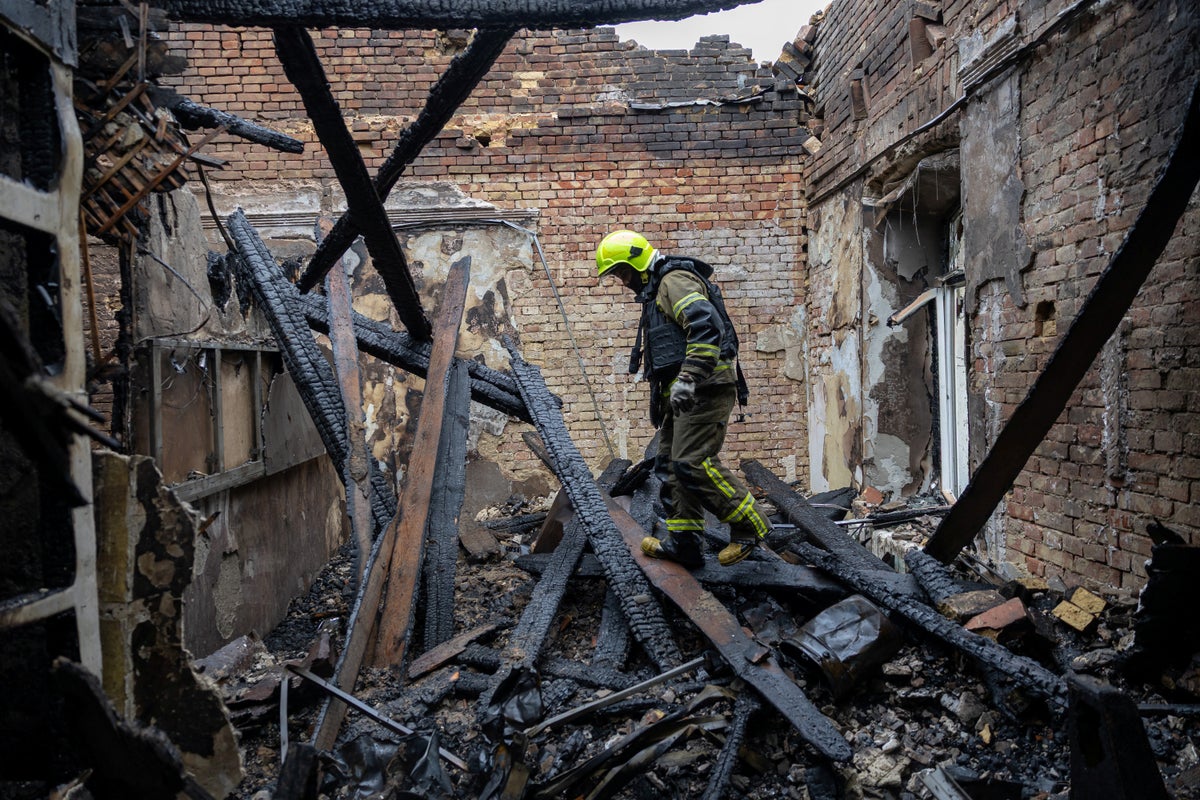
Russia and Ukraine reported intense drone and missile exchanges, including Russia's claim of intercepting 3,124 Ukrainian drones in a week and Ukraine's report of shooting down 503 Russian drones plus four missiles overnight. The conflict also hit a Chinese vessel near Ukraine, raised fresh alarm at the Zaporizhzhia nuclear plant, and left multiple civilian casualties in Ukraine and Russia. Separately, Ukraine is pressing for tighter Russia sanctions at the G7 while expecting the first disbursement of a €90 billion EU loan by early June.
The market implication is not just “more war risk,” but a higher-probability shift from episodic disruption to persistent operating friction across the Black Sea and western Russian logistics network. That tends to favor defense, EW/drone-interception, satellite ISR, and hardening vendors over legacy platform primes, because the budget mix is moving toward cheap, consumable countermeasures and rapid replenishment rather than one-off hardware buys. It also raises the probability of insurance and freight repricing for Black Sea corridors, which can bleed into agricultural, metals, and bulk commodity flows even when no single port is fully shut.
The China-flagged vessel incident is a meaningful second-order escalation because it increases the chance Beijing pushes for tighter maritime deconfliction, not necessarily stronger support for Kyiv or Moscow. That creates asymmetry: Russia may have scored a tactical hit, but the strategic cost is a higher China sensitivity to vessel safety and export corridor stability, which could complicate Russian efforts to keep Chinese commercial flows neutral. If this converts from isolated incident to a pattern, expect more conservative routing, slower loadings, and higher demurrage around Ukrainian export terminals over the next 2-6 weeks.
The nuclear-plant rhetoric is a tail-risk amplifier rather than a base-case catalyst. Even without an actual release, any perceived deterioration at a nuclear site tends to widen regional risk premia in power, utilities, and sovereign credit tied to Eastern Europe; the move is usually sharper in implied volatility than in spot prices. The real market test is whether this changes Western policy on escalation management or sanctions enforcement, especially if paired with further attacks on infrastructure and shipping.
Overall, the setup is still underdisrupted in prices for the duration and dispersion of conflict risk. The consensus likely underestimates how quickly drone warfare degrades logistics and raises replacement demand for sensors, jammers, and air-defense interceptors, while overestimating the probability that commodity flows normalize without additional state intervention. The next 1-3 months matter most: if drone tempo remains elevated, the trade shifts from headline-driven risk-off to a sustained capex cycle in defense electronics and border security.
AI-powered research, real-time alerts, and portfolio analytics for institutional investors.
Request DemoOverall Sentiment
strongly negative
Sentiment Score
-0.70
