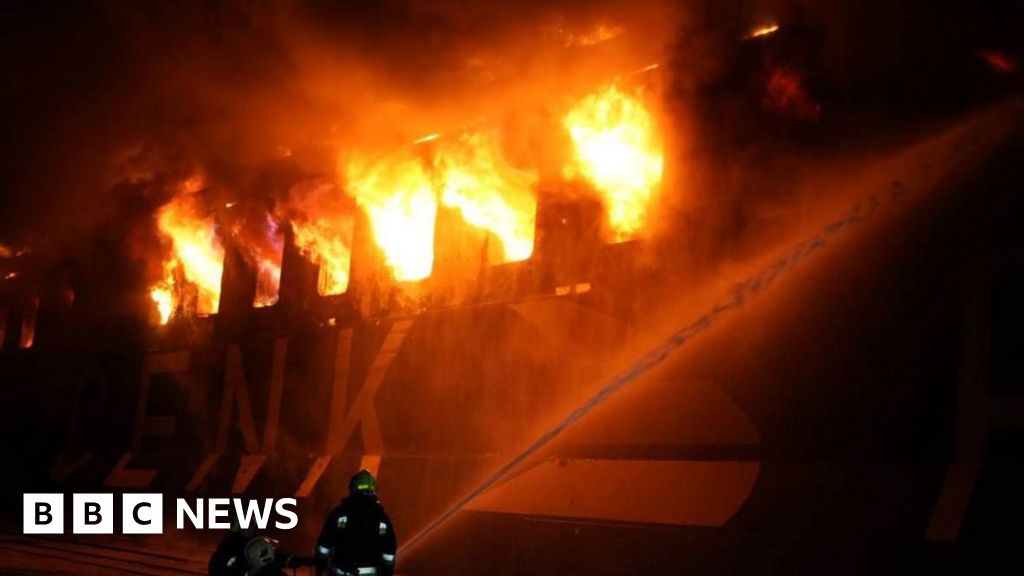
A Turkish car ferry operated by Cenk Denizcilik on the Karasu–Odesa route caught fire after being struck while anchored at Chornomorsk at 16:00 local time; the company said it was carrying "essential food supplies" and there were no reported casualties. Ukraine blamed Russia for the attack, which came amid renewed strikes on Odesa that damaged port infrastructure and cut electricity to thousands, while Turkey urged guarantees for shipping and suspension of attacks on energy and port facilities as it seeks to mediate between Moscow and Kyiv. The incident underscores rising operational and security risks for Black Sea shipping — with potential implications for Ukrainian grain and energy exports, regional logistics through the Bosphorus, and market risk premia for insurers and shippers — and comes as diplomatic efforts to secure a ceasefire remain stalled.
A Turkish car ferry, Cenk T, operated by Cenk Denizcilik on the Karasu–Odesa route was struck at 16:00 local time while anchored at Chornomorsk, igniting a large fire on the vessel's forward section; the company said the ship was carrying "essential food supplies" and reported no casualties. Emergency response teams including the crew, port fire brigade and tugboats were deployed and video shared on President Zelensky's Telegram showed crews fighting the blaze. The strike followed earlier missile attacks on Odesa and a second wave of strikes later that evening which damaged port infrastructure and knocked out electricity for thousands of homes.
Ukraine has blamed Russia for the attack while Moscow has not commented; the incident occurred hours after Turkish President Erdogan discussed a limited ceasefire for energy facilities and ports with President Putin, a proposal Russia has resisted. Russian threats to "cut Ukraine off from the sea" in response to Ukrainian maritime drone attacks on a so-called shadow fleet frame this as part of a campaign to disrupt export routes and state revenue. Turkey's public call for guarantees to secure shipping and suspend attacks highlights Ankara's mediator role and the strategic importance of the Bosphorus choke point for grain and oil flows.
The economic implications are immediate: elevated operational risk for Black Sea shipping, higher probability of port congestion and disruption to Ukrainian grain and energy exports, and potential for increased insurance and freight risk premia. These dynamics increase near-term commodity and logistical volatility while diplomatic stalemate and ongoing ground combat sustain downside tail risk to regional trade volumes. Market participants should treat Black Sea transit and port-repair developments as primary near-term catalysts for repricing in related sectors.
AI-powered research, real-time alerts, and portfolio analytics for institutional investors.
Request DemoOverall Sentiment
moderately negative
Sentiment Score
-0.50
