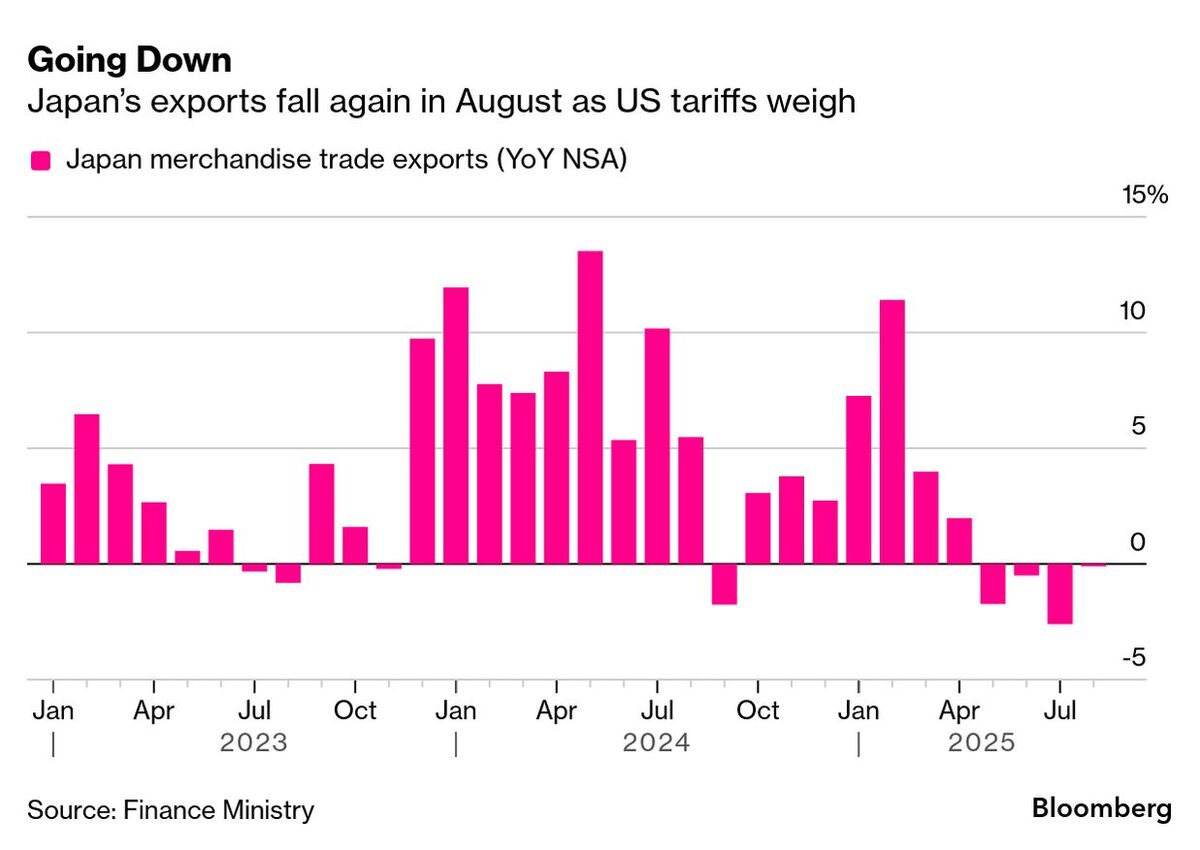
Japan's exports recorded their fourth consecutive monthly decline in August, falling 0.1% overall, primarily driven by the persistent impact of higher US tariffs on commerce, particularly affecting carmakers. Exports to the US plummeted approximately 14% year-over-year, marking the steepest drop in over four years, despite a July trade deal, though demand from Asia and Europe partially offset the overall decline.
Japan's export sector continues to exhibit signs of stress, recording its fourth consecutive monthly decline in August. While the headline figure, a modest 0.1% contraction, surpassed consensus estimates that had anticipated a 2.0% drop, the underlying data reveals a significant and targeted weakness. Exports to the United States plummeted by approximately 14% year-over-year, the most substantial fall in over four years, directly reflecting the impact of US tariffs on key industries, particularly automakers. This severe downturn in US-bound commerce indicates that the July trade deal has so far failed to alleviate the negative effects of protectionist trade policies. The overall export number was cushioned by resilient demand from Asia and Europe, but the sharp bifurcation in trade performance highlights a material risk for companies heavily exposed to the US market and underscores the persistent drag from ongoing trade frictions on Japan's economy.
AI-powered research, real-time alerts, and portfolio analytics for institutional investors.
Request DemoOverall Sentiment
strongly negative
Sentiment Score
-0.60
