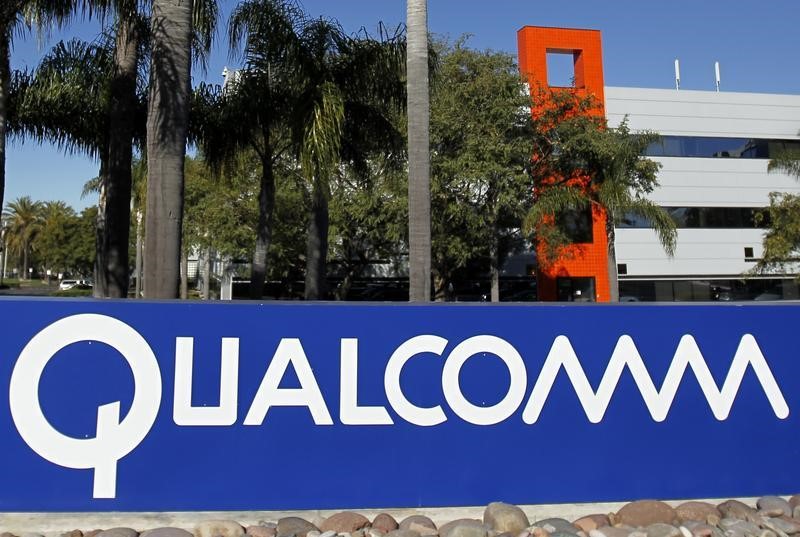
KeyBanc's proprietary spending index for Apple jumped 37% month-over-month in March and accelerated year-over-year to +11% from +4% in February, leading the firm to keep a Sector Weight and expect fiscal Q2 in line with consensus and fiscal Q3 guidance above expectations. Positive demand signals tied to early-March product introductions contrast with a £390,000 fine from the UK OFSI and removal of an app from the App Store; Apple also named Lilian Rincon VP of product marketing for AI. Separately, Raymond James reiterated Market Perform on Qualcomm, flagging memory-pricing dynamics as a downside risk to the Android smartphone supply chain.
March-level demand acceleration tied to a new product cycle likely represents a near-term pull-forward of upgrades and inventory restocking rather than a permanent step-change in replacement cadence. Expect a two- to three-quarter halo: upside to sell-through and gross margins in the next report, followed by tougher comps and channel digesting that can mute revenue growth later in the fiscal year.
The Siri multi-request push and an internal AI marketing hire point to a dual strategy: better front-end UX to raise engagement and incremental compute (either on-device NPU cycles or server-side inference) to support richer interactions. That increases optionality for Apple Silicon (higher attachment of premium SoCs) while raising opex versus services monetization; the winner is whoever can commoditize inference cheaply — Apple if on-device, cloud providers if not.
Qualcomm’s exposure to cost-sensitive Android tiers and memory pricing creates a short-to-intermediate tailwind risk for rivals like MediaTek and OEM in-sourcing; margin compression here is a multi-quarter risk rather than a single-report miss. The memory-price mechanism reduces ASP per handset and disproportionately hurts vendors with high SoC content and limited pricing power, setting up a binary outcome around seasonal inventory adjustments.
Net: event-driven upside for Apple into the next quarter but limited multiple expansion absent sustained upside to services/AI monetization; structural downside for Qualcomm unless memory and ASP dynamics normalize. Position sizes should be asymmetric — capture short-dated product-cycle upside while holding defensive hedges on the Android-cost cycle that can drag multiple quarters.
AI-powered research, real-time alerts, and portfolio analytics for institutional investors.
Request DemoOverall Sentiment
mildly positive
Sentiment Score
0.25
Ticker Sentiment
