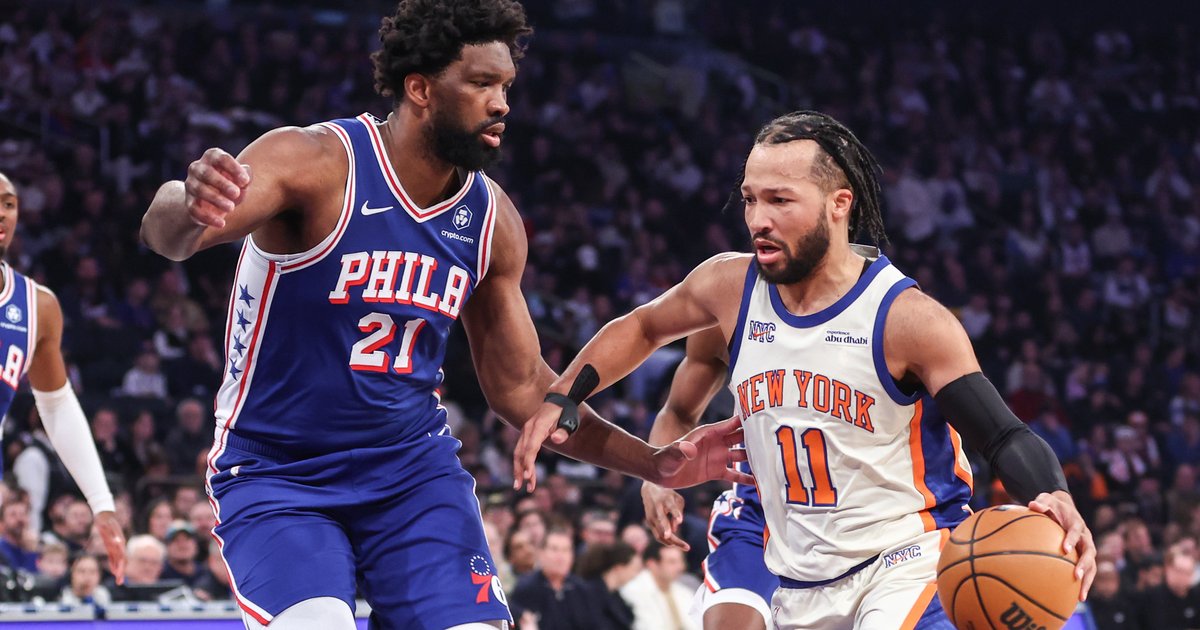
The article previews the Sixers-Knicks second-round NBA playoff series, focusing on matchup strategy, rotation options, and home-court concerns rather than any material business development. Key basketball takeaways include Joel Embiid likely defending Karl-Anthony Towns or OG Anunoby, VJ Edgecombe's emergence, and Philadelphia's effort to limit Knicks fan presence in the arena. The piece is sports commentary with minimal direct market impact.
The market-relevant angle here is not the basketball content itself but the congestion of emotionally charged, high-variance events that can reshape short-horizon entertainment demand. A long playoff run by a large-market team tends to monetize via local ad inventory, regional sports engagement, sports-betting handle, and near-term social/video traffic, with the biggest beneficiaries usually being media platforms and live-event distribution rather than the team-specific storylines. The “revenge series” framing also creates a classic momentum setup: the first 1-2 games can materially alter national audience allocation, which matters more for impressions than for eventual champion odds. From a positioning standpoint, the key second-order risk is over-earning expectations into the series and then mean reversion if the matchup becomes methodical and low scoring. Slow, defensive series generally suppress highlight volume and live-betting churn after the opening window; that is a headwind to names that need sustained engagement, while still supporting pregame and whip-around programming. If the home crowd narrative flips early, the market may overestimate the durability of the local-audience bump and underappreciate how quickly a road-heavy playoff environment can fade in ratings if games become grindy rather than dramatic. The contrarian view is that consensus is likely overstating the value of rivalry optics and understating the possibility of audience fatigue. A tight, physical series can actually be less monetizable than a higher-tempo, star-laden shootout because it compresses possessions, reduces viral clip generation, and narrows the spectator base to core fans. The better trade is to own the broader distribution layer, not the team emotion cycle, and to fade names that depend on sustained social amplification if the series turns into four quarters of half-court basketball.
AI-powered research, real-time alerts, and portfolio analytics for institutional investors.
Request DemoOverall Sentiment
neutral
Sentiment Score
0.05
