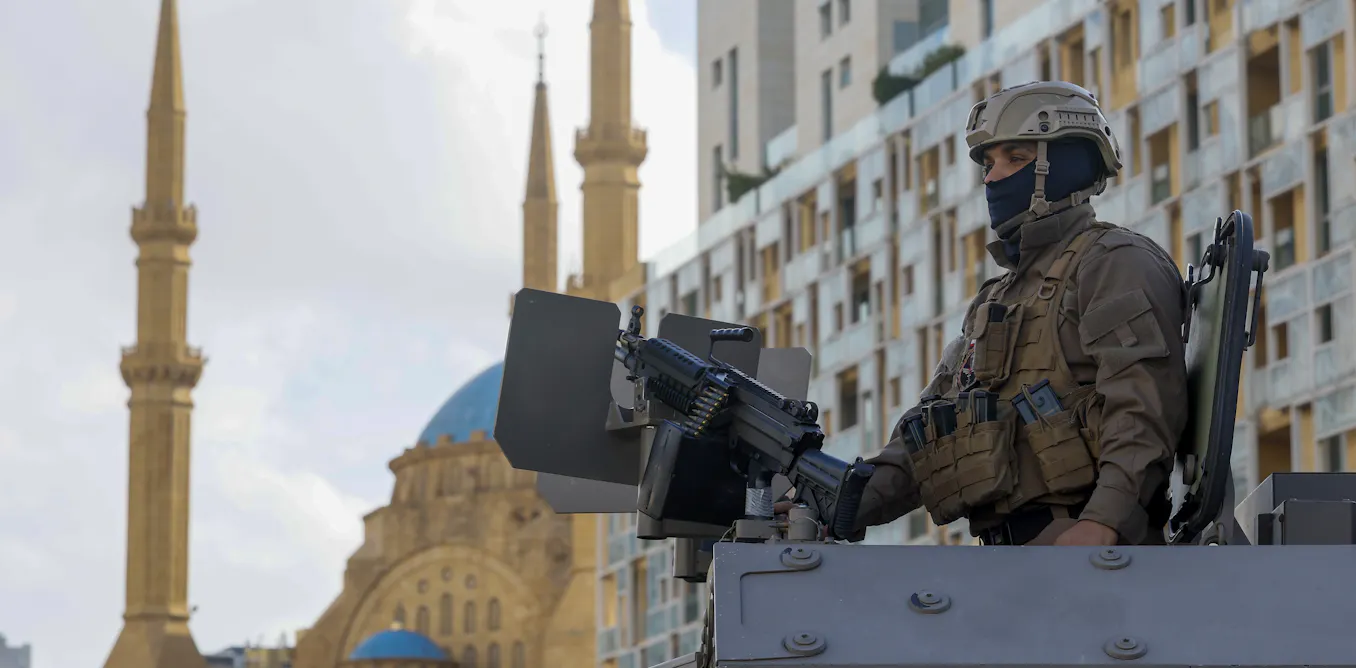
Israel ordered an expansion of military operations into southern Lebanon on March 29 as fighting with Hezbollah escalates and more than 1.0 million people have been displaced since early March. The conflict and rising sectarian tensions, combined with a weak Lebanese government that formally banned Hezbollah’s military activities on March 1, raise the risk of prolonged instability and potential internal conflict. For portfolios, expect higher regional risk premia — EM sovereign spreads could widen on the order of ~50–150 bps and oil prices could move up a few percent on broader escalation — driving a near-term risk-off reaction across emerging market assets and regional equities.
This conflict has a high probability of producing persistent, low‑intensity destabilization in Lebanon rather than a quick, decisive campaign; that raises two durable second‑order effects investors underprice today: (1) widening sovereign and bank credit spreads across Levant‑exposed EM corridors as deposit flight and remittance disruption persist for months, and (2) an elevated, multi‑quarter baseline for regional defense procurement and special‑purpose ISR (intelligence, surveillance, reconnaissance) orders from Israel and partner states. Both channels transmit to traded markets — EM fixed income/credit, and defense primes — on different cadences (weeks for credit repricing; 1–6 months for contract awards and margin recognition at defense suppliers).
Near term (days–weeks) the market will behave “risk‑off”: safe havens (USD, gold) and satellite defense exposures reprice quickly on headline escalation. Over 3–12 months, political routings in Beirut (government collapse or enforced demobilization attempts) materially increase tail risk: sovereign CDS can gap higher by hundreds of basis points and local currency and bank equity valuations can compress severely, while confirmed Israeli occupation of the Litani corridor would lock in a secular uplift in defense spending and border‑security capex. The catalytic events to watch are battlefield control of Litani/Beaufort, mass mobilization orders from Hezbollah, and a visible increase in Iranian logistics/airlift — any of which move markets from a localized shock to a protracted regional risk premium.
Counter‑scenarios that would reverse these moves are plausible and relatively fast: a negotiated tactical ceasefire supported by international intermediaries (Egypt/Qatar/UN) or Iranian back‑channels could compress spreads and unwind defense option premia within weeks. That makes asymmetric, time‑boxed option structures (buying downside protection or buying limited‑risk upside in defense names) a superior playbook to outright long/short cash positions, unless sized small relative to portfolio convexity allowances.
AI-powered research, real-time alerts, and portfolio analytics for institutional investors.
Request DemoOverall Sentiment
strongly negative
Sentiment Score
-0.80
