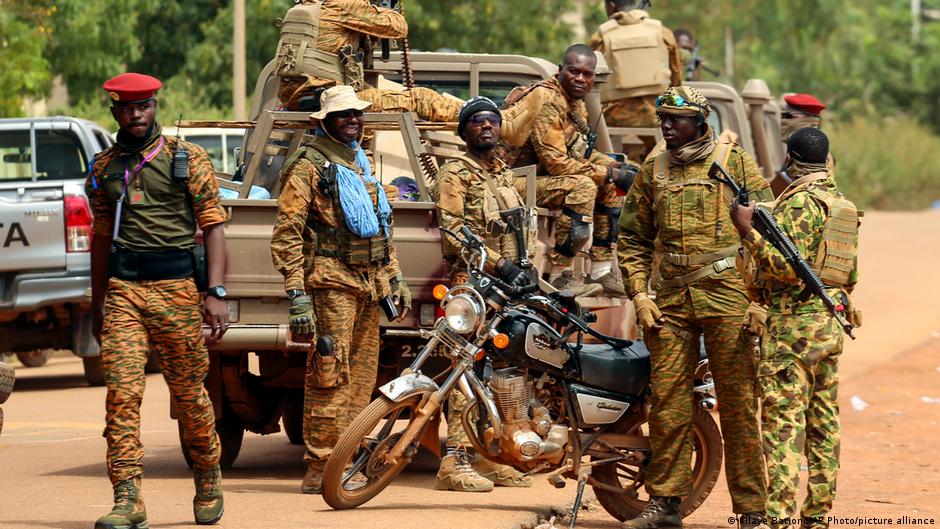
HRW reports at least 1,837 civilian deaths in Burkina Faso between Jan 2023 and Aug 2025, of which ~1,255 (≈68%) are attributed to government forces and allied militias across 33 of 57 documented incidents. More than 2.1 million people are internally displaced and ~6.5 million need humanitarian aid; the Fulani (≈1.8M people, ~8.5% of population) are singled out as targeted. The country has been under a military junta since 2022, has expelled French troops and moved closer to Russia, raising political risk and the prospect of strained relations or targeted measures from western governments.
Allegations of widespread state-linked atrocities in a fragile Sahel state have predictable capital-market spillovers: Western insurers, lenders and large miners will re-price political-risk premia for the entire region, not just the country named. Expect sovereign spread decompression of comparable Francophone Sahel credits of roughly 150–300bps over a 3–6 month window as export receipts and foreign direct investment re-assess counterparty and reputational risk.
On the operational front, logistics and security costs for extractive and agricultural supply chains will move from line-item noise to margin drivers; under conservative modeling a 10–30% rise in on-the-ground security/OPEX and a 20–50% jump in insurance pricing will render marginal projects unprofitable, prompting temporary shutdowns or curtailed output. That creates commodity concentration risk (notably in regional-produced minerals and agricultural exports) that can compress availability regionally and force trade-route diversification through neighboring ports over months to years.
Two discrete reversal paths exist: (1) rapid conditional engagement by multilateral lenders and a credible, verifiable reduction in abusive operations (6–18 months) would restore lines of credit and lower spreads; (2) conversely, deeper alignment with non-Western security partners or sanctions countermeasures raises the probability of longer-term financial isolation and asset seizure risk, creating multi-year dislocations and higher correlation with broader EM risk-off episodes.
AI-powered research, real-time alerts, and portfolio analytics for institutional investors.
Overall Sentiment
strongly negative
Sentiment Score
-0.80
