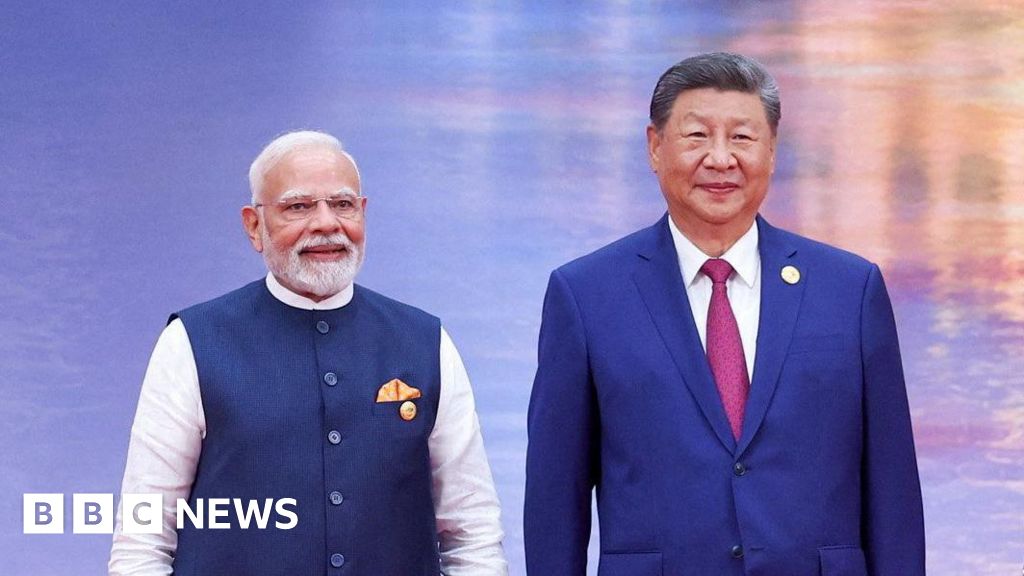
The recent meeting between Indian Prime Minister Modi and Chinese President Xi Jinping was largely catalyzed by the Trump administration's 50% tariffs on Indian imports, prompting India to seek alternative partnerships amidst strained U.S. ties. While the leaders agreed on immediate steps like resuming direct flights and simplifying visas, significant challenges persist, including unresolved border disputes, India's substantial $99 billion trade deficit with China, and China's support for Pakistan. This engagement underscores India's pursuit of strategic autonomy, creating a complex geopolitical dynamic as Delhi navigates its relationship with its largest trading partner, the U.S., while cautiously engaging its powerful neighbor.
The recent meeting between Indian Prime Minister Modi and Chinese President Xi Jinping is a direct geopolitical consequence of the Trump administration imposing 50% tariffs on Indian imports. This has compelled India, whose relationship with the U.S. is described as being at an 'all-time low', to pursue a policy of 'strategic autonomy' by re-engaging with its powerful neighbor. While the summit produced modest agreements, such as resuming direct flights and simplifying visas, it is overshadowed by substantial unresolved issues. These include a tense border with tens of thousands of troops still deployed, a burgeoning $99 billion trade deficit in China's favor, and China's continued strategic support for Pakistan. For China, the meeting is an opportune moment to exploit the U.S.-India rift and project a multilateral front via the Shanghai Cooperation Organisation. For India, this pivot is a high-stakes balancing act, as it attempts to leverage a closer relationship with Beijing without alienating the U.S., which remains its largest trading partner, or compromising its position within the Quad alliance.
AI-powered research, real-time alerts, and portfolio analytics for institutional investors.
Overall Sentiment
mixed
Sentiment Score
0.10
