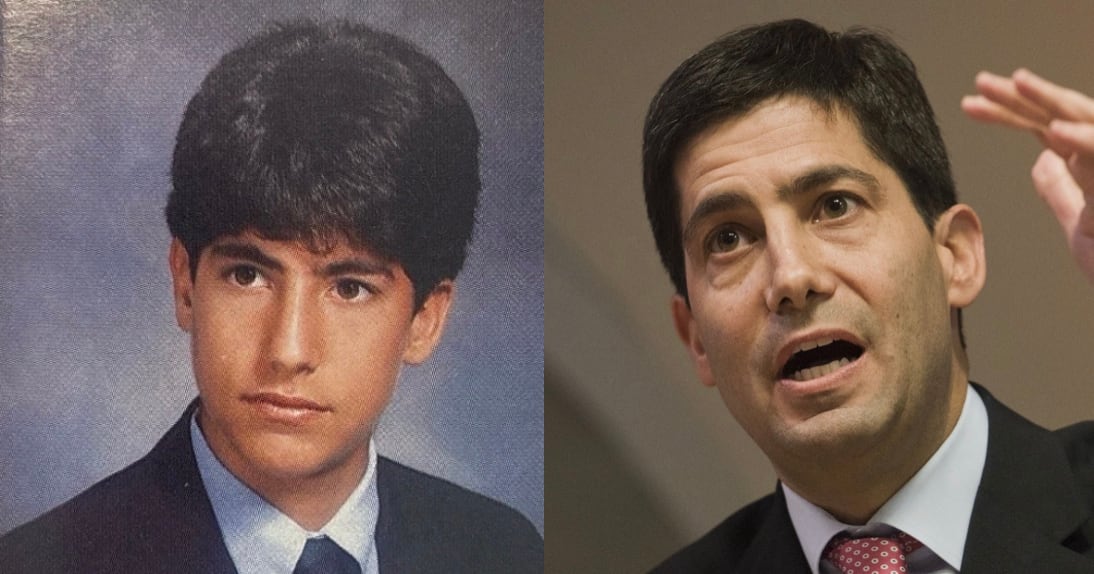
The president has nominated the son of a clothing store owner to serve as Chair of the Federal Reserve, a personnel decision that will shape U.S. monetary policy direction and market expectations for interest rates, banking regulation, and currency flows. While the nominee's policy stance and confirmation prospects will determine near-term market reactions, the appointment itself represents a material governance change with potential implications for fixed income, bank equities, and FX volatility pending further detail and the Senate confirmation process.
Market structure: A politically unconventional Fed nominee raises the probability of policy uncertainty and repositioning rather than a clear shift in fundamentals. Dovish pricing (lower rates, weaker USD) benefits long-duration bonds (TLT, IEF), gold (GLD) and EM equities (EEM); banks and regional lenders (KRE, XLF, JPM) are the primary direct losers via NIM compression and repricing risk. FX and commodity flows will amplify quickly — a 25–50bp reprice in 10y yields within 1–4 weeks would likely move DXY ±1% and push gold ±3–5%.
Risk assessment: Immediate (days) risk is headline-driven volatility around nomination and Senate hearings; expect 1–3% intraday moves in sensitive ETFs. Short-term (weeks/months) tail scenarios include a contested confirmation or a sudden policy-populist signal that materially weakens Fed independence, which could spike term premiums +50–150bps and widen bank funding spreads; long-term (quarters/years) outcomes depend on confirmed policy stance and coordination with fiscal policy, altering structural duration and credit risk pricing. Hidden dependencies include market-implied Fed funds probabilities, Treasury supply schedule, and repo market liquidity — any confluence can nonlinearly amplify moves.
Trade implications: Tactical plays are asymmetric: go long duration and convexity if markets price more than 20–40bps of easing or policy uncertainty over 6–12 months (TLT/IEF/TIP), hedge bank exposure with puts on KRE/XLF, and express FX risk by shorting UUP vs long EEM. Options: buy 30–90 day puts on KRE (5–8% OTM) and 60-day call spreads on GLD or straddles on XLF around key hearing dates. Rotate away from rate-sensitive insurers and regional banks toward defensives (XLV, XLU) if confirmation increases dovish odds.
Contrarian angles: Consensus may overweight a smooth dovish pivot — markets could underprice the risk that a politically-driven chair increases term premium by undermining Fed credibility, which would be bullish for banks and short-duration assets but catastrophic for long bonds. Historical parallels (volatile reactions to unorthodox nominees) show 3–6 week dislocations; mispricings will appear in option skews and OTC forward basis. Unintended consequence: front-loaded positioning for dovishness creates crowded long-duration exposures that can snap back violently on any sign of institutional pushback; size positions with stop-losses and re-evaluate after the first 30 days post-confirmation.
AI-powered research, real-time alerts, and portfolio analytics for institutional investors.
Request DemoOverall Sentiment
neutral
Sentiment Score
0.00
