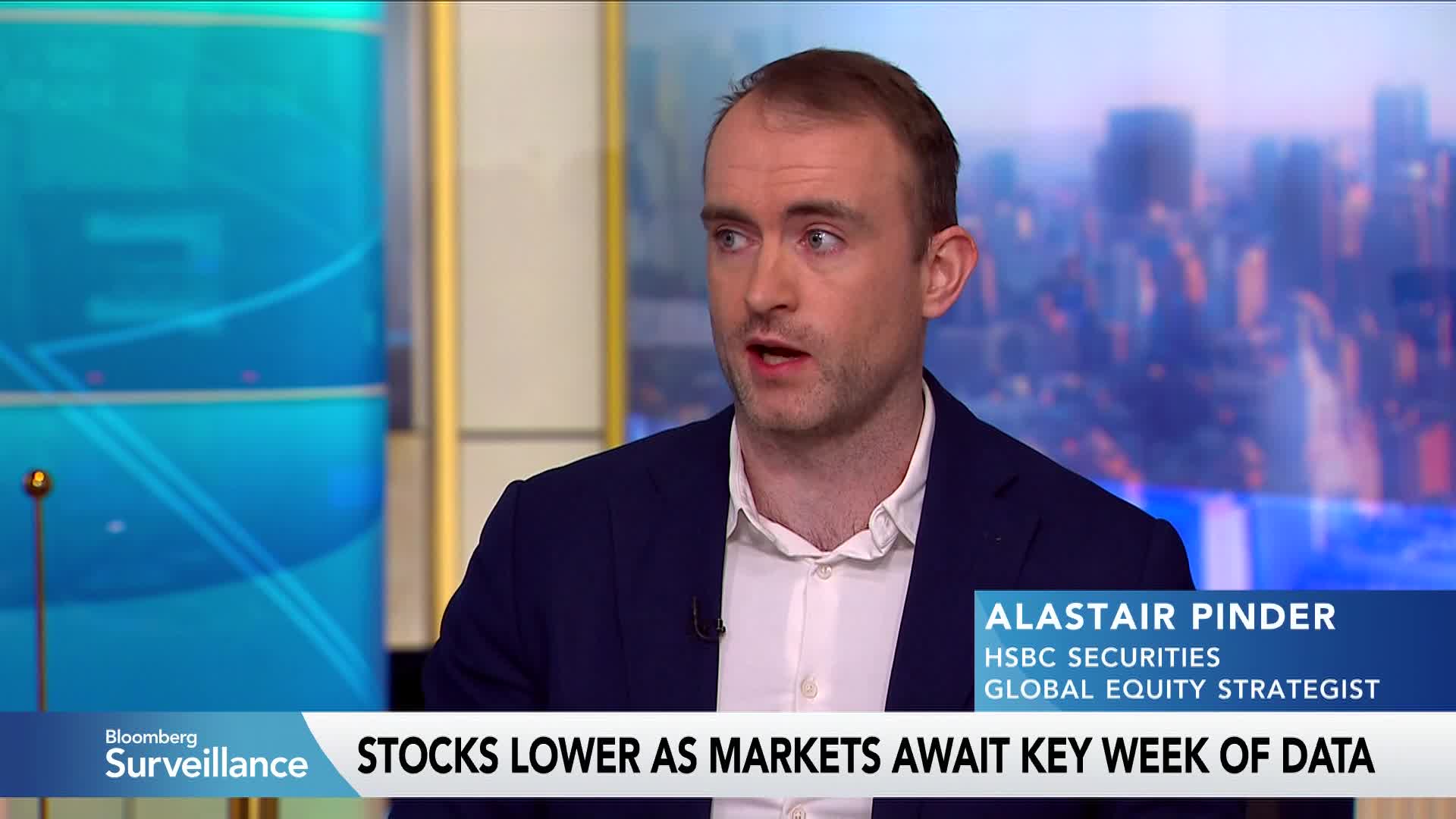
HSBC strategist Alistair Pinder sets a 2026 S&P 500 target of 7,500, arguing that AI adoption (cited at ~45% of companies) will drive earnings and both equity and credit markets next year. The bank estimates tangible AI-driven cost savings of roughly 1% of costs (~$30 billion) for 2026, notes revenue growth of ~9% and near-record positive earnings revisions, and expects the Magnificent Seven’s earnings growth to moderate into the high teens while the broader 493 stocks catch up—a constructive, potentially Fed-dovish backdrop for equities.
Market structure: AI tailwinds concentrate wins in semiconductors (NVDA, AMD), hyperscaler cloud & AI stack (MSFT, GOOGL, AMZN), enterprise software (CRM, SNOW) and data‑center REITs (EQIX). Firms with material labour intensity (staffing firms like MAN, travel/hospitality incumbents) and legacy on‑prem vendors face margin pressure; 45% corporate adoption and an estimated $30bn (≈1% S&P cost base) suggests earnings uplift is meaningful but uneven across sectors.
Risk assessment: Key tail risks include regulatory action or export controls (10–20% probability over 12 months), a large AI model failure/data breach (material reputational shock) and capex overbuild leading to cyclicality. Immediate (days–weeks) = momentum in mega‑caps; short (3–9 months) = breadth improvement as 493 catch up; long (12–36 months) = valuation dispersion and hardware cycle risk dominate.
Trade implications: Favor concentrated exposure to AI value chain with hedges — semis, cloud, enterprise software and data‑center real estate — while underweight staffing and some consumer services. Use pair trades to capture rotation (equal‑weight S&P vs QQQ), buy-dated call spreads/LEAPs on conviction names to control cost, and keep a 1–2% portfolio allocation to crash protection (3‑month 5% OTM SPX puts) tied to breadth deterioration metrics.
Contrarian angles: Consensus understates concentration and implementation risk — 1% cost savings cited may not translate to persistent EPS growth if reinvested into pricing or marketing; history shows technology-led rallies can provoke regulatory and capital spending cycles (late‑1990s parallel). Monitor earnings revisions breadth, chip lead times, hyperscaler gross margins and AI‑related capex as high‑value signals that will either validate or puncture the current Goldilocks narrative.
AI-powered research, real-time alerts, and portfolio analytics for institutional investors.
Request DemoOverall Sentiment
moderately positive
Sentiment Score
0.60
Ticker Sentiment
