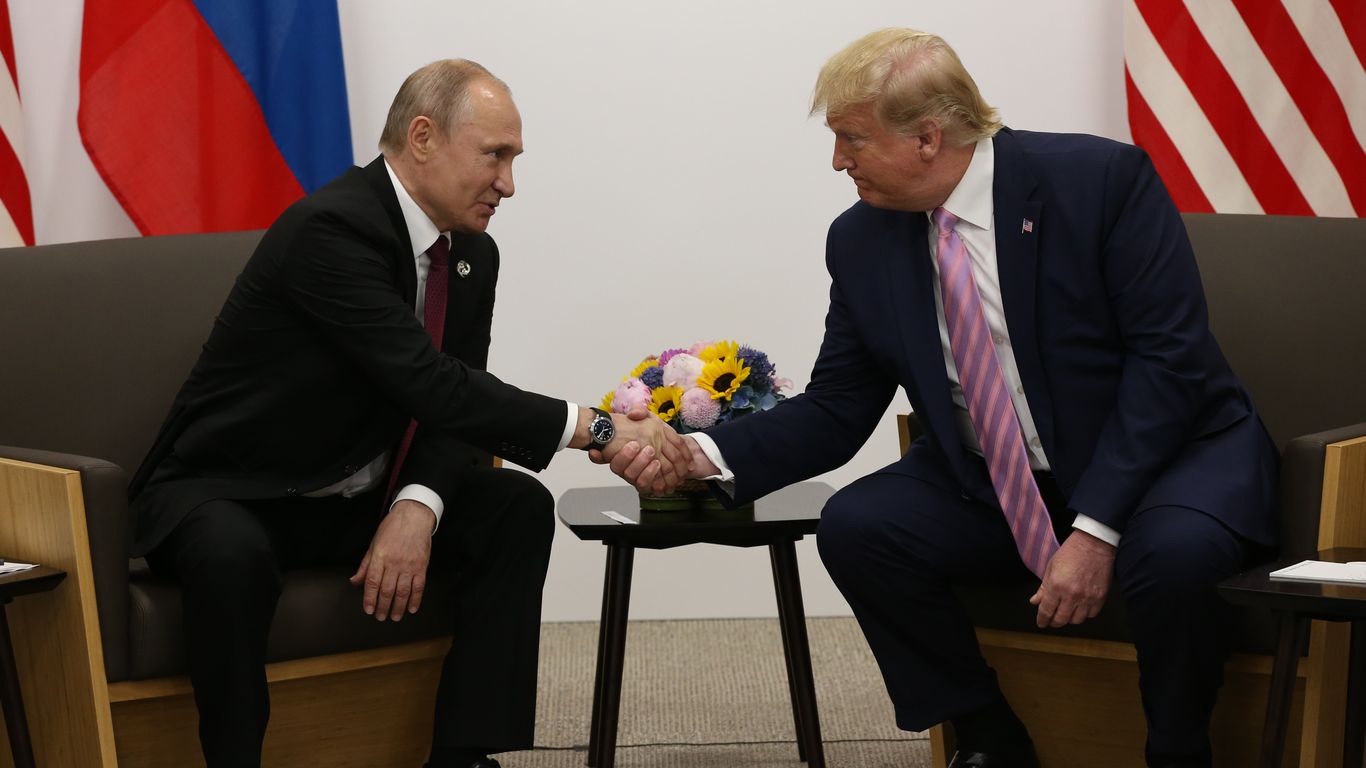
President Trump is scheduled to meet Russian President Putin in Alaska, anticipating peace proposals for Ukraine that he intends to relay to President Zelensky with a recommendation to accept or 'keep fighting.' Putin's previously outlined terms, conveyed via an envoy, involve Ukraine ceding Donetsk, Luhansk, and Crimea, and freezing current battle lines. Trump, who has paused impending sanctions on Russia, aims for a 'somewhat better deal' for Ukraine but is prepared to pressure Zelensky, a stance raising concerns among Ukrainian and European officials regarding potential territorial concessions and the broader diplomatic trajectory of the conflict.
A scheduled meeting in Alaska between President Trump and President Putin introduces significant geopolitical uncertainty and potential for a major shift in the Ukraine conflict's trajectory. President Trump has signaled a notable policy pivot, pausing impending sanctions on Russia and publicly pressuring Ukrainian President Zelensky to negotiate, a 180-degree turn following discussions between his envoy and Putin. The reported Russian proposal involves Ukraine ceding substantial territory, including Donetsk, Luhansk, and Crimea, and freezing current battle lines—a framework that is fundamentally at odds with Ukraine's stated position and constitutional constraints. While Trump has indicated a desire to secure a 'somewhat better deal' for Ukraine, his willingness to broker an agreement without Zelensky's direct participation raises concerns among European and Ukrainian officials. The situation is further complicated by conflicting leverage points: Putin's current military advantage versus Trump's threat of 'much bigger' sanctions, making the meeting's outcome highly unpredictable and a key inflection point for regional stability and international relations.
AI-powered research, real-time alerts, and portfolio analytics for institutional investors.
Request DemoOverall Sentiment
moderately negative
Sentiment Score
-0.50
