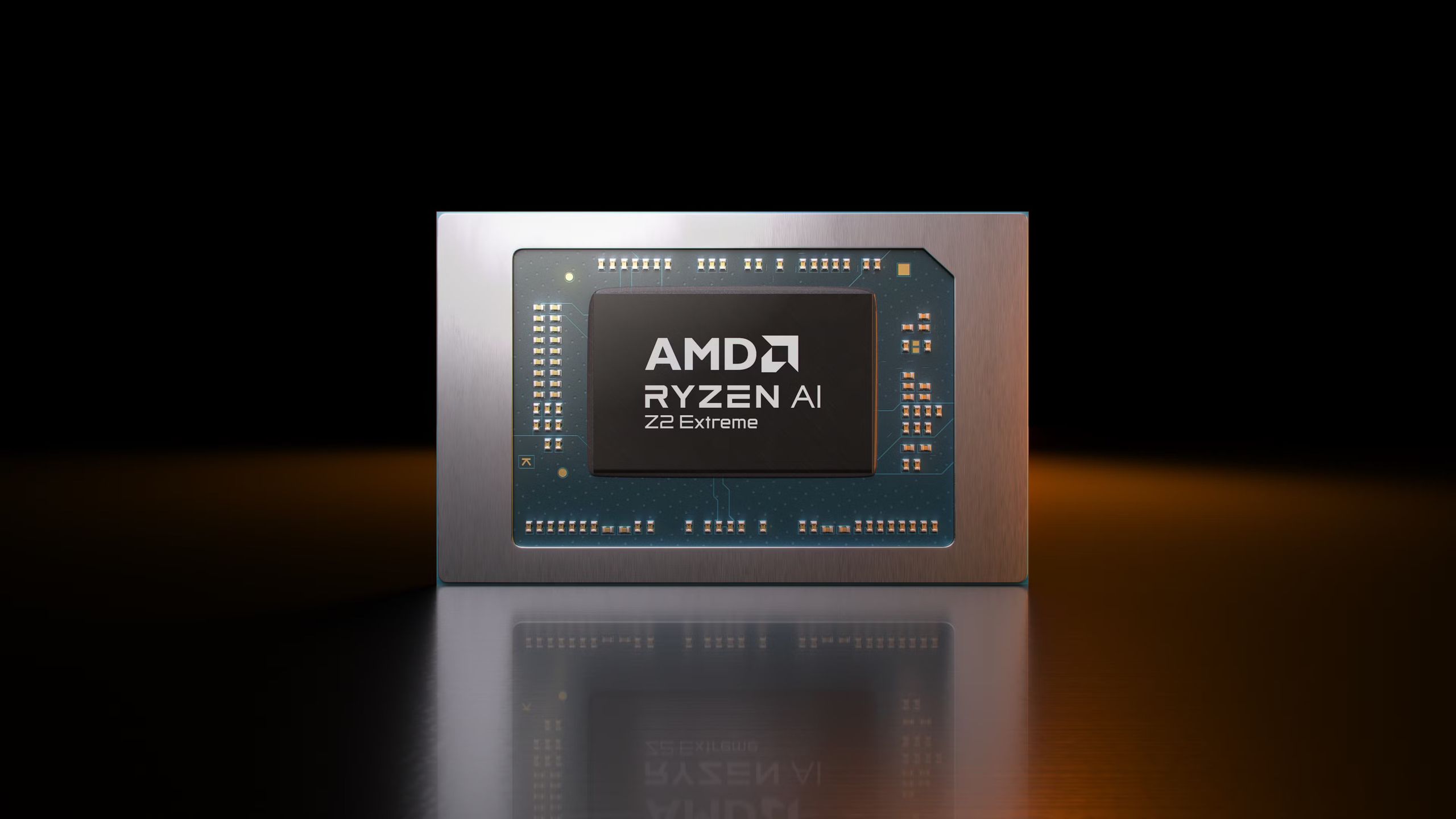
At CES 2026 AMD publicly rebutted Intel's characterization of AMD's Z2 series as “ancient silicon,” with Rahul Tikoo arguing Intel’s new Panther Lake mobile platform carries design trade-offs that make it less suitable for handheld gaming devices and that purpose-built handheld APUs emphasizing GPU performance and graphics software are preferable. AMD cited internal lab observations about E-core efficiency versus performance trade-offs on Intel parts and highlighted updates to its Strix Halo Ryzen AI Max lineup (adding 8- and 12-core models with the same 40-CU RDNA3+ flagship iGPU) as competitive responses. The exchange underscores ongoing competitive positioning between AMD and Intel in mobile and handheld gaming segments, but contains no financial metrics or guidance likely to immediately move markets.
Market structure: Intel’s Panther Lake creates a near-term win for OEMs chasing battery-bound, integrated-GPU narratives and could pressure mid-tier dGPU attach rates (10–30% risk to RTX 40-series laptop attach in next 6–12 months if benchmarks hold). AMD retains structural advantages in console/game dev relationships and RDNA3+ iGPU IP, protecting long-term mobile GPU pricing power and platform differentiation; NVDA’s discrete GPU moat remains intact for high-performance gaming/AI segments.
Risk assessment: Key tail risks are (1) rapid OEM design wins for Panther Lake across >2 major handheld/laptop vendors within 90 days, (2) manufacturing/yield shocks at TSMC or Intel fabs altering supply profiles, and (3) regulatory action (antitrust or export controls) disrupting cross-licensing or foundry access. Immediate moves will be driven by hands-on reviews (days–weeks); medium-term by OEM order flows and Q1–Q2 guides (1–3 months); long-term by platform wins and software adoption (12–36 months).
Trade implications: Favor concentrated, event-driven option structures: trade short-duration bullish INTC call spreads to capture CES-driven sentiment (3-month spreads, risk ≤0.5% portfolio), maintain a measured 1.5–2% medium-term long in AMD equity for 6–12 months (stop 15%, take-profit 35%), and buy a 6–12 month NVDA call spread (1% risk) as hedge against rising discrete GPU demand.
Contrarian angles: Consensus may underprice AMD’s software/console moat and overprice Intel’s ability to displace dGPUs — historical parallels (Intel integrated GPU claims vs discrete GPU resilience) suggest attach-rate impact is incremental not disruptive. If AMD secures 2+ handheld OEM design wins or published Zen5+iGPU benchmarks beat expectations, current market moves will be underdone and warrant adding risk exposure within 30–90 days.
AI-powered research, real-time alerts, and portfolio analytics for institutional investors.
Request DemoOverall Sentiment
mixed
Sentiment Score
0.05
Ticker Sentiment
