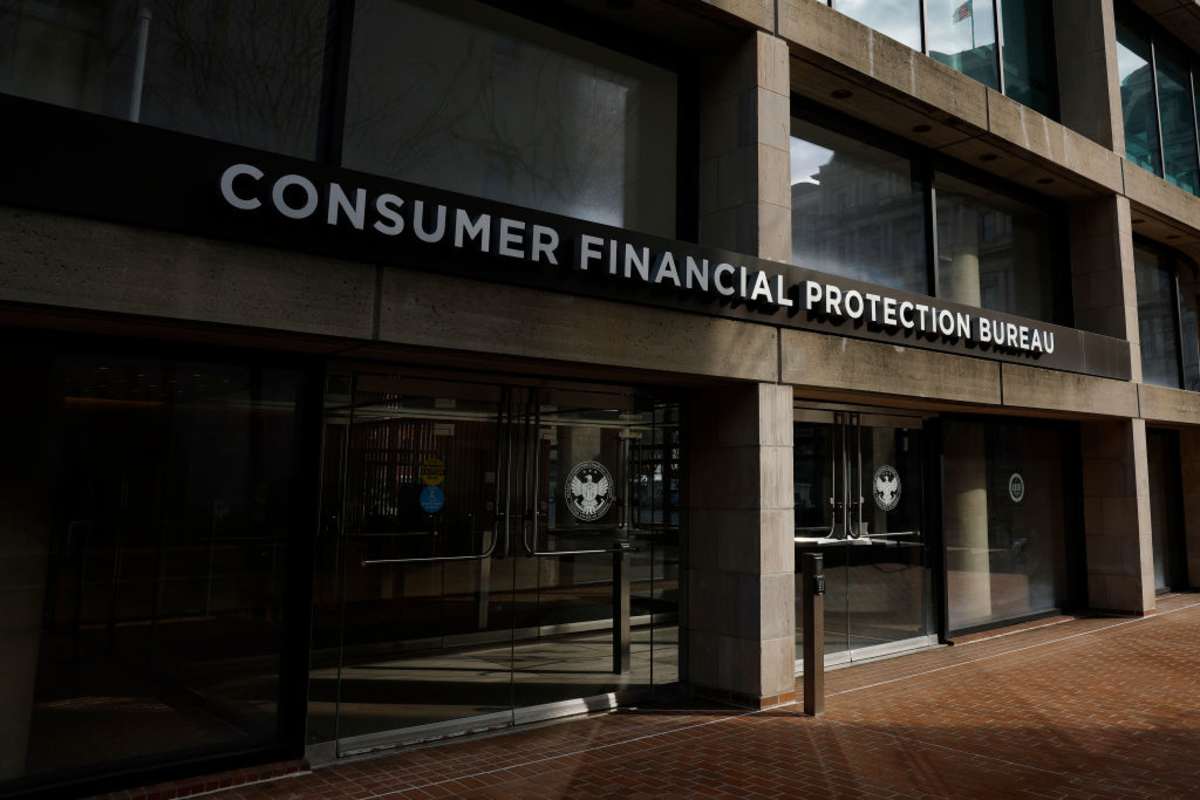
A Senate Banking Committee report finds that changes imposed by the Trump administration after it assumed control of the CFPB in February 2025 led to abandoned enforcement and regulatory actions that cost consumers an estimated $19 billion in relief. The report cites at least $3.5 billion in potential restitution from 22 enforcement actions dropped, roughly $10 billion in curtailed savings from a blocked overdraft/late-fee rule, $4 billion from dismissed lawsuits and settlements, $225 million from 23 settlements whose payments were reduced or delayed, and $40 million tied to the shutdown of the Consumer Complaint Program; the report also notes attempted staffing cuts from 1,689 to 207 positions and a roughly halved budget under recent Congressional action.
Market structure: Rolling back CFPB enforcement is a net positive for large retail banks, credit-card issuers and incumbent payment networks (e.g., BAC, JPM, AXP, V, MA) because ~ $13–14bn of fee-related relief (per report) would have directly hit card revenue and interchange economics. Expect immediate margin tailwinds for card lines and overdraft/late-fee dependent products, shifting pricing power modestly back to incumbents over 3–12 months as suppressed fee streams re-accumulate on balance sheets.
Risk assessment: Tail risks include rapid legal reversals (court reinstatements or Congressional appropriation restoring >50% of CFPB budget within 30–90 days) and reputational/legal reserve shocks if state AGs or class actions follow; these are low probability but can cause >15–25% drawdowns in exposed names. Monitor three key catalysts in next 60–180 days: federal court decisions, any new CFPB director confirmations, and Q2 consumer delinquency trends (30–90+ day delinquencies up >50bp q/q would signal stress).
Trade implications: Favor financials and card issuers for 3–12 month directional exposure and buy downside protection to hedge policy reversal. Consider relative trades that long incumbent banks/card issuers vs short regulation-sensitive fintechs (PYPL, SQ) because fee capture advantage is asymmetric and quicker to realize than consumer trust shifts.
Contrarian angles: Consensus may underprice eventual second-order enforcement (state-level suits, private litigation) which could reintroduce latent liabilities; conversely market may be underreacting to incremental lending growth and tighter credit spreads benefitting ABS and high-yield financial debt. Historical parallel: partial deregulation cycles drove 6–18 month earnings beats for banks in 2017–18 followed by later regulatory/headline volatility—trade size and hedges must reflect that two-phase outcome.
AI-powered research, real-time alerts, and portfolio analytics for institutional investors.
Request DemoOverall Sentiment
strongly negative
Sentiment Score
-0.60
