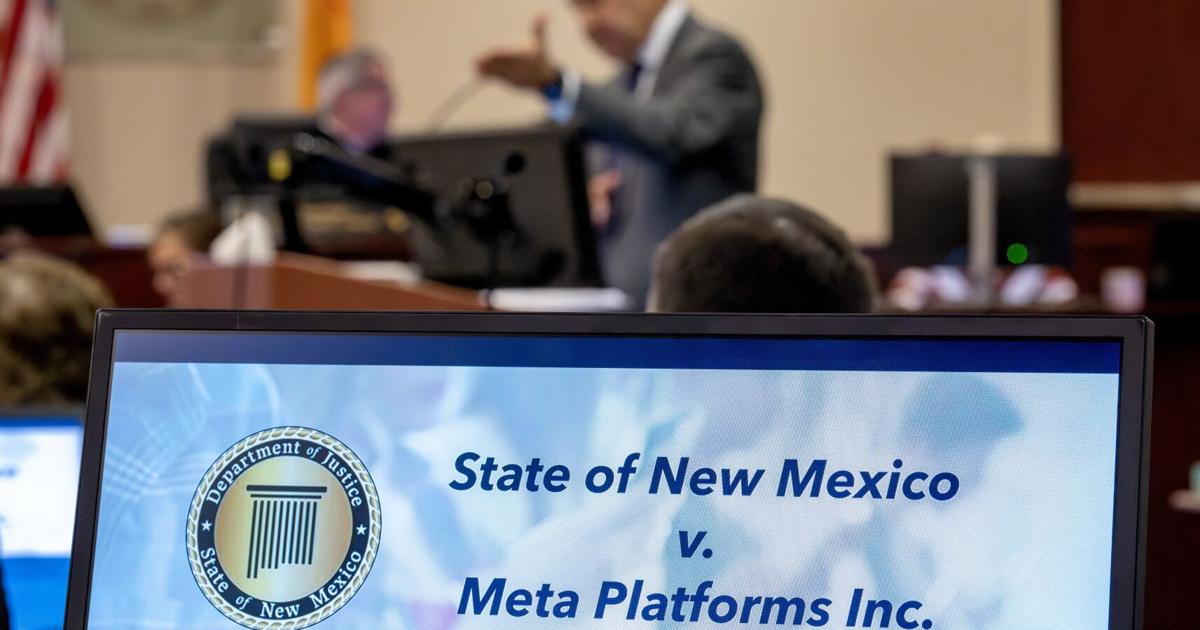
Meta faces the second phase of a New Mexico trial that could add billions of dollars in damages and impose sweeping operating restrictions, including age verification, under-13 blocking, guardian accounts, algorithm redesigns, and limits on push notifications for users under 18. The state is also seeking a warning label and a court-appointed child safety monitor for at least five years. Meta argues the remedies are impractical and has threatened to remove its platforms from New Mexico if no agreement is reached.
This case is less about the headline fine and more about whether a state court can impose product-design obligations that effectively become a de facto national regulatory standard. If the judge grants monitoring, age-gating, notification limits, and algorithmic constraints, the economic hit is not just legal expense; it is potential engagement compression, weaker ad load, and slower time spent growth in teen-heavy cohorts, with knock-on effects to advertiser ROI and long-duration sentiment around the platform family. The market may be underpricing the optionality of a broader remediation regime because the first phase already validated liability, which raises the odds that the next order outcome is operational rather than purely monetary. A forced product redesign would likely have a second-order benefit to rivals with more favorable youth positioning or less scrutiny, including Snap and select YouTube-adjacent ecosystems, while also nudging ad budgets toward channels with lower regulatory overhang. The real bearish catalyst is not a New Mexico-only remedy; it is copycat discovery material for attorneys general in other states and plaintiffs seeking injunctive relief. Near term, the principal risk is headline-driven multiple compression rather than immediate cash flow damage, since implementation would likely be staggered and subject to appeal. The tail risk for Meta is a court order that is difficult to operationalize globally but still costly to litigate and comply with domestically, creating a prolonged uncertainty discount. The upside reversal case is a narrow ruling that confines relief to a modest penalty and avoids mandatory product changes, which would remove the regulatory overhang and allow fundamentals to reassert themselves. Contrarian view: the stock may not be as vulnerable as the rhetoric suggests because broad, enforceable platform restrictions are harder for courts to supervise than to announce, so the final remedy could be materially diluted on appeal or narrowed in implementation. However, even a diluted outcome still shifts the overhang from one-time litigation to recurring governance risk, which is enough to keep relative-performance investors cautious on the name into the next several quarters.
AI-powered research, real-time alerts, and portfolio analytics for institutional investors.
Request DemoOverall Sentiment
mildly negative
Sentiment Score
-0.35
Ticker Sentiment
