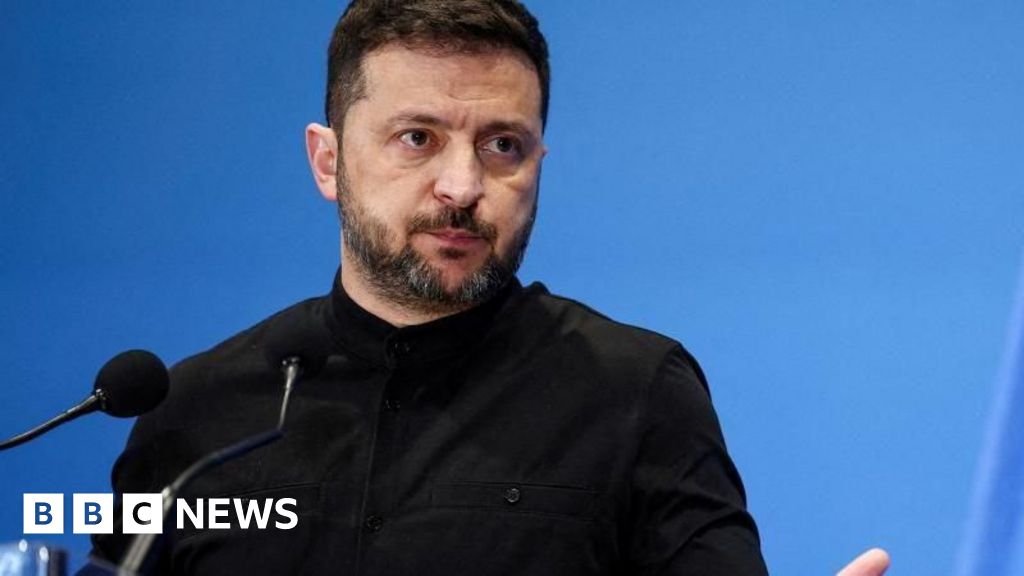
Ukrainian President Zelensky has firmly rejected any territorial concessions in the Donbas region, despite a recent 10km Russian advance, ahead of a critical meeting between US President Trump and Russian President Putin in Alaska. Trump's suggestion of "territory swaps" has heightened concerns in Kyiv and Europe regarding potential border changes by force. Kyiv's exclusion from the summit signals ongoing diplomatic fragmentation and limited immediate prospects for de-escalation, underscoring persistent geopolitical risk in Eastern Europe.
Heightened geopolitical risk is evident ahead of the US-Russia summit in Alaska, driven by a stark divergence in diplomatic positions and concurrent military escalation. Ukrainian President Zelensky has unequivocally rejected any territorial concessions involving the Donbas region, framing it as a critical bridgehead for potential future Russian offensives and a matter of constitutional integrity. This firm stance directly opposes remarks from US President Trump suggesting a peace deal could involve "some swapping of territories," a proposal that has alarmed Kyiv and European allies. The situation is compounded by a fresh Russian military advance of 10km near Dobropillia, which Kyiv interprets as a strategic maneuver to create an "information space" of Russian strength prior to the talks. Ukraine's exclusion from the direct Trump-Putin meeting introduces significant uncertainty, with Zelensky voicing frustration over being sidelined and fearing any agreements made without Kyiv would be "dead decisions." While the White House has tempered expectations by labeling the summit a "listening exercise," the combination of military posturing and fragmented diplomacy signals a period of high tension with a low probability of a swift resolution favorable to Ukraine.
AI-powered research, real-time alerts, and portfolio analytics for institutional investors.
Request DemoOverall Sentiment
moderately negative
Sentiment Score
-0.50
