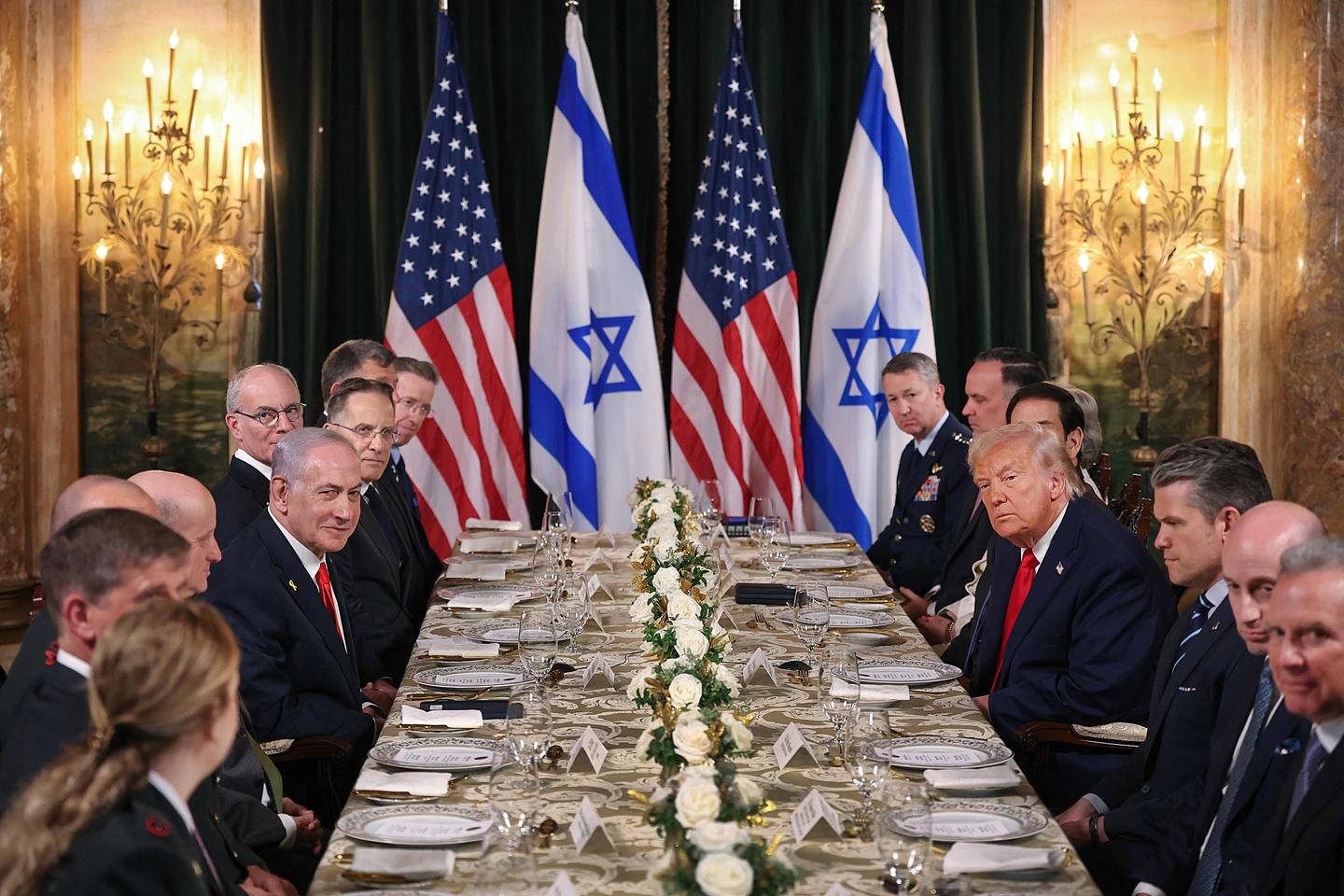
Israeli Prime Minister Benjamin Netanyahu met with U.S. President Donald Trump at Mar-a-Lago on December 29, where the leaders presented a united front and Netanyahu unexpectedly awarded Trump the Israel Prize. The private meeting included senior U.S. political and defense figures and underscored close Israel–U.S. ties amid pressure on Netanyahu over Gaza and domestic issues; the event is politically significant but carries limited direct near-term market implications.
Market-structure: A visible US–Israel political alignment undercuts near-term geopolitical risk premia — winners are large defense primes (LMT, NOC, RTX), Israeli equities (WisdomTree Israel EIS) and private security/infrastructure contractors that capture accelerated aid or procurement; losers are regional airlines/tourism and EM lenders to the region. Pricing power shifts toward prime contractors with backlog visibility; mid‑cap suppliers may see order flow but face margin pressure from contract timing. Cross-asset: expect a short-lived drop in safe-haven flows (gold, long-dated Treasuries) and transient downward pressure on oil if markets perceive de‑escalation; FX flows favor risk currencies and the ILS versus other EM currencies.
Risk assessment: Tail risks include rapid escalation of conflict (oil +8–20% in 1–4 weeks, regional risk-off), US Congressional blockage of aid (contract delays) and sanctions spillovers; probability low-moderate but impact high. Immediate (days): sentiment relief; short-term (weeks–months): re‑pricing of defense capex and Israeli assets; long-term (quarters): procurement timelines hinge on US budget appropriations and electoral cycles. Hidden dependencies: campaign policy (Trump administration’s unilateral moves) can accelerate approvals but also provoke retaliatory shocks; monitor US Congressional votes and large-scale military incidents as catalysts.
Trade implications: Direct plays: tactical 2–3% long positions in LMT and NOC sized to portfolio volatility, target +10–15% in 3–6 months, stop-loss 6%; buy 1–2% EIS on <5% dip to capture sentiment improvement. Options: buy 3‑month call spreads on LMT/NOC (debit, 25–35 delta strikes) to cap downside while leveraging upside; establish a short‑oil pair trade (short USO via put spread) if Brent snaps back more than +6% intraday. Rotate 3–5% from consumer discretionary into defense and cyber names; hedge with 0.5–1% GLD if Brent > +8% in 72 hours.
AI-powered research, real-time alerts, and portfolio analytics for institutional investors.
Request DemoOverall Sentiment
neutral
Sentiment Score
0.00
Contrarian angles: Consensus overweights large primes; overlooked opportunities are Israeli tech/security SMBs and subcontractors that can rerate if multi‑year aid converts to local contracts — focus on EIS small-cap constituents on >10% selloffs. The market may underprice the risk of a policy-driven surge in US defense authorization (if Congress passes emergency funds), which would lift mid‑cap suppliers 15–30% over 6–12 months. Unintended consequence: overt US alignment could trigger asymmetric retaliation — keep volatility hedges active and set clear triggers (Brent +8%/VIX +20%) to de-risk trades.
