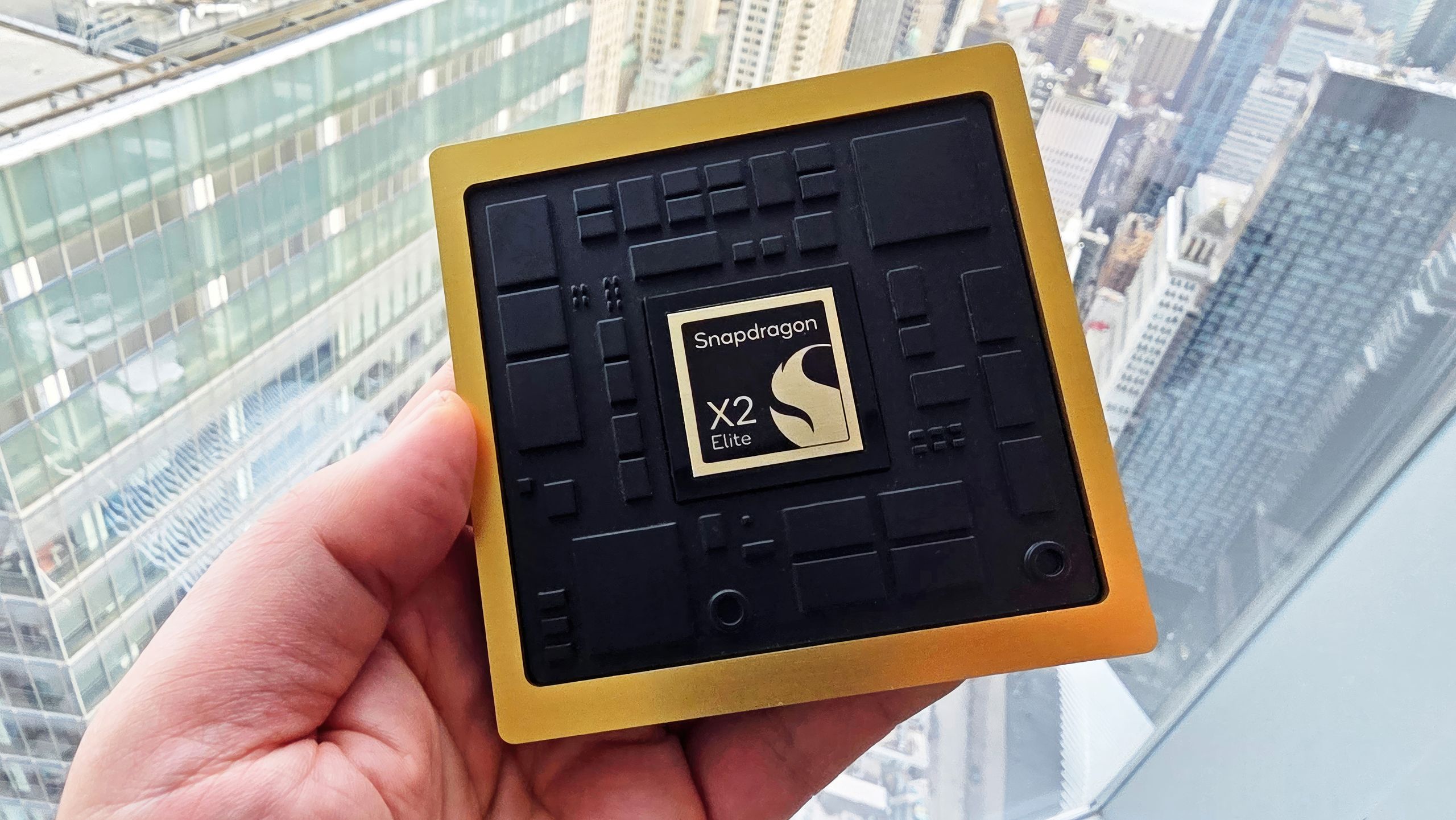
Qualcomm unveiled the Snapdragon X2 Plus at CES 2026, a 3nm, Oryon‑architecture chip offered in 10‑core and 6‑core variants with up to 4.0GHz, 34MB cache, Adreno X2‑45 GPU (up to 1.7GHz), an 80 TOPS Hexagon NPU, and support for up to 128GB LPDDR5x (152GB/s). Qualcomm claims generational gains (up to +35% single‑core, +17% multi‑core vs Snapdragon X Plus), large ISO‑power advantages over current Intel Core Ultra 2 parts (up to 3.5× CPU at equal power) and class‑leading AI throughput (UL Procyon CV 4193; Geekbench AI 83,624), while using up to 43% less power than the prior generation. The X2 Plus targets the $799–$1,299 mainstream laptop segment, brings enterprise features (Snapdragon Guardian) that compete with Intel vPro, and is slated to ship in H1 2026; near‑term risks include Intel’s upcoming Panther Lake refresh and rising LPDDR5x prices that could affect OEM pricing and margins.
Market structure: Qualcomm (QCOM) is the clear near‑term winner — X2 Plus targets the $799–$1,299 volume tier and can plausibly capture 5–10% incremental share of mainstream Windows laptop CPU shipments over 12–18 months by displacing Intel in thin‑and‑light and business fleets. Intel (INTC) is the most exposed because vPro-like manageability and sustained battery/AI performance remove two enterprise barriers to Arm adoption; NVIDIA sees marginal downside in entry GPU attach but remains dominant in datacenter. OEMs (HPQ, ASUS, Lenovo) gain product differentiation but face pricing pressure if LPDDR5x stays elevated.
Risk assessment: Key tail risks are (1) Intel’s Panther Lake (expected within 4–8 weeks) materially outperforming X2 Plus at sustained power, reversing investor sentiment; (2) LPDDR5x price spikes or 3nm capacity constraints (TSMC) forcing OEMs to under‑spec devices, compressing ASPs and slowing conversions; (3) lingering Windows‑on‑Arm enterprise app failures or anti‑cheat blocks. Time horizons: expect headline volatility in days, OEM announcements and Panther Lake results to drive weeks‑to‑months repricing, and measurable share shifts over 2–4 quarters. Hidden dependency: Microsoft’s enterprise support and OEM marketing execution are gatekeepers.
Trade implications: Tactical long QCOM exposure is warranted ahead of H1 2026 shipments; hedge with short INTC exposure until Panther Lake performance is validated. Use 3–12 month option structures to express view (call spreads on QCOM, put spreads on INTC) to limit capital and exploit volatility windows around CES/Computex and Intel disclosures in 4–8 weeks. Rotate modest weight from consumer OEM exposure into software/AI beneficiaries (MSFT) that monetize on‑device AI.
Contrarian angles: The market underestimates enterprise buy‑in speed because Snapdragon Guardian erodes vPro’s moat — corporate refresh cycles could accelerate if IT pilots succeed, producing step function adoption versus gradual share erosion. The consensus may overstate Intel’s imminent recovery; Apple M‑series history shows architectural shifts can stick once compatible ecosystems mature, but Windows fragmentation remains a slower‑moving constraint. Unintended consequence: OEM confusion over 6‑core vs 10‑core SKUs could dilute perceived wins and delay adoption if pricing/spec communication is poor.
AI-powered research, real-time alerts, and portfolio analytics for institutional investors.
Request DemoOverall Sentiment
moderately positive
Sentiment Score
0.55
Ticker Sentiment
