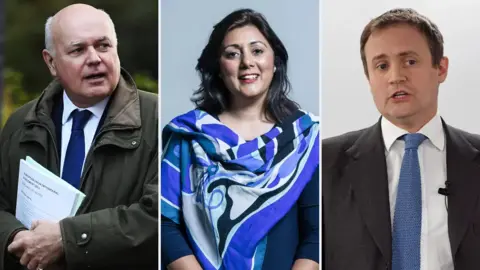
China has lifted travel and related sanctions on six sitting UK parliamentarians following Prime Minister Sir Keir Starmer's talks with President Xi, while leaving other targeted individuals still under sanction. The visit yielded several cooperative agreements, including a pledge to halve import taxes on British whisky (effective next week), intelligence-sharing on people-smuggling, reduced red tape for UK exporters and collaboration on health issues, though a visa-free travel start date was not set. The moves signal a diplomatic thaw with potential modest upside for specific UK exporters and bilateral trade facilitation, but domestic political backlash and outstanding human-rights and sanction issues limit immediate broader market implications.
Market structure: A pragmatic thaw between the UK and China removes discrete policy barriers for UK exporters (notably Scotch), lowering effective tariffs (whisky import tax halved) and red tape; expect demand re-acceleration in premium spirits and selected consumer goods with a likely 10–30% volume uplift in targeted SKUs over 12 months if retail price pass-through is achieved. Competitive winners: large diversified Scotch producers (Diageo DEO) and UK exporters with China distribution; losers: domestic duty-free competitors and small independent distillers that cannot scale China entry costs. Cross-asset: modest GBP appreciation (50–200 bps) and risk-on tilt could push 10y Gilt yields +5–15bp near-term; commodity impact limited but positive for seaborne logistics and container rates if trade volumes rise over quarters.
Risk assessment: Tail risks include quick policy reversals (China re-sanctions) or UK political backlash leading to investment restrictions—assign a ~10–15% probability over 12 months with high impact on China-exposed names. Near-term (days–weeks) volatility will hinge on deal implementation details (visa start date, tariff regs); medium-term (3–12 months) outcomes depend on measurable trade flows and any linked financial or tech restrictions. Hidden dependencies: banking/insurance appetite to underwrite China trade and UK export credit availability; if those remain constrained the nominal tariff wins may not convert to volumes.
Trade implications: Direct plays—establish a tactical 2–3% long in DEO (Diageo) over 3–12 months, target +15% if China sales accelerate; hedge political tail with a 0.5% allocation to 9–12 month DEO call spreads. Pair trades—long EWU (iShares MSCI United Kingdom ETF) 2% vs short EWG (iShares Germany ETF) 2% for 3–6 months to capture UK-specific China reopening; alternatively long DEO / short BF-B (Brown‑Forman BF-B) to isolate Scotch vs bourbon exposure. FX/options—buy 3‑month GBPUSD calls (0.5–1% portfolio) targeting 1.30–1.33, stop-loss at 1.24.
Contrarian angles: Consensus views this as mild détente; markets may underprice implementation risk and UK domestic political pushback—there is a reasonable chance that only cosmetic wins materialize and net flows remain muted for 6–12 months. Reaction could be overdone for pure China plays but underdone for mid-cap UK exporters that suddenly regain route-to-market; search for <£5bn market cap exporters with demonstrated China distribution as 6–12 month asymmetric longs. Historical parallels (post-2015 tariff relieves) show initial pricing uplifts fade if logistics/finance aren’t aligned—use tight stop-losses and size positions to 1–3% per idea.
AI-powered research, real-time alerts, and portfolio analytics for institutional investors.
Request DemoOverall Sentiment
neutral
Sentiment Score
0.10
