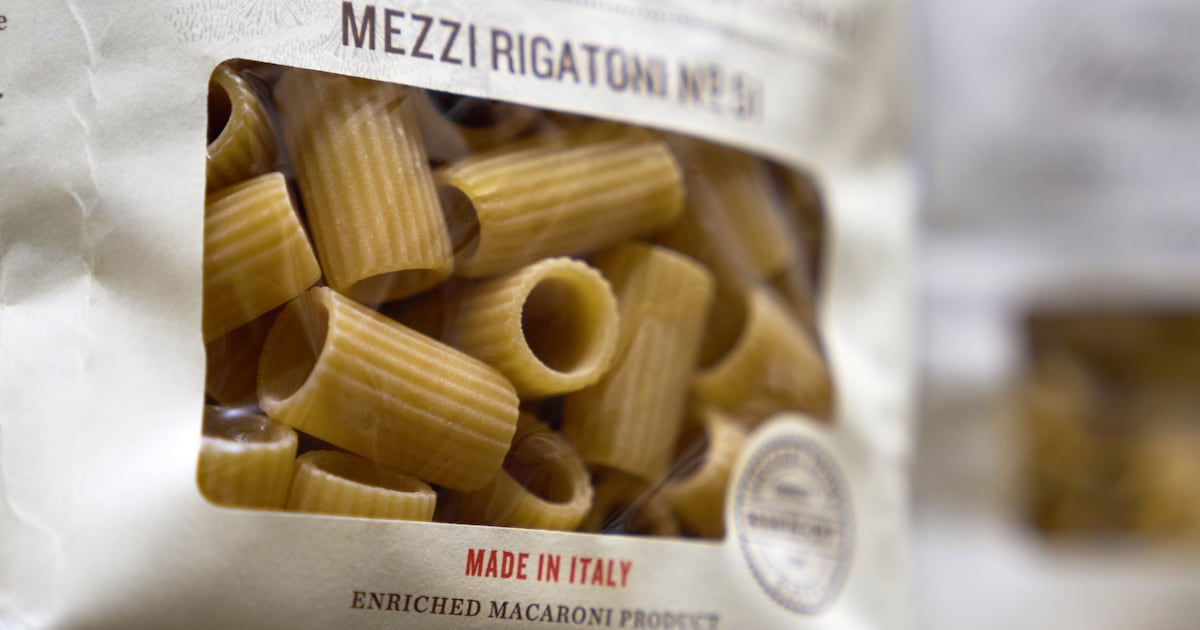
The U.S. has reduced anti-dumping duties on Italian pasta to about 10%, lowering the tariff burden on Italian exporters and cutting potential import costs for U.S. distributors and retailers. The move should modestly ease pricing pressure and improve competitiveness for Italian pasta suppliers in the U.S. market, but is unlikely to drive material market-wide shifts absent broader trade policy changes.
Market structure: Cutting Italian pasta anti‑dumping duties to ~10% is a direct revenue/margin win for Italian exporters and U.S. importers/wholesalers; supermarkets (WMT, KR) and broadline distributors (SYY, UNFI) gain incremental gross margin or promo room. Domestic private‑label manufacturers (THS) and some shelf‑stable food packagers (BGS) face intensified price competition; expect modest US shelf share movement (2–6 percentage points) toward imported premium brands over 3–12 months.
Risk assessment: Tail risks include policy reversal or litigation (Commerce/ITC) within 30–180 days, a supply surge that triggers price wars, or Italian production limits that cap volume gains; currency moves (EURUSD ±2–5%) and freight spikes could swamp the tariff effect. Immediate impact will be muted (days); material assortment and margin effects should show in retail sales and distributor volumes over 1–3 quarters and stabilize by 12 months.
Trade implications: Tactical trades favor long large grocers and distributors, short select private‑label packagers — these reflect predictable margin and volume shifts. Expect small moves (single‑digit percent) in equities; options trades (buy spreads) can cheaply express directional views around quarterly results or US import data releases in the next 30–90 days.
Contrarian angles: Consensus understates capacity constraints — Italian producers may not scale quickly, so price relief could be limited and temporary, benefiting retailers more than exporters. Conversely, cheaper premium imports could expand category demand (elasticity), lifting volumes industry‑wide; mispricings likely in mid‑cap packagers that already priced in persistent tariffs.
AI-powered research, real-time alerts, and portfolio analytics for institutional investors.
Overall Sentiment
mildly positive
Sentiment Score
0.25
