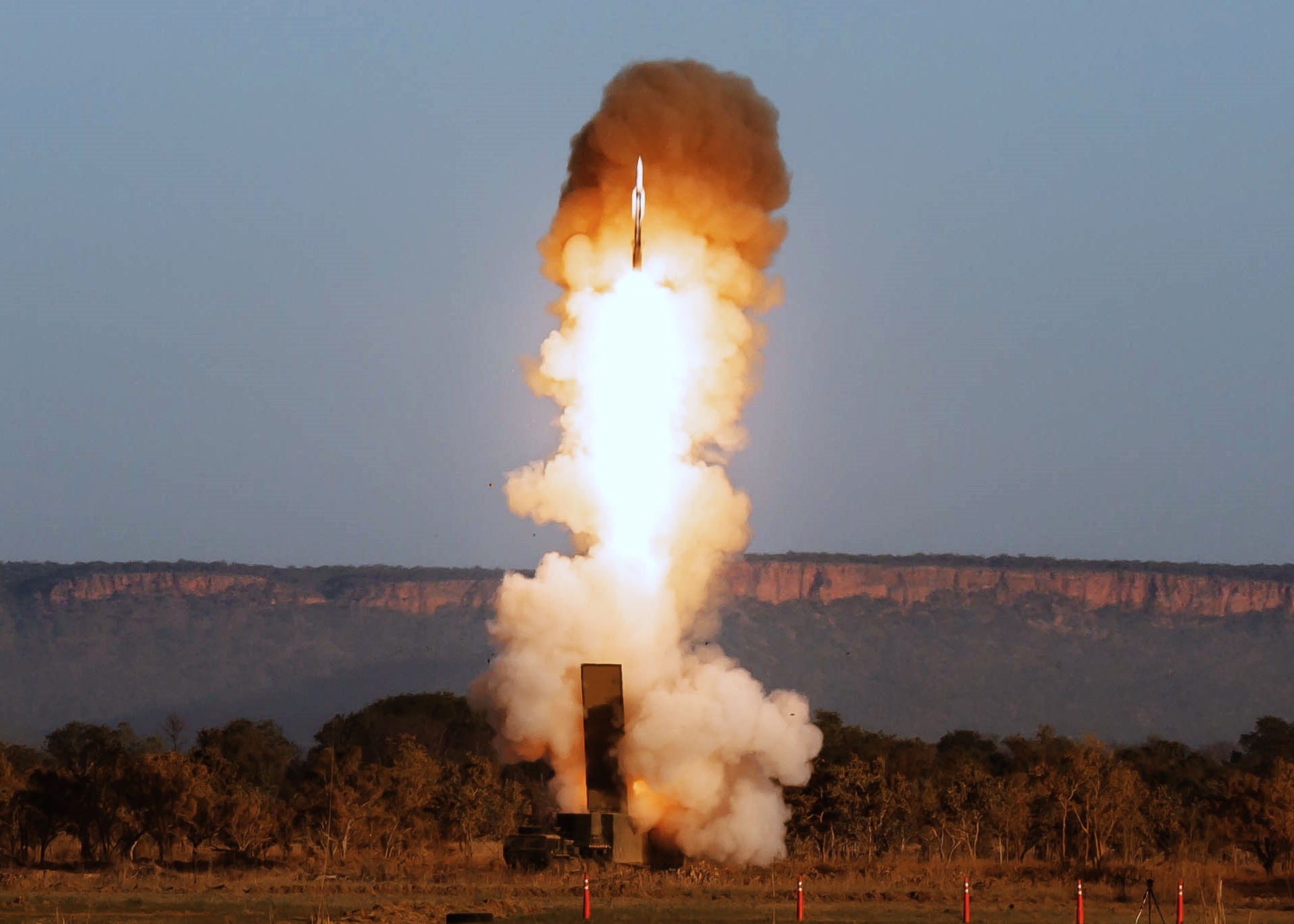
The U.S. has deployed its Typhon Mid-Range Capability missile system, equipped with 1,000-mile range Tomahawk missiles, and the NMESIS anti-ship system in Japan as part of Exercise Resolute Dragon 25, significantly bolstering its deterrence posture against China. Stationed at Marine Corps Air Station Iwakuni and Ishigaki Island, these systems provide capabilities to strike targets across China's coastline, Taiwan, and the Korean Peninsula. China's Foreign Ministry strongly condemned the deployment, asserting it undermines regional security, escalates an arms race, and heightens the risk of military confrontation, signaling increased geopolitical tensions in the Indo-Pacific.
The deployment of the U.S. Army's Typhon Mid-Range Capability missile system and the Navy-Marine Expeditionary Ship Interdiction System (NMESIS) in Japan marks a material escalation in military deterrence within the Indo-Pacific. The Typhon system, positioned at Marine Corps Air Station Iwakuni, extends U.S. strike capability significantly with its 1,000-mile-range Tomahawk missiles, which can reach China's coastline, half of Taiwan, and the entire Korean Peninsula. This action, framed as part of the 'First Island Chain' defense strategy, has prompted a strong condemnation from China's Foreign Ministry, which cited an increased risk of an arms race and military confrontation. The event's high market impact score of 0.7 and moderately negative sentiment signal that markets perceive this development as a substantial increase in regional geopolitical risk, introducing new uncertainty for assets and supply chains linked to East Asian stability.
AI-powered research, real-time alerts, and portfolio analytics for institutional investors.
Request DemoOverall Sentiment
moderately negative
Sentiment Score
-0.50
