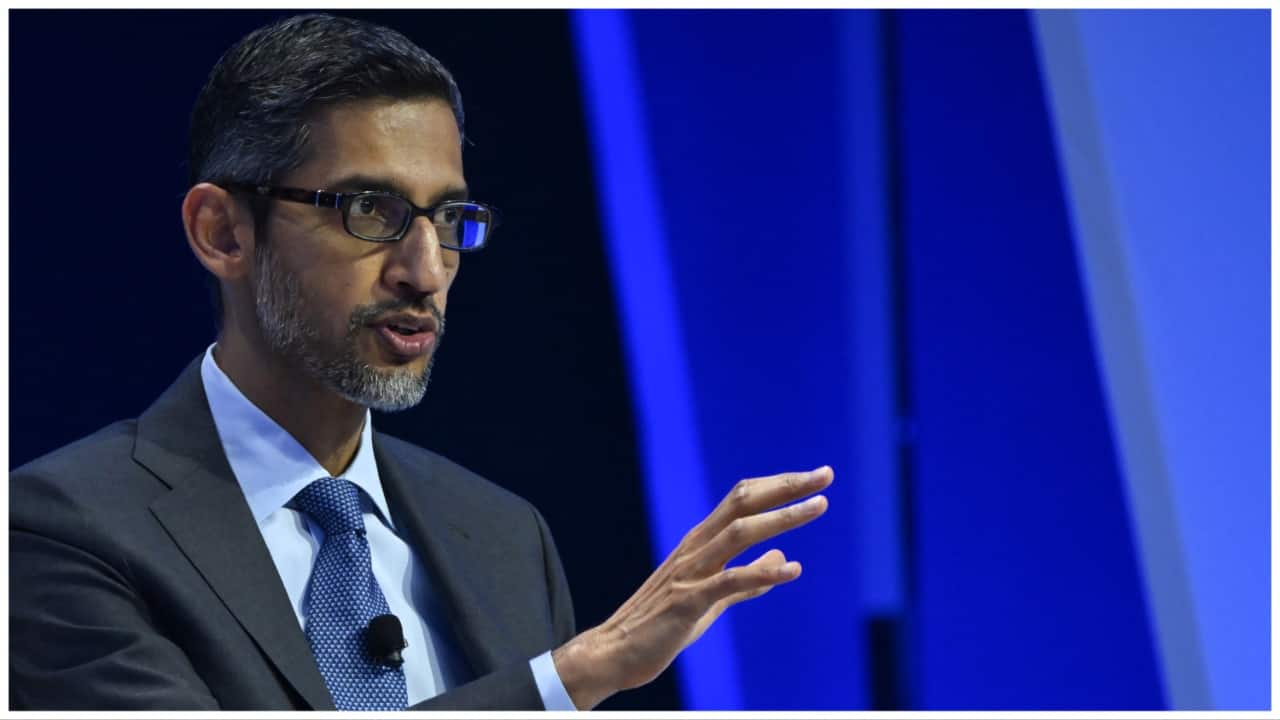
Alphabet CEO Sundar Pichai highlighted “vibe coding” — AI-assisted, visual app building — as a democratizing shift that lets non-programmers prototype apps and submit first-time changelists, with internal examples at Google and Meta. He warned AI-generated code remains unsuitable for mission-critical production without engineer review, implying near-term gains in prototyping and productivity but limited immediate impact on large-scale, secure systems.
Market structure: Vibe-coding accelerates demand for scalable model inference and managed developer platforms, directly benefiting GOOGL/GOOG (AI Studio, Gemini), NVDA (inference GPUs), AMZN/ MSFT (AWS/Azure cloud). It pressures mid-tier outsourcing and low-value application-maintenance vendors (EPAM, CGI) by compressing billable-hours; expect hyperscalers to capture incremental spend and raise effective pricing power for cloud compute over 12–36 months. Cross-asset: equity premiums for AI-exposed names should stay elevated, bond markets may price higher capex-driven term premia (push on 10y yields +10–30bp if capex accelerates materially), and options vol will stay asymmetric (call buyers on NVDA/GOOGL); commodity impact concentrated in GPUs/semiconductors, not broad raw materials.
Risk assessment: Tail risks include regulatory crackdowns on code-generation IP/antitrust actions (large-cap fines or forced product changes) and systemic security incidents from AI-generated code causing rapid de-adoption; probability moderate but impact high within 6–24 months. Short-term (days–weeks) volatility will be driven by product announcements and earnings; medium-term (3–12 months) by enterprise adoption metrics (customer counts, ARR growth) and long-term (12–36 months) by durable productivity gains. Hidden dependencies: labeled training data quality, integration with CI/CD and security stacks, and GPU supply; catalysts are major model releases, enterprise deals, and developer tooling integrations.
Trade implications: Primary trade is overweight GOOGL (direct exposure to developer tooling) and NVDA (infrastructure), underweight discretionary ad/engagement plays at META; implement a relative-value pair (long GOOGL, short META) over 6–18 months to capture secular monetization and product-led adoption. Options: use defined-risk call-spreads on GOOGL/NVDA around product updates; hedge positions with cyber-defense longs (CRWD, PANW) to protect against security-driven drawdowns. Rotate away from IT-services and low-code pure-plays and into cloud, AI infra, and enterprise security over the next 3–12 months.
Contrarian view: Consensus celebrates democratization but underestimates the cost/time to productionize AI-generated code—expect meaningful engineering review overhead and security spend that delays margin accretion 12–24 months. The market may be underpricing sustained NVDA GPU demand (buy-side) and overpricing small no-code startups (sell-side); historical parallel: low-code/no-code hype in 2016–18 delivered limited enterprise revenue conversion for many vendors. Unintended consequence: rising regulatory/legal costs for generated-code IP could compress gross margins for platform owners and reopen sourcing to specialized engineering firms, creating re-rating risk if ignored.
AI-powered research, real-time alerts, and portfolio analytics for institutional investors.
Request DemoOverall Sentiment
moderately positive
Sentiment Score
0.45
Ticker Sentiment
