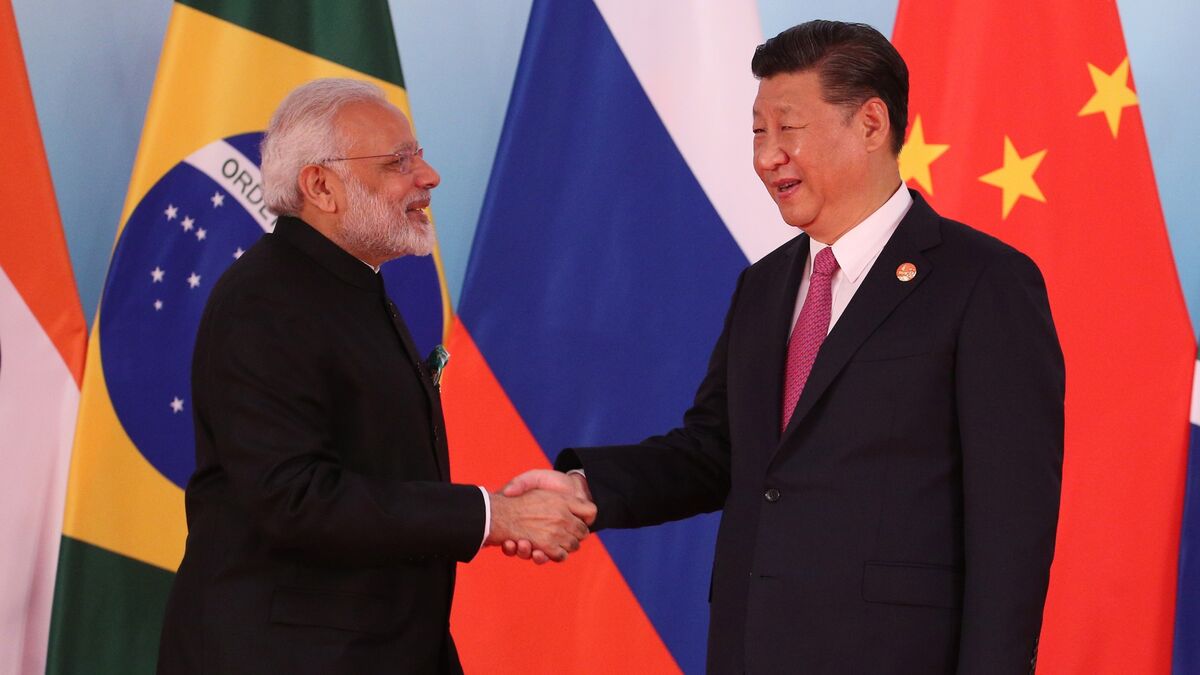
India and China are actively pursuing improved bilateral relations, as evidenced by Indian External Affairs Minister Jaishankar's recent remarks during a meeting with his Chinese counterpart Wang Yi, marking the first such visit in three years. This push for normalization is notably driven by both nations' desire to mitigate the impact of unpredictable U.S. trade policies, signaling a potential strategic recalibration in Asian geopolitics and trade dynamics.
A notable thaw in Sino-Indian relations is underway, underscored by a bilateral meeting between India’s External Affairs Minister and his Chinese counterpart, the first such high-level visit to India in three years. The explicit driver for this rapprochement is the shared need to mitigate uncertainty stemming from unpredictable US trade policies. This strategic realignment suggests a potential pivot by the two Asian giants to form a more cohesive economic front, which could significantly alter regional geopolitical and trade dynamics. While the development is viewed with moderate optimism, its primary significance lies in its potential to create a counterbalance to US economic influence and reshape global supply chains towards greater regional integration.
AI-powered research, real-time alerts, and portfolio analytics for institutional investors.
Request DemoOverall Sentiment
moderately positive
Sentiment Score
0.50
