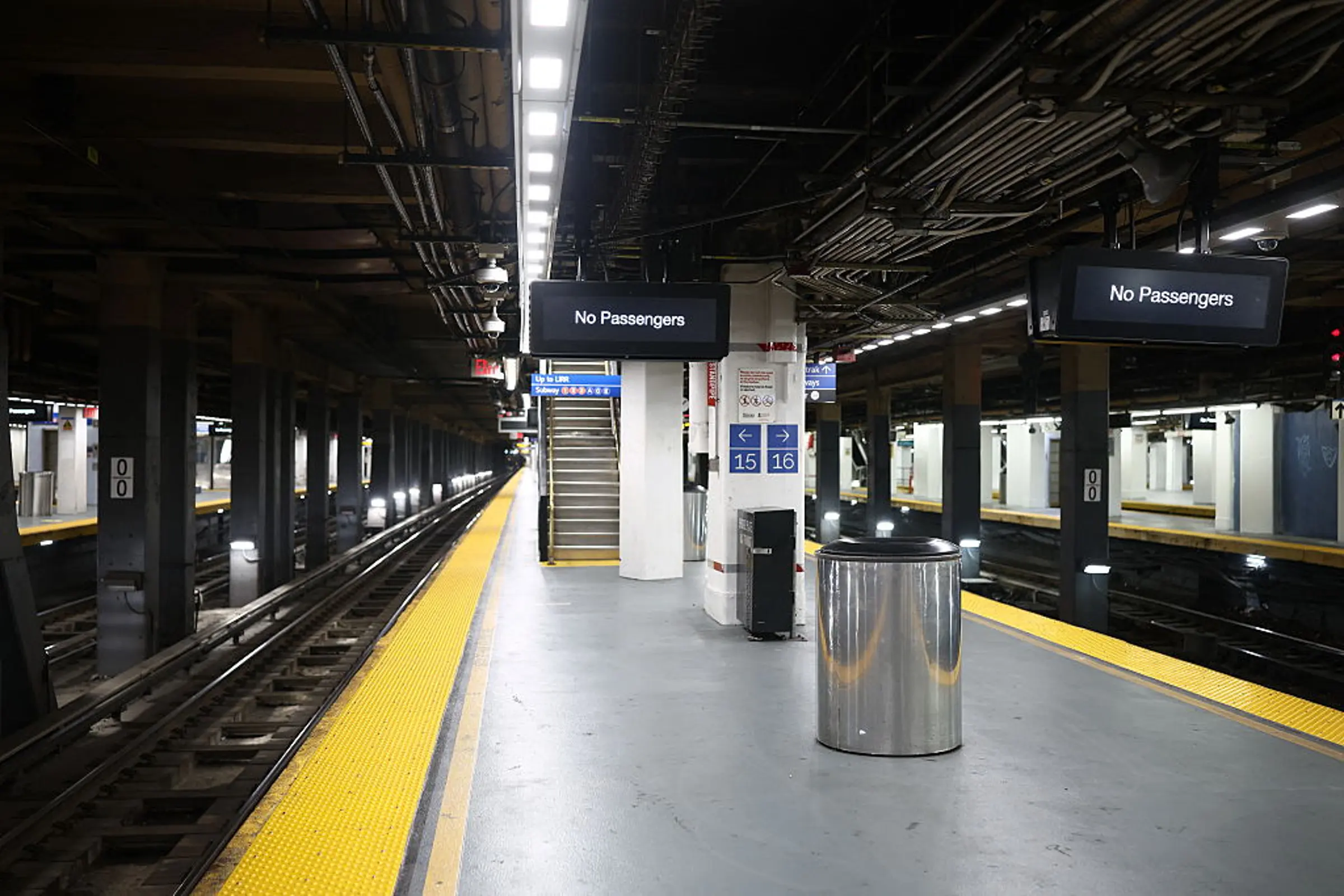
The Long Island Rail Road strike has entered its third day, shutting down North America’s busiest commuter rail service and affecting more than 250,000 weekday riders. The dispute centers on wages and healthcare premiums, with unions seeking a 6.5% raise versus an MTA offer reportedly closer to 3%, raising the risk of fare pressure and broader transportation disruption in New York. Talks are resuming under federal mediation, but the stoppage is already forcing commuters onto cars, shuttle buses, and subways, increasing traffic and operational strain.
The immediate market read is not on the rail operator itself but on the spillovers: this is a same-day friction shock that pushes discretionary commuters into cars, buses, and remote work, creating a temporary demand transfer away from transit-linked volumes and toward road congestion, parking, tolls, rideshare, and suburban retail. The more interesting second-order effect is political: the strike increases pressure on Albany and Washington to avoid being seen as enabling a failure of public infrastructure into an election cycle, which raises the odds of a settlement that is faster than the labor rhetoric suggests.
For investors, the key is that the economic damage is front-loaded into days, while the reputational and policy damage can persist for months. If service remains impaired through the workweek, the biggest losers are businesses dependent on predictable commuter flows—CBD food service, coffee chains, convenience retail, and weekday transit-adjacent foot traffic—while suburban grocers, gas stations, parking operators, and rideshare demand can see a short-lived uplift. A longer strike also risks a modest inflation impulse from higher auto fuel and transport spend, but this is too localized to move macro prints unless it persists and spreads into broader NYC logistics.
The consensus may be overpricing the probability of a prolonged outage. Labor disputes in essential transportation typically resolve under political pressure once commuter pain becomes visible, which means the most attractive setup is not a directional bet on long duration, but a very short-dated dislocation trade. The real tail risk is an escalation into broader MTA labor action or a hard-line stance on wage/benefit precedent that complicates other public-sector negotiations; that would extend the disruption window from days into weeks and would matter more for New York consumer-exposed names.
On balance, this is a negative but likely transient shock for the metropolitan economy, with the market impact concentrated in local, high-frequency spending rather than national equities. The better edge is to fade any prolonged-strike pricing if settlement headlines emerge, while keeping a tactical hedge on New York discretionary and commuter-dependent names until talks break one way or the other.
AI-powered research, real-time alerts, and portfolio analytics for institutional investors.
Request DemoOverall Sentiment
strongly negative
Sentiment Score
-0.55
Ticker Sentiment
