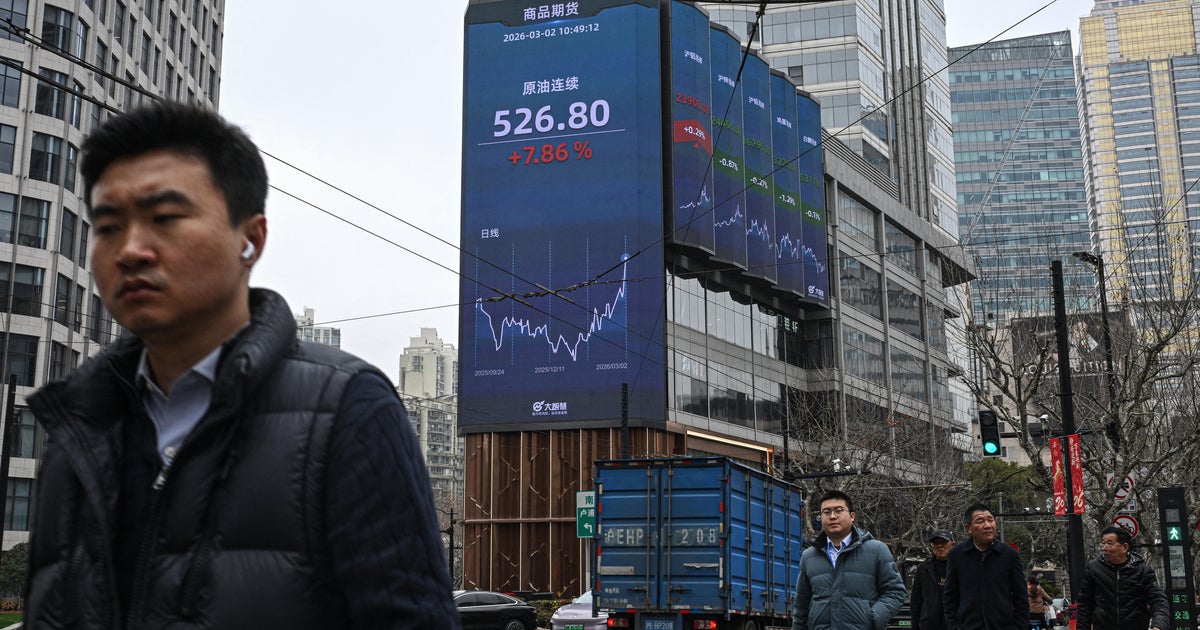
Heightened U.S.- and Israeli-led strikes on Iran threaten to disrupt China’s oil supply chain — China imports roughly 70% of its oil and gas overall and sources a majority from the Persian Gulf — and could choke shipments through the Strait of Hormuz. Kpler data show Iran sold up to 80% of its oil to China and China imported about 1.38 million barrels per day of Iranian oil last year; Beijing reportedly holds roughly four to five months of petroleum reserves. The prospect of halted ship-to-ship transfers and broader regional instability elevates near-term oil price and supply-risk for Chinese refiners and global markets, with potential diplomatic and trade ramifications ahead of a U.S.-China summit.
Market structure: Immediate winners are oil producers and tanker owners (higher spot oil, freight spikes); losers are oil importers (China refiners, airlines) and EM borrowers with large oil import bills. If Persian Gulf flows are impaired for >4–8 weeks, expect Brent to reprice up $15–40/bbl versus pre-crisis levels and refinery cracks in Asia to widen, shifting pricing power to majors and LNG exporters. Cross-asset: commodity shock → risk-off equities, wider EMFX stress (USD/CNH up), safe-haven bids in gold and USTs, but stagflation risk could push real yields higher over months.
Risk assessment: Tail risks include full Strait of Hormuz closure, cyber-attacks on Chinese ports, or U.S. secondary sanctions on Chinese shipping — each could produce >$50/bbl spikes and seizure/insurance freezes for “shadow fleet” operations. Timeline: days = freight/insurance premium volatility; weeks-months = physical shortages if reserves (4–5 months) are used; quarters+ = China accelerates structural decarbonization reducing oil intensity by several percent annually. Hidden dependencies: insurance markets, covert ship-to-ship routes, and RMB-denominated barter channels can blunt official sanction effects.
Trade implications: Direct plays — long integrated majors (XOM, CVX) and US LNG/shipper optionality (LNG, FRO) for 3–9 month horizons; short China refiners (SNP, PTR) and long USD/CNH via forwards for FX hedging. Options: buy 3-month Brent call spreads (e.g., $85/$110) and XOM 6‑month call spreads to cap cost; use tanker equities as leveraged play. Size trades to 1–3% of portfolio with stop-loss thresholds (e.g., trim if Brent < $75 for 30 days).
Contrarian angles: Consensus underestimates China’s 4–5 month reserve buffer and potential diplomatic de‑escalation ahead of high‑level talks — initial price spikes could be overdone and mean-revert within 6–12 weeks. Historical parallels (2019 tanker incidents) show $10–20 spikes that faded as production and insurance adapted; unintended consequence: sustained spike accelerates US shale response and China’s renewables push, capping multi‑year upside in oil.
AI-powered research, real-time alerts, and portfolio analytics for institutional investors.
Request TrialOverall Sentiment
strongly negative
Sentiment Score
-0.65
