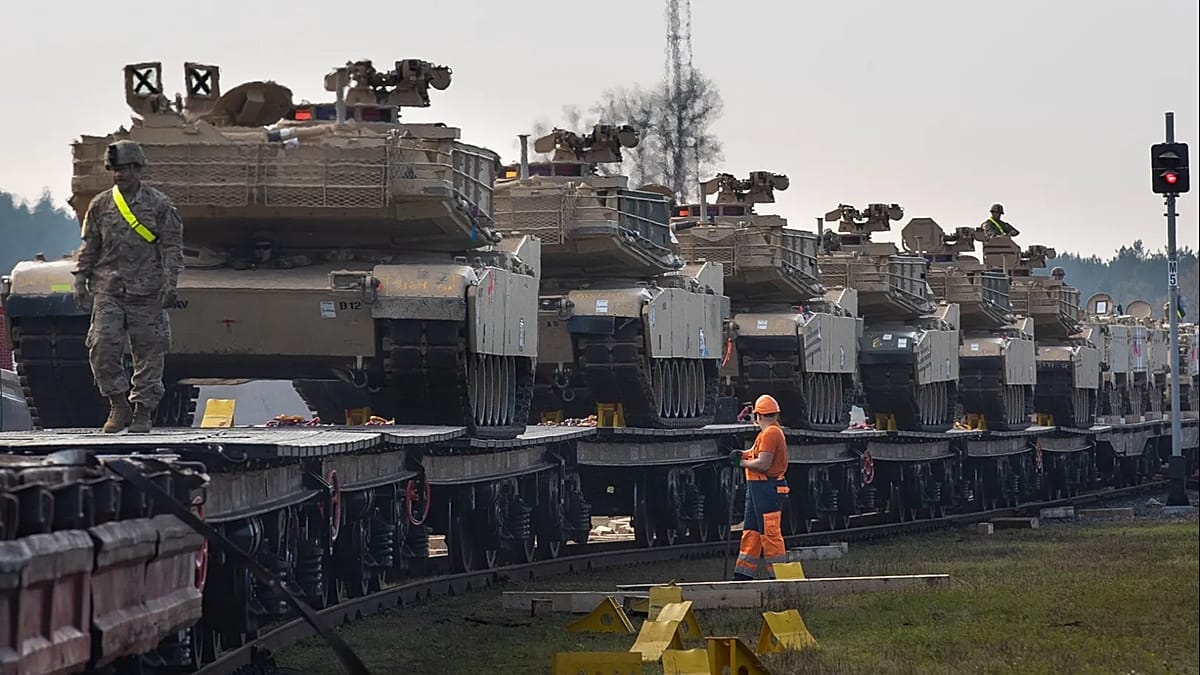
The European Commission has proposed a "military Schengen" Military Mobility package to dramatically speed cross-border movement of troops and equipment, mandating member states to approve transit within three days in peacetime and within six hours in emergencies, and creating a solidarity pool, a civilian dual‑use asset catalogue and a national coordinator transport group to prioritise upgrades across four military corridors. The plan targets 500 infrastructure upgrades (roads, rail, ports, tunnels, bridges) to handle heavy military loads, with an estimated price tag of €100 billion versus €1.7 billion currently earmarked through 2027 and a proposed €18 billion for 2028–34; commissioners say cohesion funds and the SAFE defence loan scheme can be tapped and investments will count toward NATO spending targets. For investors, the initiative signals sustained, sizeable demand for dual‑use infrastructure, logistics and defence-related procurement and construction, though substantial funding gaps and implementation details remain.
The European Commission has unveiled a "military Schengen" Military Mobility package that would require EU member states to approve cross-border transit of troops and equipment within three days in peacetime and within six hours in emergencies, with fast-tracked permitting and a presumption of approval in crisis. Commissioner Apostolos Tzitzikostas framed the change as moving from "months" to "days," and the proposal is modelled on the EU Civil Protection Mechanism to enable rapid assistance.
The plan creates a military mobility solidarity pool, a catalogue of dual-use civilian transport assets (flat trains, ferries, strategic airlifts) and a national transport coordinator in each state, and prioritises financing for 500 infrastructure upgrades across four military corridors to harden roads, railways, ports, airports, tunnels and bridges. These project and asset lists are intended to remove logistical bottlenecks that the Commission says are critical to defence readiness.
Cost estimates and financing are the principal constraints: the Commission estimates €100 billion is needed while only €1.7 billion is earmarked to 2027 and a proposal of just under €18 billion is on the table for 2028–34; the package relies on tapping cohesion funds and the SAFE defence loan scheme and allows member states to count investments toward NATO spending targets. The significant funding gap and the need for cross-border regulatory harmonisation create execution and political risks despite a mildly positive, hawkish policy signal for defence, logistics and civil-infrastructure contractors.
AI-powered research, real-time alerts, and portfolio analytics for institutional investors.
Request DemoOverall Sentiment
mildly positive
Sentiment Score
0.30
Ticker Sentiment
