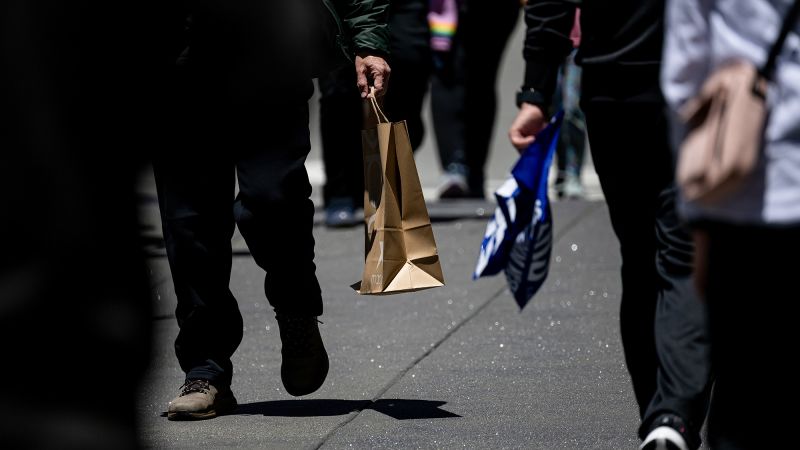
Despite economists' predictions of rising inflation following President Trump's tariff implementations, recent consumer price data indicates a minimal increase, with the Personal Consumption Expenditures price index falling to 2.5% in April, the lowest since March 2021; however, retailers and the Federal Reserve anticipate price increases later in the summer as pre-tariff inventory depletes and businesses begin passing on tariff costs, suggesting the full inflationary impact is yet to be realized.
Recent U.S. inflation data has unexpectedly diverged from economists' forecasts following the implementation of significant tariffs, which raised the effective rate by nearly 12 percentage points to 14.1% in 2025. Consumer prices rose a modest 2.4% annually last month, and core Personal Consumption Expenditures inflation, the Federal Reserve's preferred gauge, fell to 2.5% in April – its lowest since March 2021. This contrasts sharply with predictions from institutions like Goldman Sachs (forecast: 6.3% core goods inflation this year) and JPMorgan (forecast: core inflation nearly doubling by year-end). The primary explanation for this anomaly, corroborated by Fed Chair Jerome Powell and industry research from Telsey Advisory Group, is that retailers are currently selling through lower-cost, pre-tariff inventory, with only limited price increases observed so far, such as in some electronics, while auto prices have even declined. Despite the Trump administration claiming vindication, economists and major retailers including Walmart, Target, Lululemon, Home Depot, and Costco anticipate that the inflationary impact of these extensive tariffs—covering $2.3 trillion of imports—is merely delayed, not averted. Price increases are widely expected to become more apparent in late summer, potentially August or September, as these inventories deplete. Leading indicators, such as the April ISM services report showing a rise in prices paid by businesses and contracting inventories, support this cautious outlook, suggesting the current low-inflation environment may be temporary and that businesses, particularly smaller ones, face significant uncertainty regarding future costs.
AI-powered research, real-time alerts, and portfolio analytics for institutional investors.
Overall Sentiment
moderately negative
Sentiment Score
-0.40
Ticker Sentiment
