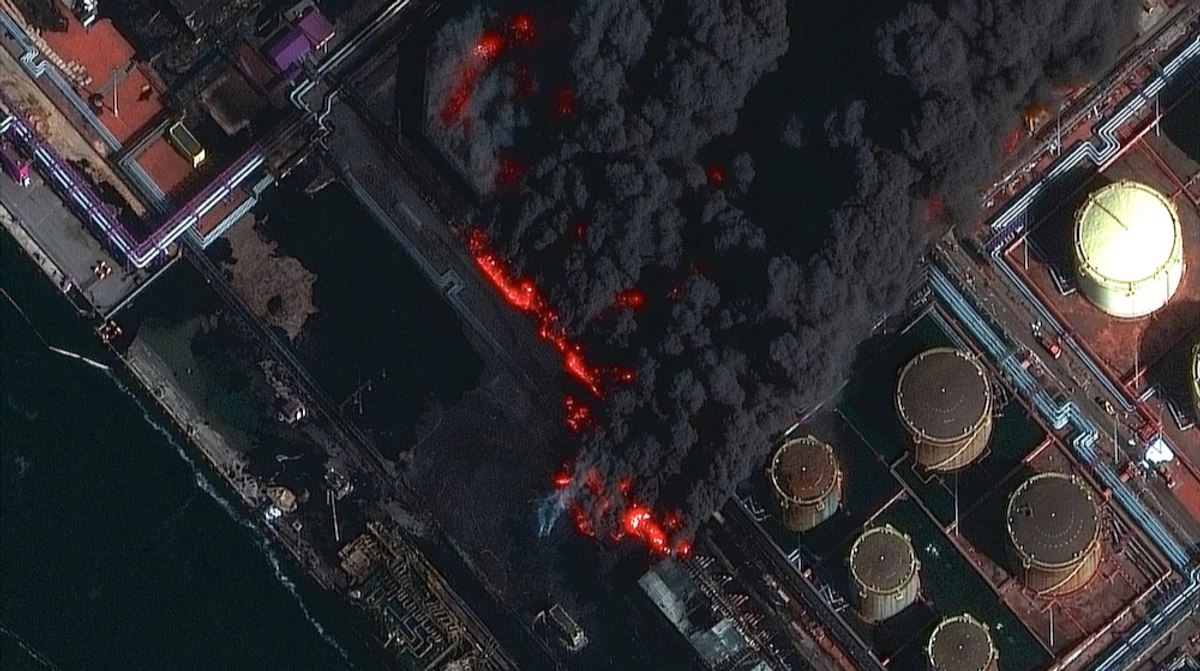
Ukrainian drone strikes on Primorsk and Ust‑Luga cut Russian Baltic oil exports by 1.75 million b/d to 2.32 million b/d in the week to 29 March, reducing Moscow's oil revenues by more than US$1 billion. Vessel data show 22 tankers loaded 16.23 million barrels versus 28.5 million barrels the prior week; four‑week average shipments fell to 3.31 million b/d (down 280k b/d). Deliveries to India rose to ~1.7 million b/d in March (from ~1.1 million b/d in February) after US licences for pre‑12 March cargoes, partially offsetting the Baltic shortfall. Expect near‑term Baltic supply disruption to support oil price volatility and pressure Russian export receipts; monitor terminal repair timelines, further strikes, and rerouting to Asian buyers.
Recent chokepoint disruptions have created an asymmetric shock to seaborne logistics that disproportionately benefits owners of tonnage and parties that capture time-charter premiums. With cargoes forced to reroute or wait, the marginal economics tilt toward spot-rate-driven earnings — a structural lever for listed tanker owners and ship financiers because charter rates re-price faster than crude valuations. Insurance and bunker-cost inflation are second-order winners: higher premiums and longer voyages increase cash margins for owners able to monetize floating storage or charter-in assets.
The shock is likely front-loaded (weeks) but has a path-dependent tail: quick repair and regulatory clearances will normalize flows within a month, whereas escalation or repeat targeting raises the equilibrium cost of Baltic/European export capacity for quarters. That divergence opens a well-defined event window for trades that monetize freight and optionality rather than directional crude exposure. Equally important, importers with flexibility (significant Indian/Asian buyers) gain bargaining leverage that can compress Russian revenue per barrel even if gross volumes normalize.
Consensus tends to focus on headline oil-volume lost; the underappreciated transmission is in the logistics chain — spike in spot tanker rates, rise in floating storage premiums, and transient contango dynamics. These are volatile, mean-reverting opportunities: mean reversion could be rapid once normal loading resumes, so position sizing must assume a high probability (30–50%) of near-term reversal. Monitor 4-week rolling flow metrics and insurance premium notices as the primary trade triggers and stop-loss signalers.
AI-powered research, real-time alerts, and portfolio analytics for institutional investors.
Request DemoOverall Sentiment
moderately negative
Sentiment Score
-0.50
