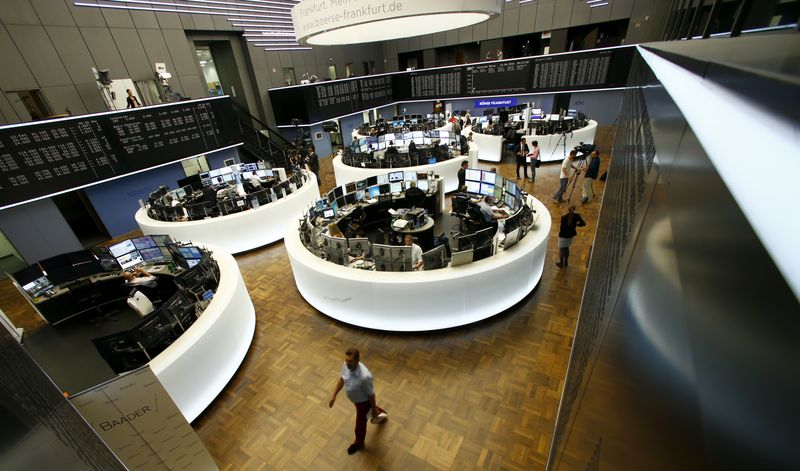
Iran rejected a proposed 45-day ceasefire and President Trump issued a Tuesday deadline, threatening to strike Iranian infrastructure; the dispute risks further disrupting the Strait of Hormuz, which handles ~20% of global oil flows. Oil jumped (Brent +1.4% to $111.28/bbl; WTI +2.1% to $114.74/bbl) while major European indices were largely flat (Stoxx 600 +0.1%, DAX ~0%, CAC 40 +0.5%, FTSE 100 +0.2%). The escalation raises near-term inflation and global growth risks and argues for risk-off positioning across portfolios.
Risk-off positioning is being driven by marginal supply-side disruption risk in a chokepoint that has outsized pass-through to transport costs and commodity inflation. A sustained oil shock (sustained = weeks-to-months) transmits via three channels: refinery margins and fuel differentials, higher shipping route costs/insurance that lift delivered commodity prices, and a near-term acceleration in headline CPI that forces central banks to keep real rates higher for longer. Expect equity multiples to compress before fundamentals reprice — energy producers re-rate faster than end-demand beneficiaries.
Second-order winners are oil services/gear suppliers and high-density compute vendors that can pivot to defense and edge compute contracts; SMCI sits in that overlap and will see order visibility improvements in a 6–12 month procurement cycle if defense budgets accelerate. Losers include discretionary travel and ad-revenue dependent tech (APP exposure) where softer consumer activity and tighter ad budgets compress top-line and push higher-beta multiples lower in the next 1–3 quarters.
Tail risks: an actual large-scale strike changes the calibration from elevated volatility to regime change with oil repricing for >12 months, while a credible diplomatic de-escalation or SPR release can erase >50% of the current risk premium within 30–90 days. The consensus is treating this primarily as a short-term headline shock; position the portfolio to capture asymmetric payoffs and avoid one-way directional exposure to commodity futures unless hedged by time-limited options.
AI-powered research, real-time alerts, and portfolio analytics for institutional investors.
Overall Sentiment
strongly negative
Sentiment Score
-0.65
Ticker Sentiment
