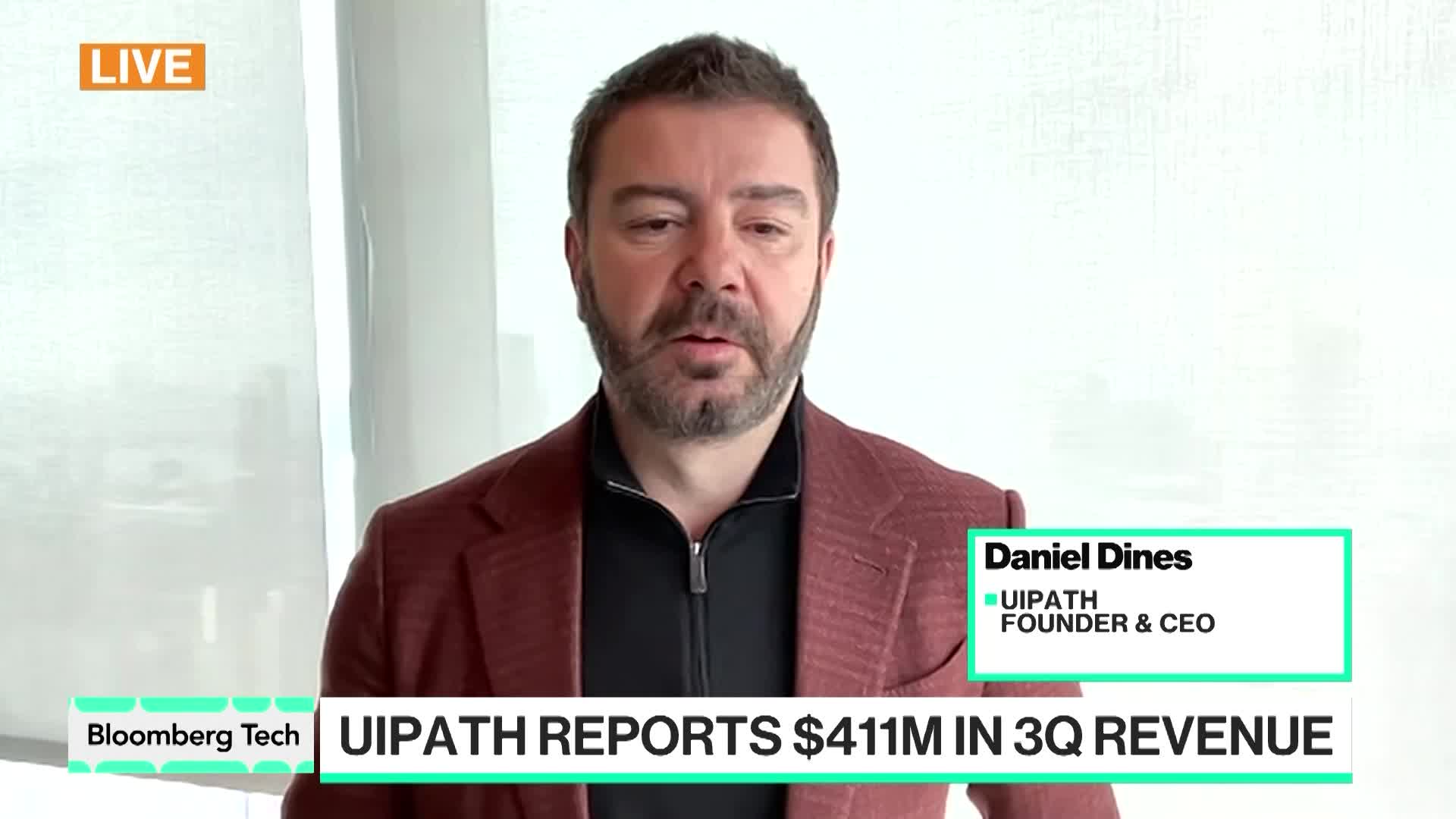
The company is positioning its RPA platform by layering AI agents and orchestration over rule-based automations to deliver autonomous, general-AI-driven workflows, targeting expansion within healthcare and financial services. Management argues AI complements rather than replaces RPA, accelerating development and improving reliability, and believes this will bolster subscription economics despite Bloomberg Intelligence's caution on subscription sustainability. No specific revenue or earnings figures were disclosed.
Market structure: RPA vendors (eg. UiPath PATH), cloud providers (MSFT, GOOGL), and GPU/AI infrastructure suppliers (NVDA) are the primary beneficiaries as AI agents become a value-add on top of rule‑based automation — TAM expansion could be +20–40% in addressable automation spend within 12–36 months as lower‑technical desks adopt tooling in healthcare and financial services. Incumbent BPO/staffing outfits (WNS, CTSH, EXLS) and legacy manual-processing vendors face pricing pressure and margin erosion as clients shift spend from FTEs to subscription automation; expect a multi‑year secular shift in software spend vs. headcount spend.
Risk assessment: Key tail risks include regulatory scrutiny on automated decisioning (health data/FINRA rules) and catastrophic operational failures (automation error leading to regulatory fines) — assign a 5–10% probability of a material regulatory event within 24 months that could force remediation costs of 1–3% of vendor revenue. Short term (days–months) volatility will be driven by pilot announcements and Q‑on‑Q subscription metrics; long term (quarters–years) outcomes hinge on measurable ROI (customer TCV upsell >10% and churn <5%). Hidden dependency: heavy reliance on hyperscalers and model providers concentrated risk in MSFT/GOOGL/NVDA.
Trade implications: Direct long: establish a 2–3% long in PATH and 2–3% in MSFT (cloud) over 6–12 months, targeting 25–40% upside if adoption accelerates; short 1–2% positions in WNS or EXLS to express BPO margin risk. Pair trade: long PATH, short WNS (equal notional) to capture relative re‑rating. Options: buy 30–60 day NVDA 20–30% OTM call spreads ahead of product/earnings catalysts to play infrastructure demand while controlling cash. Rotate sector weights toward Software/Cloud and Semis; reduce Staffing/BPO exposure by 200–400 bps.
Contrarian angles: Market consensus underestimates complementarity — AI is unlikely to fully replace rule‑based RPA in regulated workflows, so subscription durability is likely underpriced; conversely, near‑term enthusiasm may be overdone for unproven “autonomous” claims leading to short‑term multiple compression for hyper‑promised small caps. Historical parallel: ERP and BPM waves delivered multi‑year consultancy tails; expect similar services uplift but also concentration of economics to platform owners (hyperscalers + top RPA vendors). Unintended consequence: rapid rollout could trigger stricter audit/regulatory demands that increase implementation costs by 10–20%, compressing vendor gross margins before scale economies kick in.
AI-powered research, real-time alerts, and portfolio analytics for institutional investors.
Request DemoOverall Sentiment
moderately positive
Sentiment Score
0.35
