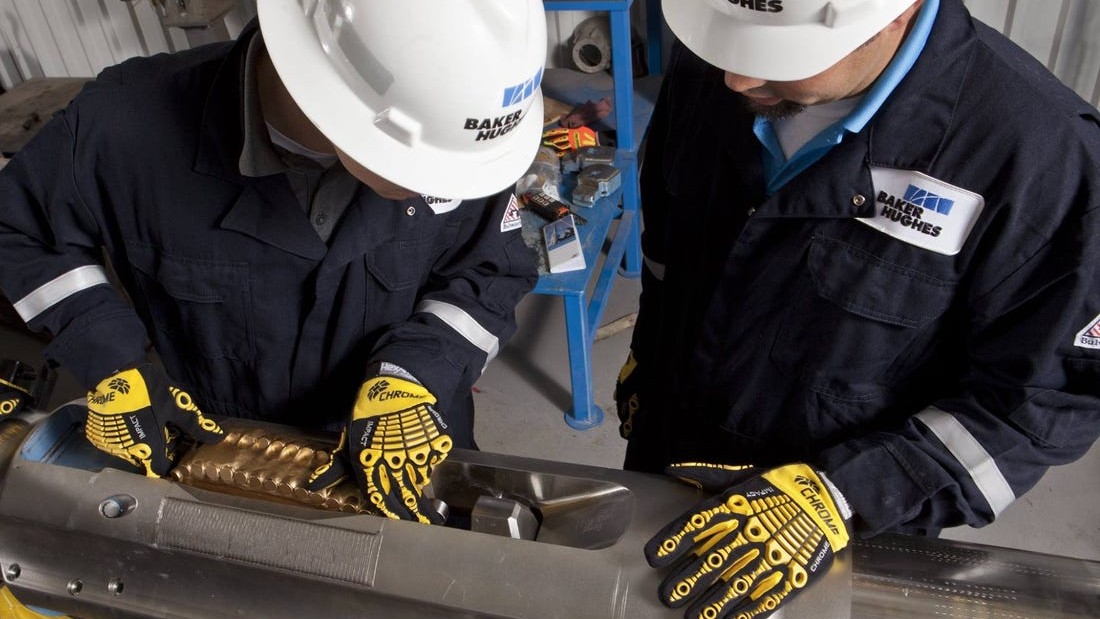
A prolonged Middle East supply disruption is shifting capital toward oil and gas exploration, with SLB, Baker Hughes, Exxon and others highlighting stronger upstream and energy infrastructure spending. U.S. shale exports are at all-time highs and producers are generating an extra $63.4 billion in cash flow this year, while Africa is emerging as a long-term beneficiary for new supply investment. The article suggests a structural, potentially permanent reallocation of energy investment away from the Middle East toward the U.S., Africa and other lower-risk regions.
The market is underestimating how quickly this shifts capex from “maintenance mode” to “security premium” mode. That matters most for the service layer: SLB and BKR are the cleanest leverage points because incremental exploration dollars flow through pricing and utilization before they show up in volumes at E&Ps. In a world where the industry is no longer optimizing only for IRR but for resilience, the winners are the firms embedded in early-cycle spending, not the barrels themselves. The second-order effect is geographic reallocation of capital. If buyers start pricing lower delivery risk into African, Atlantic Basin, and Western Hemisphere projects, the benefit accrues to service firms with local execution capability and to logistics/insurance names tied to longer-haul flows. That also implies a relative disadvantage for basin-constrained producers that rely on fast takeaway or politically fragile export routes: their realized pricing may lag headline crude, and their growth capital will face higher hurdle rates. The real catalyst window is months, not days. A prolonged disruption keeps this bid alive, but if diplomatic de-escalation restores shipping confidence, the premium can fade faster than most upstream budgets reprice. The contrarian point: the market may be too quick to extrapolate “more drilling” when the more durable outcome is actually “more redundancy,” which favors infrastructure, processing, LNG, storage, and service intensity over pure upstream beta. For Morgan Stanley, the direct earnings impact is limited, but the stock becomes a relative beneficiary if capital markets activity rises around project finance, hedging, and M&A in energy security themes. The bigger risk is that higher oil prices eventually choke demand and force policy responses that cap the upside before a full capex cycle develops.
AI-powered research, real-time alerts, and portfolio analytics for institutional investors.
Overall Sentiment
mildly positive
Sentiment Score
0.25
Ticker Sentiment
