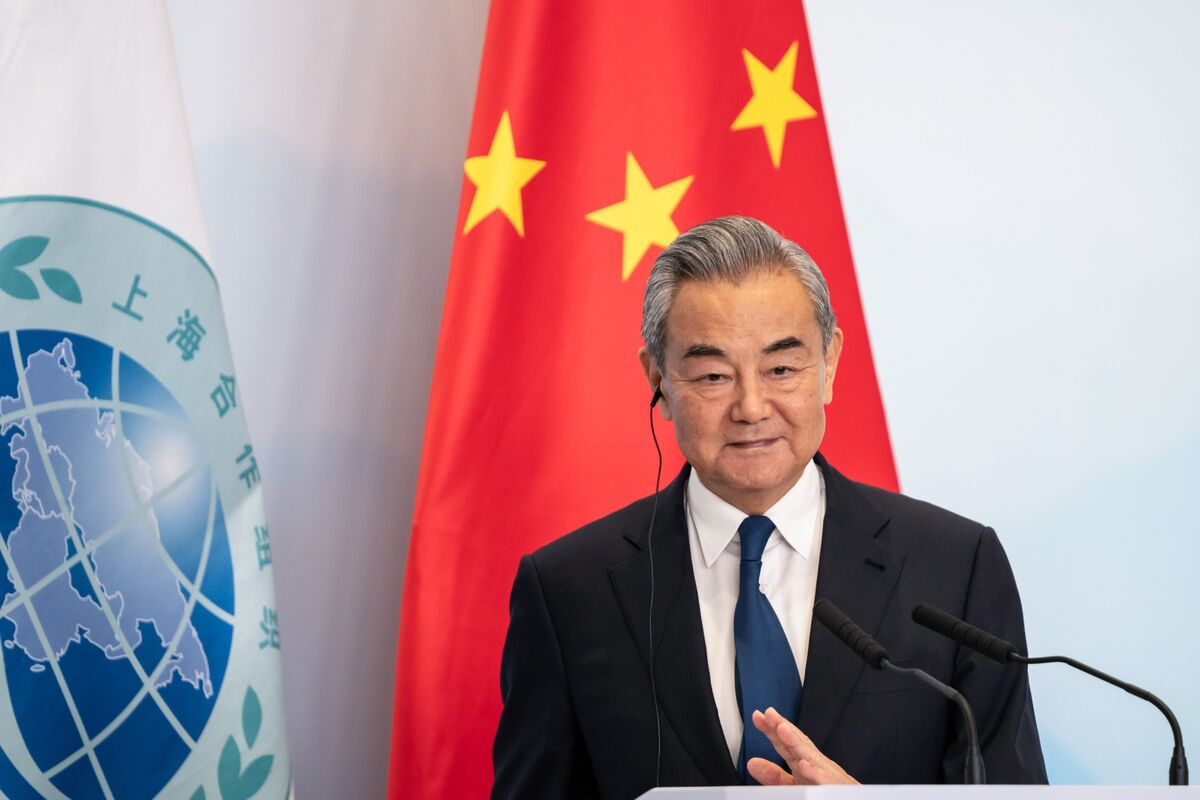
Chinese Foreign Minister Wang Yi will visit North Korea this week — his first trip since 2019 — arriving Thursday for a two-day visit at the North’s invitation. The visit signals Beijing and Pyongyang are seeking closer ties amid rising geopolitical uncertainty; expect modest impact on regional risk sentiment and diplomatic dynamics but limited immediate market-moving effects.
China’s quiet stabilization of the Korean peninsula is more likely to be about risk management than ideological alignment — that subtle shift changes the expected frequency and intensity of DPRK provocations rather than eliminating them. Practically this lowers near-term volatility but raises the baseline for sanctions evasion activity (maritime transfers, opaque payment channels), which will show up as persistent frictions in insurance, shipping and secondary commodity markets over the next 3–18 months.
A managed North Korea reduces the immediate political justification for aggressive US/ROK naval posturing, but it also creates a multi-year procurement cycle for missile defense, ISR and sanctions-monitoring tools as allies hedge against asymmetric threats. Expect defense primes and surveillance/sensor suppliers to see more predictable order books (6–24 months visibility), while specialty insurers, P&I clubs and sanction-compliance vendors face higher claims and compliance costs.
On flows and sentiment: markets will likely underreact initially — EM risk premia compress modestly while real economic linkages (labor, mineral exports, infrastructure deals) build slowly. The clearest second-order winners are firms that enable sanctioned trade (shipping intermediaries, scrapyard/commodity brokers) and Chinese construction/concession players if cross-border projects restart; losers are short-tail tourism & consumer plays in Korea/Japan and western insurers tasked with compliance.
Watch triggers closely: AIS dark patterns and spikes in ship-to-ship activity, Chinese bank SWIFT anomalies, and ROK defense budget amendments — each is a 0–6 month catalyst that can flip sentiment quickly. Tail risks that would reverse the drift include a high-profile DPRK provocation or a hardening of US/UN secondary sanctions; those events would rerate defense names and spike safe-haven flows within days to weeks.
AI-powered research, real-time alerts, and portfolio analytics for institutional investors.
Request DemoOverall Sentiment
neutral
Sentiment Score
0.00
