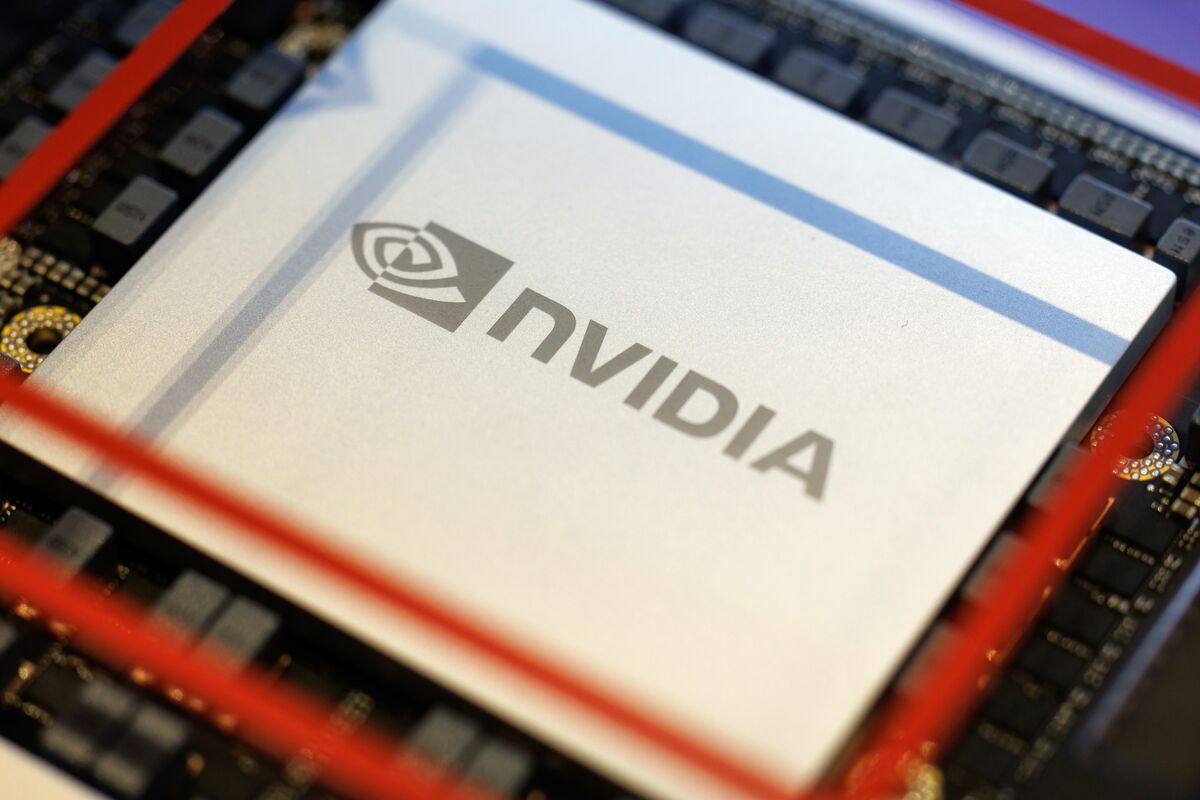
Investor angst over an emerging AI bubble is denting confidence in Nvidia’s leadership in the sector, raising the risk of sentiment-driven volatility for the chipmaker and related names. Separately, Airbus disclosed that more than 6,500 A320-family jets will require a software fix after a recent computer problem that threatened a JetBlue flight and temporarily grounded flights in Australia and New Zealand, creating operational disruption risk and potential remediation costs for the company.
Market structure: The headline-driven hit to Nvidia (NVDA) is primarily a sentiment shock that redistributes short-term flows away from mega-cap AI leaders into cyclicals and value. Direct beneficiaries in a risk-off rotation are AMD (AMD) and Intel (INTC) for share-gain narratives and short-duration government bonds (TLT) for flight-to-safety; losers are high-multiple AI infrastructure names (NVDA, related small-cap AI plays) that rely on multiple expansion. Supply/demand remains skewed to tightness for data-center GPUs over 12–24 months, so price discovery is about demand growth expectations rather than immediate capacity changes.
Risk assessment: Tail risks include regulatory export restrictions or AI safety rules (5–15% probability in 12 months), a hyperscaler capex pullback (10–20% chance) or a fabrication/yield shock at TSMC/ASML (low single-digit probability with outsized impact). Immediate (days) risk is implied-volatility spikes of +20–50%; short-term (0–6 months) could see NAV re-rating of -10% to -30% if guidance disappoints; long-term (12–36 months) fundamentals still support growth if data-center spend persists. Hidden dependencies: channel inventory, concentration in top-3 hyperscalers, and software ecosystem lock-in that can amplify or mute hardware cycles.
Trade implications: Reduce directional NVDA exposure and buy convex protection: establish a 2–3% NAV hedge with 30–90 day put spreads targeting protection for a 15–25% downside. Consider a relative-value pair: long AMD vs short NVDA sized 1:1 for a 3–6 month horizon targeting 15–25% relative outperformance if sentiment-driven flows rotate. Use covered-call overlays (6–8 week, 8–12% OTM) to monetize elevated IV for existing NVDA positions and redeploy premiums into value cyclicals or IG bonds.
Contrarian angles: Consensus underestimates the stickiness of GPU demand — if NVDA reports >25% y/y data-center revenue growth next quarter, market could reposition quickly and squeeze short-interest. The panic-driven move may be overdone in 1–3 months; options skew likely overpriced by 20–40% vs realized vol, creating an opportunity to sell premium. Historical parallels: post-bubble pullbacks in 2018/2020 saw 6–12 month recoveries as earnings justified multiples. Unintended consequence of broad selling: accelerates share gains for AMD/INTC and creates cheap long-entry points in NVDA on any >25% drawdown.
AI-powered research, real-time alerts, and portfolio analytics for institutional investors.
Request DemoOverall Sentiment
mildly negative
Sentiment Score
-0.30
Ticker Sentiment
