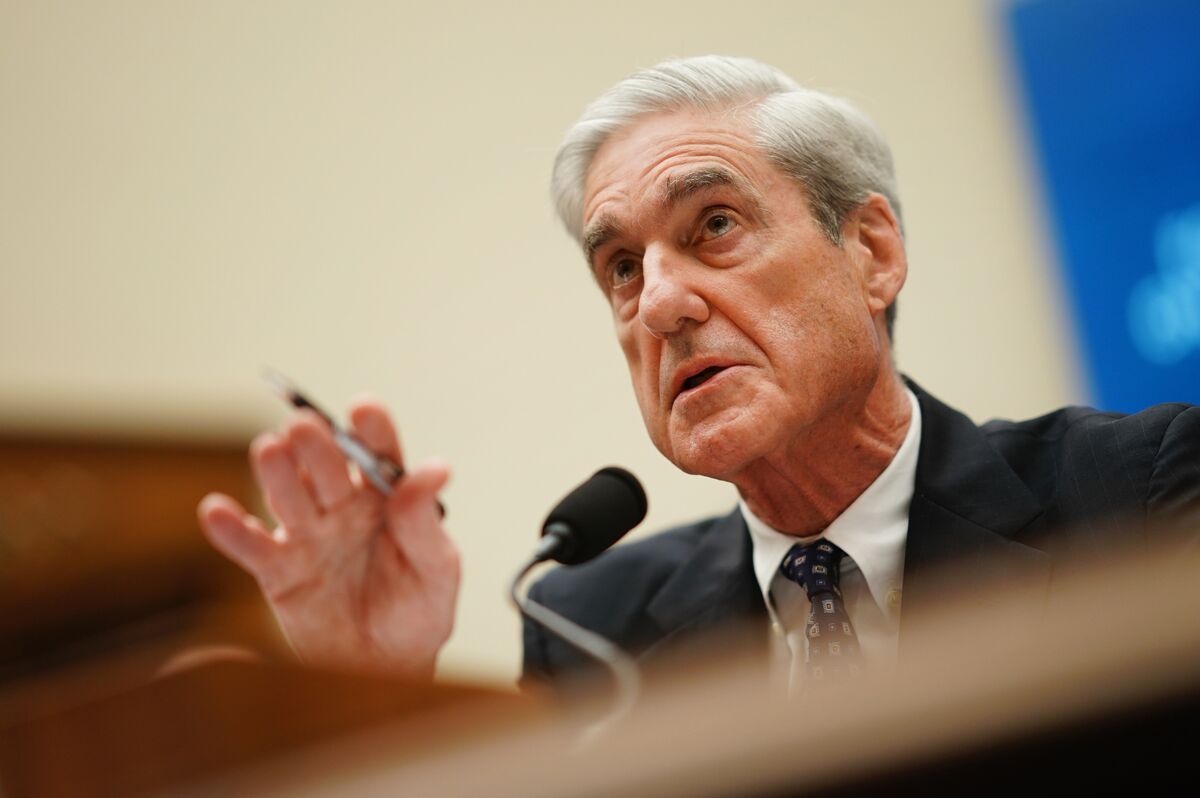
Robert S. Mueller III, former FBI director and special counsel who led the investigation into ties between Russia and Donald Trump's 2016 campaign, has died at age 81. He is credited with reshaping the FBI into a terrorism-focused agency after the Sept. 11, 2001 attacks; his family announced his death and asked for privacy.
The removal of a long-standing, precedent-setting figure from the Washington legal ecosystem will create a subtle re-pricing of “institutional continuity” risk rather than a single-event market shock. Expect law-firm equities, compliance and litigation-tech vendors, and long-duration regulatory-sensitive names to see elevated headline-driven volatility (intra-day moves of 1–3%) in the first 72 hours as counterparties, insurers, and counsel refresh scenario matrices. Over 3–12 months the more meaningful channel is higher expected enforcement variability: a 25–75bp increase in an affected sector’s cost of capital would translate to a roughly 2–5% haircut to terminal-value-driven stocks if regulatory outcomes skew adverse.
Winners are likely to be firms that sell crisis management, compliance automation, and cybersecurity — these capture recurring revenue and can increase billings quickly when enforcement escalates; think ARR growth re-acceleration within 6–12 months. Losers are small- and mid-cap consumer/social platforms and single-product fintechs whose valuations are heavily dependent on regulatory certainty and low legal opacity; these see the largest bid/ask blowups and funding cost increases. Defense contractors are a second-order beneficiary only if political narratives shift markedly toward national security spending; that is a lower-probability (but higher-impact) 6–18 month scenario contingent on election dynamics.
The near-term catalyst set to monitor: statements from DOJ leadership, appointments to independent counsel roles, and any sudden uptick in filed investigations or grand jury activity—each can move the needle within days. A reversal would come from rapid institutional signaling (clear policy memos or bipartisan agreements) that restores “business as usual” prosecutorial norms; that would compress risk premia back toward baseline within 1–3 months. The consensus risk is to over-index to symbolism; actionable alpha comes from selectively hedging legal exposure and buying optionality into compliance/security winners rather than broad-market positions.
AI-powered research, real-time alerts, and portfolio analytics for institutional investors.
Request DemoOverall Sentiment
neutral
Sentiment Score
0.00
