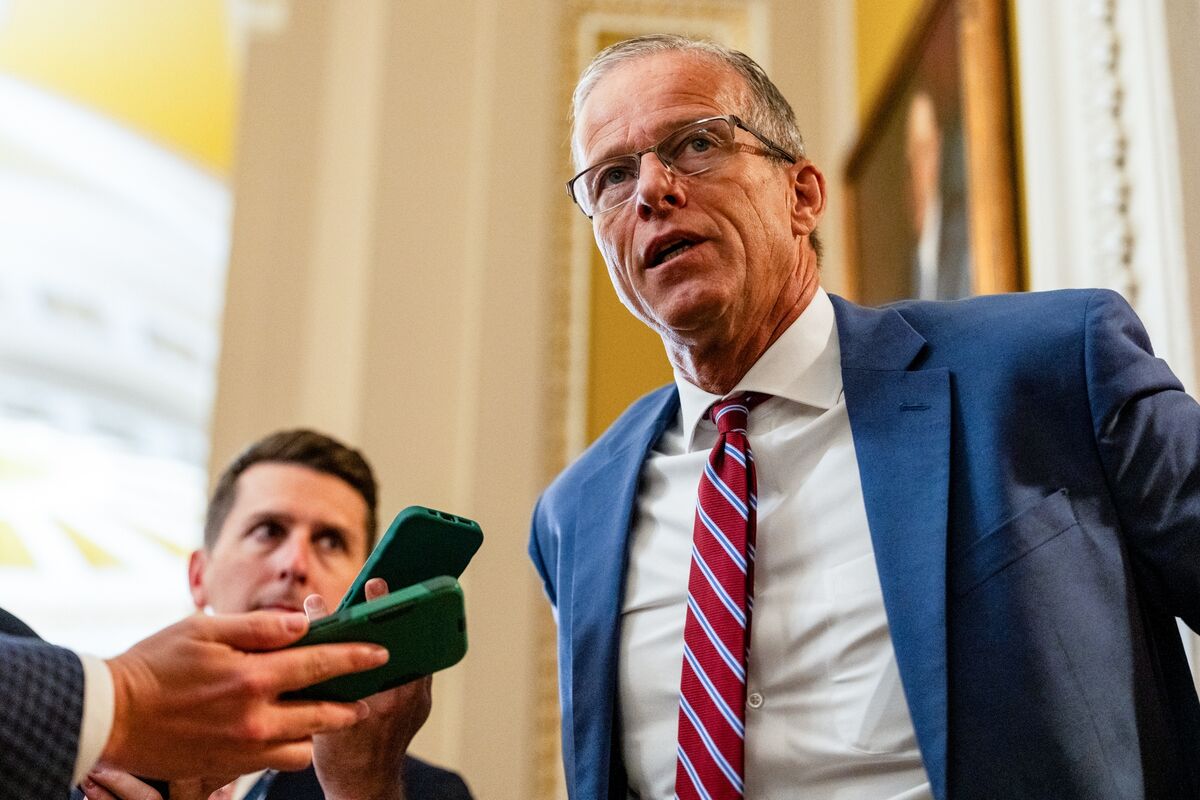
President Trump and Senate Republicans discussed potentially reducing the state and local tax (SALT) deduction cap of $40,000 included in the House version of the proposed tax-cut bill, signaling a possible point of contention between the House and Senate. Senate Majority Leader John Thune indicated limited support among Senate Republicans for the existing SALT deduction, suggesting a willingness to consider further limitations.
Former President Donald Trump and Republican senators have engaged in discussions regarding potential modifications to the state and local tax (SALT) deduction. Specifically, the talks centered on scaling back the $40,000 SALT deduction cap featured in the House version of a proposed tax-cut bill. Senate Majority Leader John Thune's commentary, "There really isn’t a single Republican senator who cares much about the SALT issue," as he departed the meeting, underscores a potential divergence between Senate Republicans and the House proposal, suggesting the Senate may favor a more restrictive cap or its elimination. This development introduces a significant point of negotiation for the broader tax legislation, with potential implications for taxpayers, particularly in higher-tax jurisdictions, although the market impact score of 0.3 and neutral sentiment indicate a muted immediate market reaction to these preliminary discussions.
AI-powered research, real-time alerts, and portfolio analytics for institutional investors.
Request DemoOverall Sentiment
neutral
Sentiment Score
0.00
