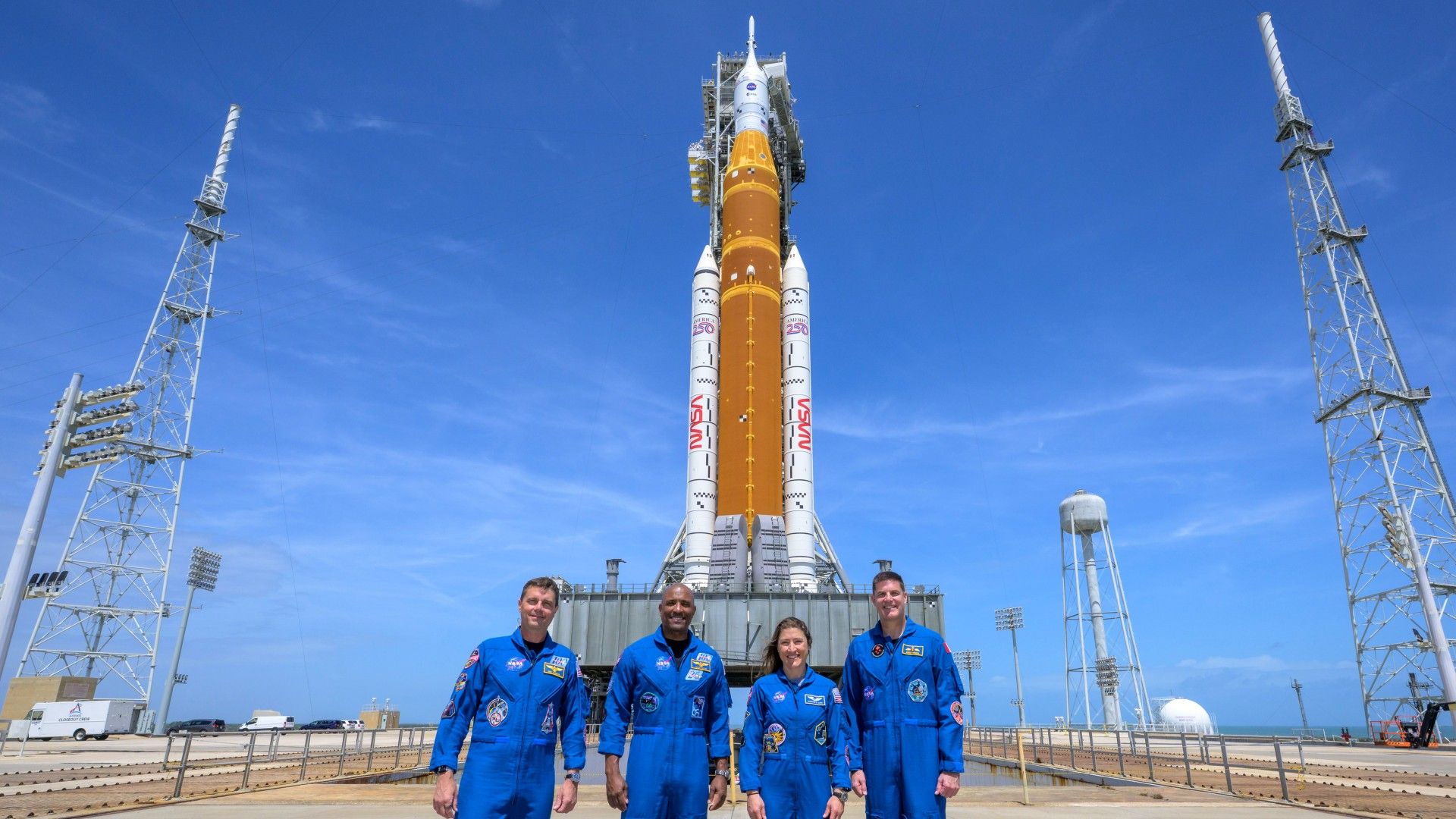
An X1.4-class solar flare erupted March 29 (11:19 p.m. EDT) and launched a CME toward Earth, but NASA says it poses no threat to the Artemis 2 launch scheduled for April 1 at 6:24 p.m. EDT. Mission management gave a formal 'go' and does not expect the CME to cause effects; the four-astronaut, 10-day lunar flyby (first crewed lunar flight since Apollo 17 in 1972) will still test an onboard radiation shelter as a precaution.
Operational “no‑show” from this flare is the headline, but the real market effect plays out in procurement and capex profiles over the next 6–36 months. Agencies and prime contractors will accelerate specifications and purchases for radiation‑hardened avionics, on‑board sheltering systems and space‑weather forecasting — that is procurement dollars moving from commercial launch ops into defense/NASA primes and specialized component vendors. Commercial LEO constellation operators face a quieter, but material headwind: incremental per‑satellite hardening and operational insurance/reserve increases that can shave mid‑single‑digit percentage points off IRR assumptions for multi‑billion dollar constellations.
Tail risk remains asymmetric: a direct, poorly‑timed CME could produce immediate market shocks (days) via satellite outages and insured losses, a multi‑week delay in launch cadence, then months of insurance repricing; conversely, breakthroughs in lightweight shielding or cheaper rad‑hard semiconductors would reverse capex pressure within 12–36 months. Near term (days–weeks) watch for insurance filings and NASA/DoD procurement language changes; medium term (6–24 months) watch contract awards and supplier backlog growth.
The consensus is underweighting transition costs for commercial operators and overestimating the speed at which constellations can be retrofitted or insured cheaply. That gap creates a predictable dispersion trade: long predictable, contract‑backed prime cashflows vs short capital‑intensive, commercially exposed satellite operators whose returns are most sensitive to higher per‑unit capex and rising insurance costs.
AI-powered research, real-time alerts, and portfolio analytics for institutional investors.
Overall Sentiment
mildly positive
Sentiment Score
0.12
