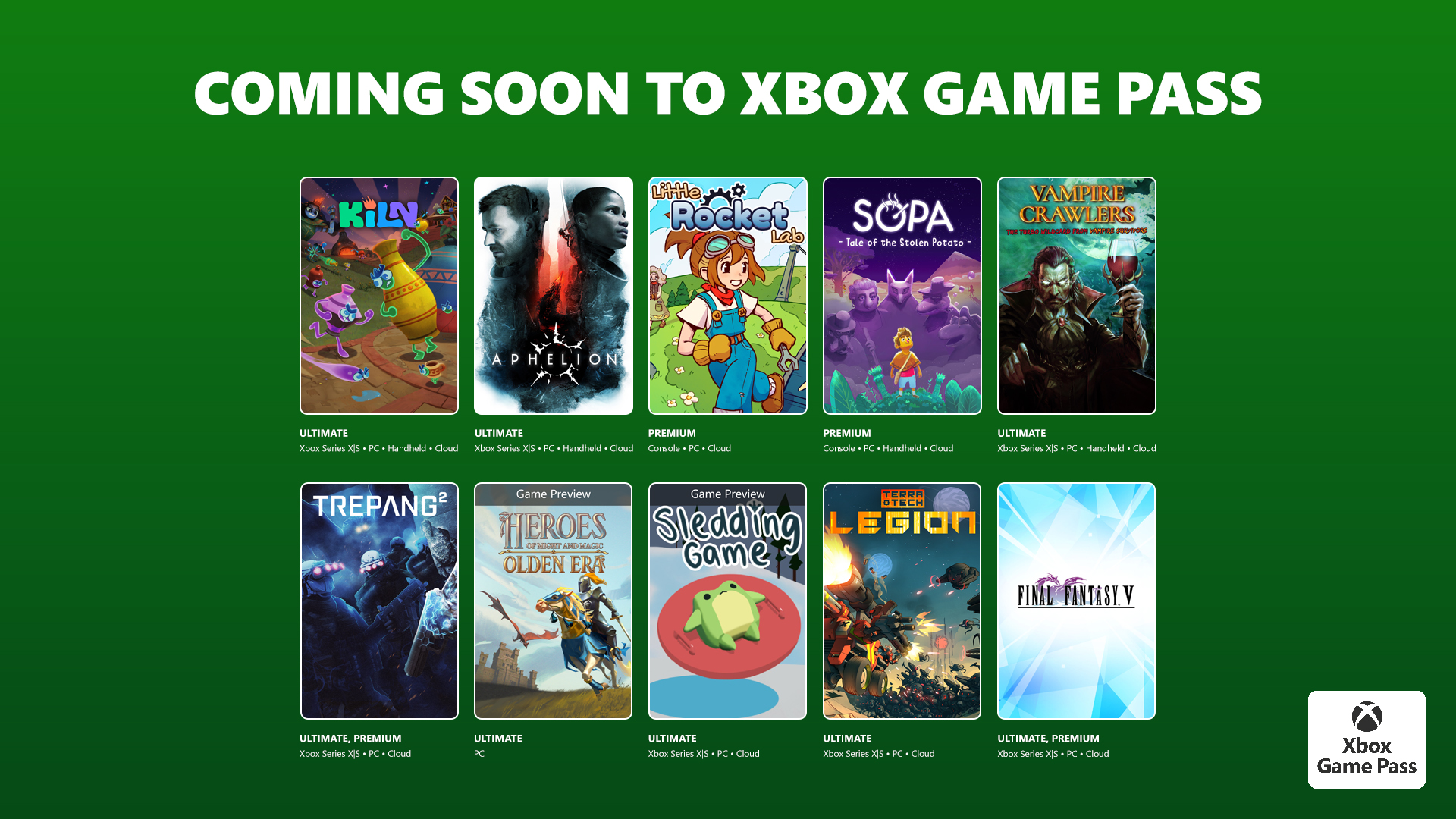
Xbox Game Pass announced a slate of new titles arriving between April 21 and May 5, including day-one additions such as Vampire Crawlers, Kiln, Aphelion, Heroes of Might & Magic: Olden Era, Sledding Game, TerraTech Legion, and Final Fantasy V. The update also lists several games leaving the service on April 30, including Citizen Sleeper, Creatures of Ava, Dragon Ball Xenoverse 2, and Hunt Showdown 1896. The article is a routine content lineup update with limited direct market impact.
This reads less like a single product-news event and more like a cadence signal: the platform is using a dense slate of day-one drops to keep engagement high and reduce churn around the subscription bundle. The key second-order effect is not just incremental hours played, but lower cancel propensity among value-sensitive users who treat the service as a rotating discovery funnel; that helps the service’s unit economics even if individual titles are niche. The mix also skews toward genres that are cheap to distribute but sticky to consume—roguelites, strategy, and co-op hangouts—suggesting the catalog is leaning into content with high replay and social loop potential rather than blockbuster acquisition. That is bullish for retention, but it can crowd out paid premium releases in adjacent genres, especially mid-tier AA titles that rely on a clean launch window and still compete for the same discretionary gaming hours. The risk is that a strong content slate can mask weaker underlying monetization if engagement is concentrated in low-ARPU segments or if the title mix fails to convert to ancillary spend. Over 1-3 months, the real test is whether this kind of lineup improves subscription stickiness enough to offset any cannibalization of standalone purchases and marketplace transactions. In the nearer term, the biggest catalyst is not the games themselves but whether showcase visibility translates into a measurable jump in sign-ups and time spent, which would support the broader platform narrative. Contrarian takeaway: the market may underappreciate how much these smaller launches function as retention infrastructure rather than revenue events. If that’s right, the beneficiaries are not the obvious game publishers but the platform owners with the best ability to amortize content over a recurring base; if engagement disappoints, the whole strategy loses leverage quickly because the content spend is still fixed while conversion is variable.
AI-powered research, real-time alerts, and portfolio analytics for institutional investors.
Request DemoOverall Sentiment
neutral
Sentiment Score
0.15
