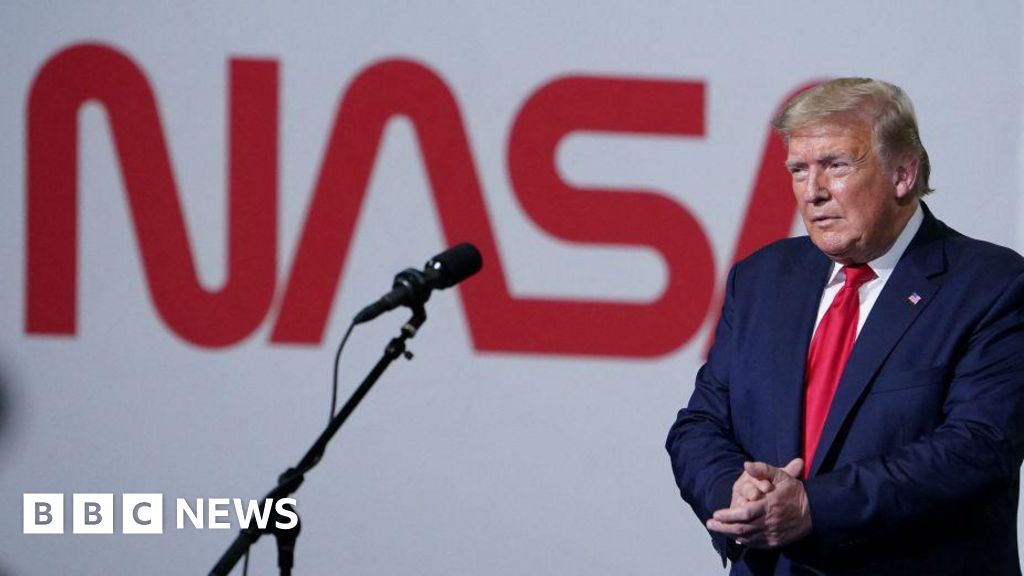
Artemis will send four astronauts on the first deep-space U.S. crewed flight since 1972, and the Trump administration is positioning the mission as an 'America First' strategic win with an executive order targeting a U.S. return to the Moon by 2028 and a permanent outpost by 2030. Officials highlight geopolitical competition with China and potential economic upside from lunar resources (helium-3 cited at >$20,000/kg, plus water ice and rare earths), implying long-term strategic and commodity implications. Near-term market impact is limited, but the program could drive sectoral investment and supply-chain/resource plays over time.
A renewed, high‑profile push to dominate cis‑lunar space is a policy lever that disproportionately re‑rates defense primes, launch integrators and non‑Chinese critical‑materials processors rather than consumer tech or pure-play tourism names. Expect a front‑loaded budgeting cycle: discrete contract awards and procurement announcements over the next 6–18 months that drive 15–40% upside for firms with existing infra/contracting footprints, while true commercial extraction economics remain a multi‑decade option.
Second‑order supply‑chain effects matter more than headline missions. Governments will accelerate subsidized processing and offtake deals for rare earths and propellant‑feedstock supply (water/oxygen intermediates), which benefits midstream processors and engineering firms — not raw miners — because capital intensity and processing technology create a moat. Conversely, many small public “space” names will see ephemeral retail flows around launch windows but lack the backlog to sustain multiples once political attention fades.
Tail risks are binary and concentrated in short windows: program failures, high‑profile accidents, or a Chinese technological leap could erase policy momentum in weeks; conversely, a visible contract (e.g., lunar lander or propellant facility award) can reprice winners within months. Structurally, the longest lead item is commercialization of lunar resources — plan horizon: tactical trades on budget/certainty (0–18 months), strategic position‑building in supply chain/defense (18 months–5 years), and treat lunar mining as a 5–15 year conditional optionality.
AI-powered research, real-time alerts, and portfolio analytics for institutional investors.
Request DemoOverall Sentiment
mildly positive
Sentiment Score
0.20
