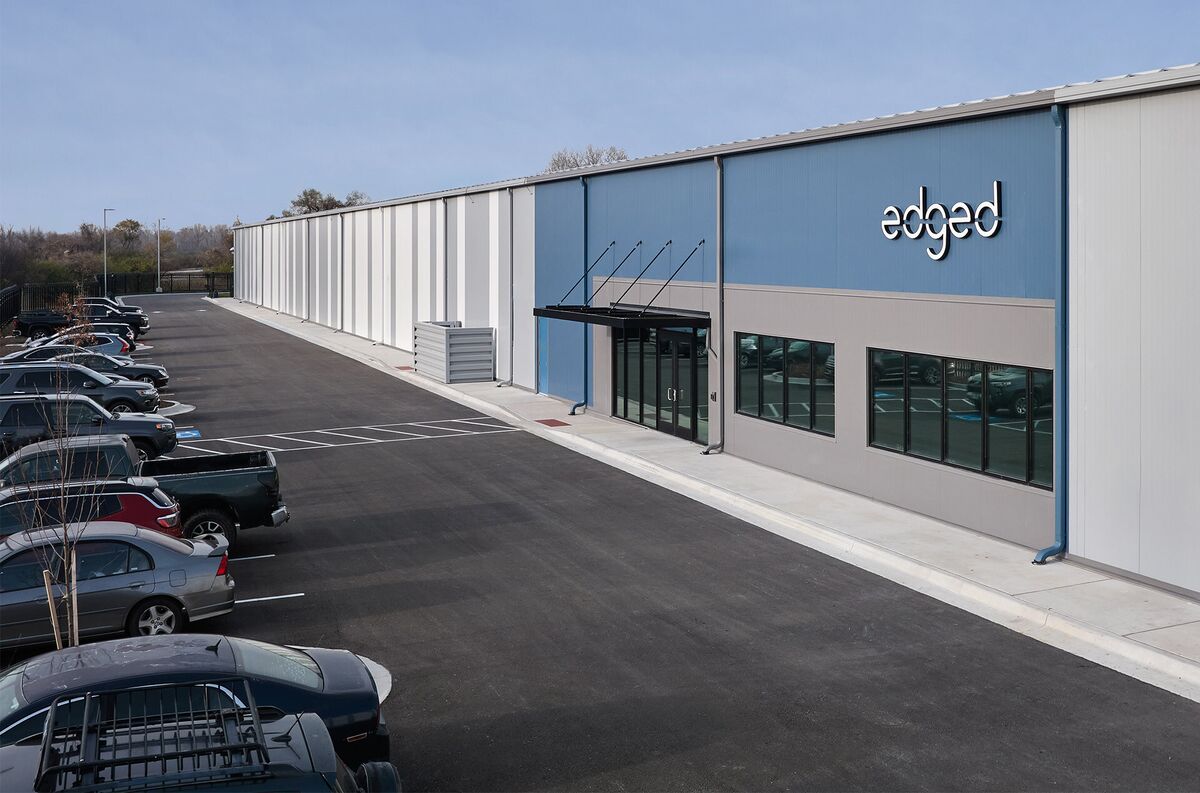
Edged Compute LLC is seeking to raise $1.3 billion through a high-yield bond sale to fund AI infrastructure facilities in Chicago and Atlanta. The deal adds to a continuing wave of junk-debt issuance from data center developers as the sector races to finance buildouts for artificial intelligence demand. The article is largely factual and signals ongoing activity in credit markets rather than an immediate adverse or positive catalyst.
The important read-through is not the single issuer, but the financing stack being rebuilt around AI infrastructure. If high-yield investors are willing to fund speculative data-center builds, the immediate beneficiaries are capital providers and infrastructure owners with stable land/power access; the losers are developers without execution scale, because lower-quality projects will now face a more explicit cost-of-capital spread. This should widen dispersion across the data-center complex: “powered land + permits + interconnect” becomes more valuable than generic colocation capacity. The second-order effect is on bond-market duration and credit selection. AI demand can justify leverage only if utilization ramps quickly; if lease-up slips even 6-12 months, leverage loads start to look like classic buildout bubbles, not growth capex. That makes the next 1-2 quarters critical: the market will reward issuers that can demonstrate signed capacity, contracted power, and partner-backed capex, while punishing speculative developers that are relying on takeout financing. Contrarian risk: consensus is treating AI infrastructure as a near-linear demand story, but the bottleneck is increasingly power, not debt availability. More junk financing can actually accelerate the wrong kind of supply—projects in weaker grids or secondary markets that later require refinancing at materially worse spreads. That creates a setup where the broad “AI infra” trade is overbought in the public equities, while the select private-capital and regulated-utility names with incremental load approvals may still be underappreciated. For credit, this is also a signal that high-yield spreads in the infrastructure sleeve may stay tighter than fundamentals justify for a few months, but any operational miss could gap them out fast. The tradeable edge is in distinguishing projects with contracted economics from those being financed on narrative momentum alone.
AI-powered research, real-time alerts, and portfolio analytics for institutional investors.
Overall Sentiment
neutral
Sentiment Score
0.10
