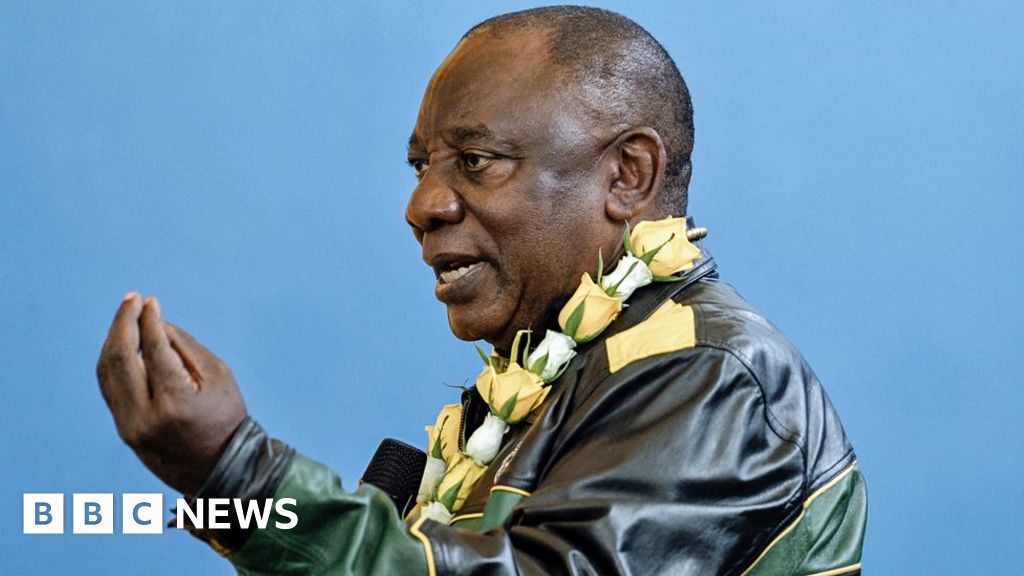
South African President Cyril Ramaphosa is meeting with U.S. President Donald Trump to address strained relations, primarily stemming from Trump's claims of a "genocide" against Afrikaners and South Africa's land expropriation policies and its ICJ case against Israel. Ramaphosa aims to secure a favorable trade deal, particularly the extension of the African Growth and Opportunity Act (Agoa), which generated $2.7 billion in revenue for South Africa in 2023; failure to do so could lead to a new trade framework. Analysts suggest the meeting's outcome hinges on whether rational or emotional considerations prevail, with potential consequences for South Africa's role in Africa.
South African President Cyril Ramaphosa's meeting with U.S. President Donald Trump represents a critical juncture for bilateral relations, primarily focused on mitigating significant diplomatic strains and securing favorable trade terms. The core economic impetus for South Africa is the extension of the African Growth and Opportunity Act (Agoa), which accounted for approximately $2.7 billion in revenue in 2023, predominantly from vehicle, jewellery, and metal exports. Failure to renew Agoa, or South Africa's exclusion, necessitates negotiating a new trade framework. Tensions have escalated due to several factors: President Trump's repeated, discredited claims of a "genocide" against South Africa's Afrikaner community, amplified by Elon Musk; South Africa's land expropriation bill signed in January; its ICJ case against Israel; the subsequent suspension of U.S. aid; and the expulsion of South Africa's ambassador. Ramaphosa, leveraging his recognized negotiating skills, aims to normalize diplomatic ties and strengthen trade, with his spokesperson emphasizing this visit as the start of a process rather than an immediate resolution. Analysts view the meeting as a "high-risk strategy," with outcomes dependent on whether discussions remain rational or become dominated by contentious issues like the genocide claims. South Africa asserts its sovereign right to make domestic and international policy choices and highlights mutual economic dependencies, noting U.S. reliance on South African minerals such as platinum, iron, and manganese, alongside its geo-strategic importance. The inclusion of Agricultural Minister John Steenhuisen, a critic of ANC policies, in the delegation is a noteworthy dynamic. The overall sentiment surrounding this event is neutral with an uncertain tone, reflecting the precarious nature of the talks and the potential for significant shifts in the U.S.-South Africa relationship.
AI-powered research, real-time alerts, and portfolio analytics for institutional investors.
Request DemoOverall Sentiment
Neutral
Sentiment Score
-0.10
