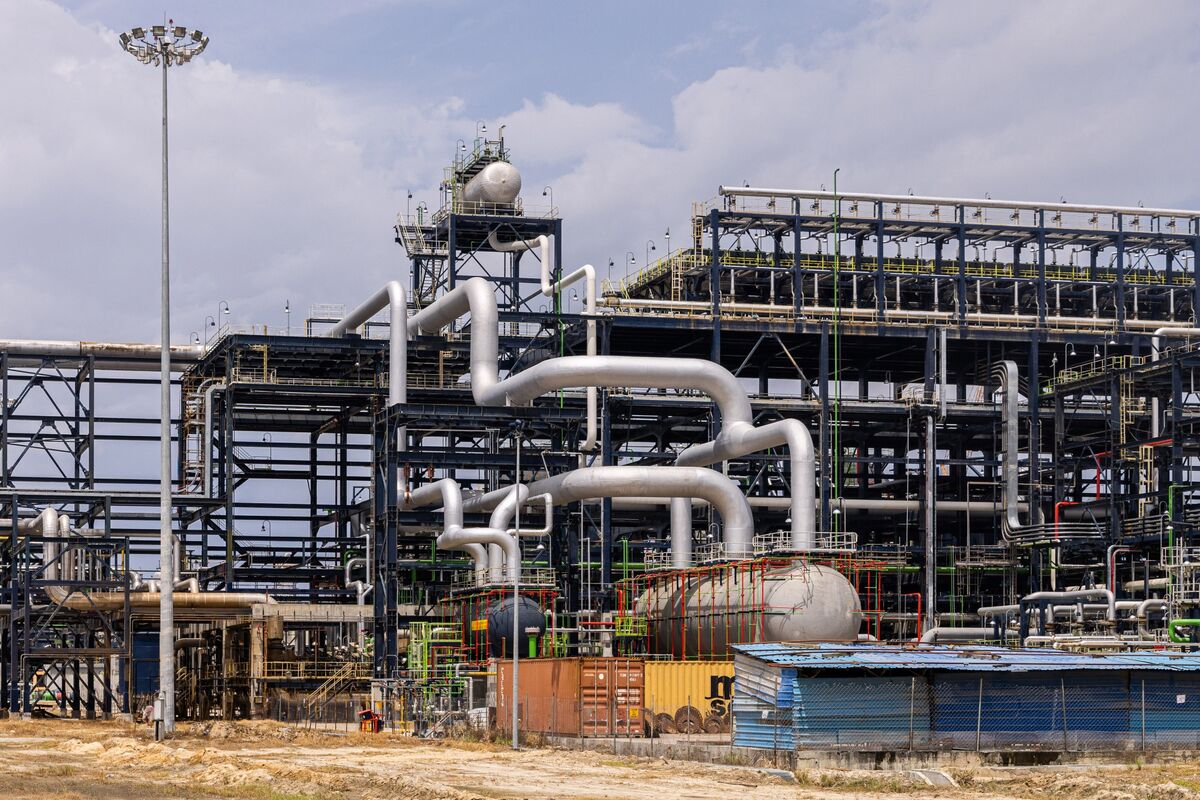
Nigeria's state oil company, NNPC, has finalized a two-year crude supply agreement with Dangote Petroleum Refinery, ensuring continued feedstock for the facility. The deal specifies five crude cargoes for both September and October, with further supply details beyond that period undisclosed. This arrangement provides critical operational stability for Dangote's refining capacity and underscores strategic resource allocation within Nigeria's energy landscape.
The Nigerian National Petroleum Co. (NNPC) has formalized a two-year crude supply agreement with the Dangote Petroleum Refinery, a development that underpins near-term operational stability for the new facility. Under the terms, NNPC will initially provide a confirmed volume of five crude cargoes per month for both September and October. This arrangement provides critical feedstock visibility for the refinery, which is crucial for its ramp-up phase. However, a degree of medium-term uncertainty persists as the volume of supply beyond October has not been disclosed. The deal represents a significant strategic pivot towards domestic resource allocation, ensuring that a portion of Nigeria's crude production is refined locally, which supports the country's objective of reducing its reliance on imported petroleum products. The market's moderately positive sentiment reflects the perceived benefit of enhanced supply chain security within Nigeria's domestic energy sector.
AI-powered research, real-time alerts, and portfolio analytics for institutional investors.
Request DemoOverall Sentiment
moderately positive
Sentiment Score
0.40
