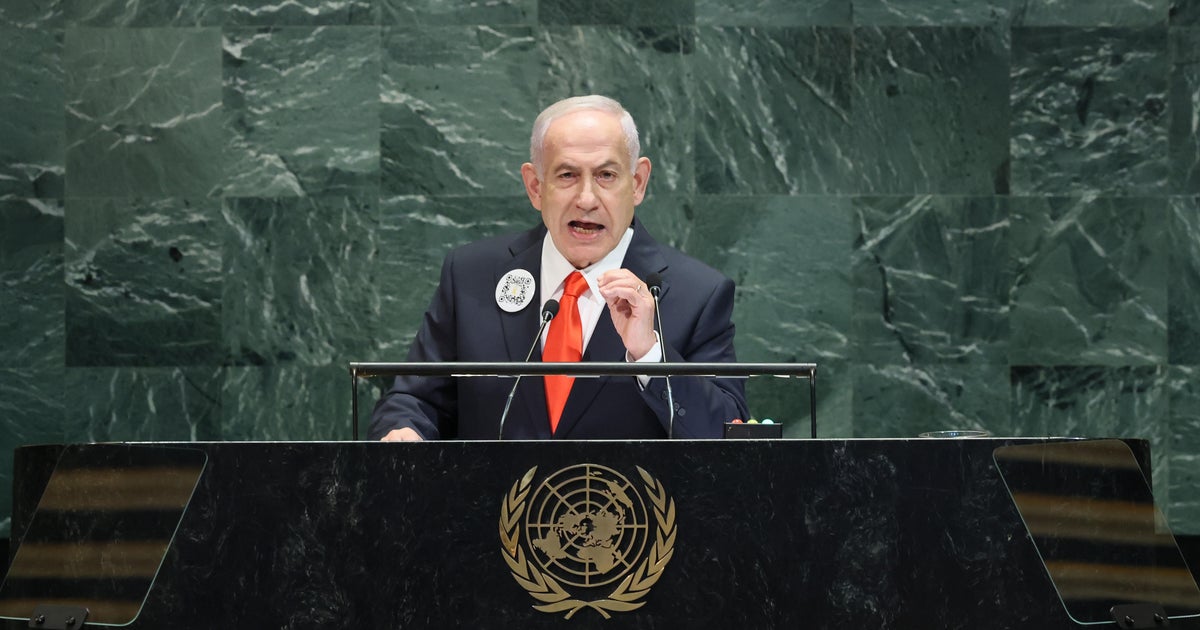
Israeli Prime Minister Benjamin Netanyahu delivered a defiant speech at the UN General Assembly, reaffirming Israel's commitment to "finish the job" in Gaza and rejecting Palestinian statehood, even as delegates walked out and international pressure mounts. This firm stance signals a protracted conflict and deepening geopolitical isolation for Israel, amidst war crimes accusations and recent statehood recognitions. Netanyahu's rejection of a two-state solution underscores persistent uncertainty regarding the conflict's resolution, influencing regional asset prices and investment sentiment due to continued instability.
Israeli Prime Minister Benjamin Netanyahu's defiant address at the U.N. General Assembly signals a commitment to prolonging the military campaign in Gaza, directly contradicting growing international pressure for a ceasefire. His characterization of recent Palestinian statehood recognitions by allies like Australia, Canada, and France as a 'disgraceful decision' underscores Israel's deepening diplomatic isolation. This isolation was visibly demonstrated by a mass walkout of delegates and the presence of only junior-level diplomats from key partners like the U.S. and U.K. The situation is compounded by significant legal and economic threats, including an ICC arrest warrant for Netanyahu, an ICJ genocide case, and the potential for E.U. sanctions. Netanyahu's firm rejection of a two-state solution, framed as a reward for terrorism, removes a key pillar of long-standing international policy and introduces substantial uncertainty into the region's future political landscape. The combination of a protracted conflict, escalating diplomatic friction, and tangible legal and economic risks points to sustained geopolitical instability with direct implications for regional asset prices and sovereign risk.
AI-powered research, real-time alerts, and portfolio analytics for institutional investors.
Overall Sentiment
strongly negative
Sentiment Score
-0.70
