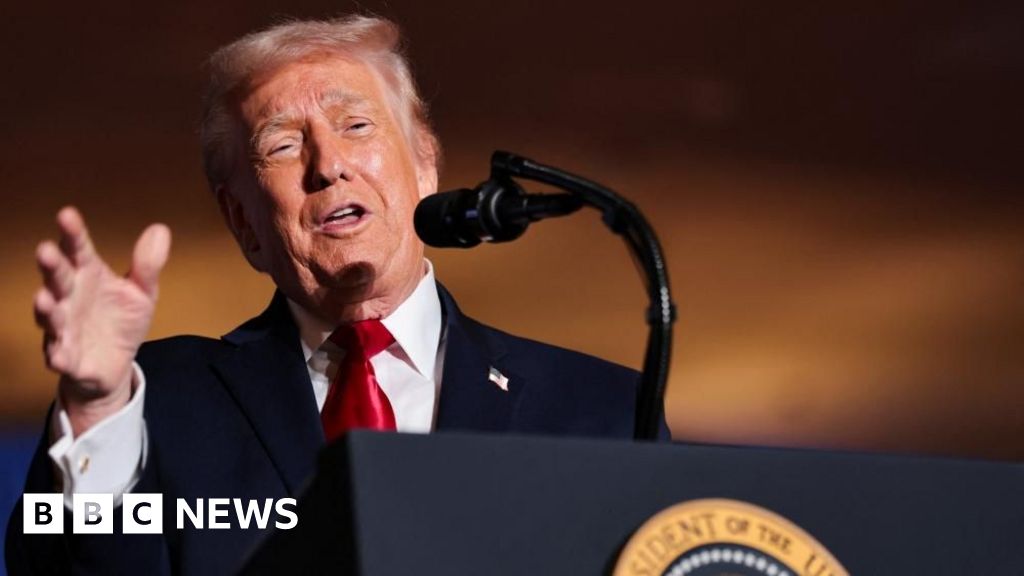
President Trump staged a campaign-style rally in Pennsylvania promoting an upbeat economic message—arguing consumer prices are falling and touting policy moves such as removing tariffs on dozens of food products, rolling back fuel-efficiency standards, Trump-branded children’s retirement accounts and a $12bn farm aid package—as he seeks to blunt Democratic attacks and shore up support ahead of next year’s midterms; his approval rose to 41% in a Reuters/Ipsos poll. Economic data are mixed: headline inflation stood at 3% in September (above the Fed’s 2% target) after a peak of 9.1% under Biden, overall prices are roughly 25% higher over five years, consumer confidence is at spring lows while GDP is forecast to expand ~1.9% this year and equities sit near record highs. The political messaging and policy pivots—plus Trump’s continued emphasis on tariffs that he says have generated “hundreds of billions” in revenue—signal potential near-term sectoral effects in trade-exposed industries and agriculture, while markets watch for further Fed rate moves from the current ~3.9% level.
President Trump staged a campaign-style rally in Pennsylvania promoting an upbeat economic message, asserting that consumer prices are falling and highlighting policy moves including the removal of tariffs on dozens of food products, rollback of fuel-efficiency standards, Trump-branded children’s retirement accounts and a $12bn farm aid package; his approval rose to 41% in a Reuters/Ipsos poll. Economic indicators in the article are mixed: headline inflation was 3% in September (above the Fed’s 2% target) after a peak of 9.1%, overall prices are ~25% higher over five years, GDP is forecast to expand about 1.9% this year versus 2.8% last year, consumer confidence hit spring lows while stocks remain near record highs. The article documents sectoral stress from trade policy and tariffs—construction and steel/aluminum workers report job losses and farmers were hit when China paused soybean purchases until a late-October deal—while the administration continues to emphasize tariffs as revenue generators. Policy-driven uncertainty (tariffs, targeted aid) combined with lingering real-income pressure on housing, childcare and healthcare suggests differentiated outcomes across sectors and the potential for episodic market volatility tied to political developments and imminent Fed rate decisions.
AI-powered research, real-time alerts, and portfolio analytics for institutional investors.
Request DemoOverall Sentiment
mixed
Sentiment Score
0.00
