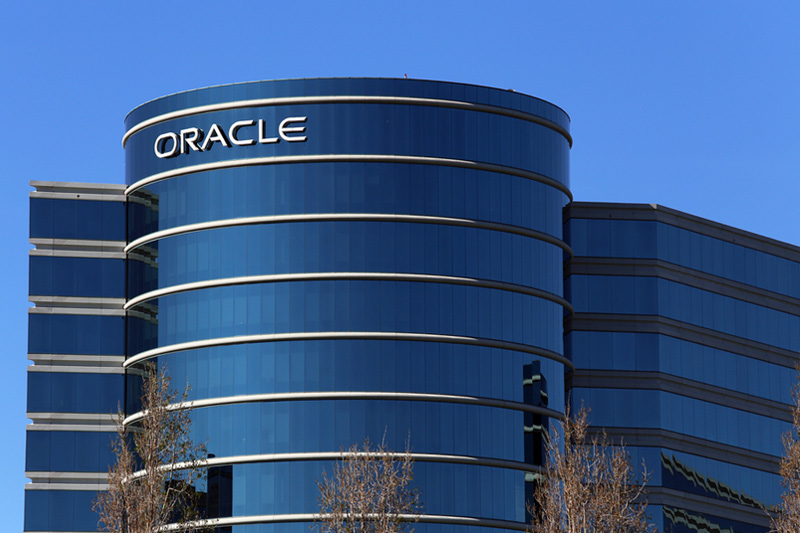
Oracle reported Q3 FY2026 EPS $1.79 vs $1.70 estimate (surprise +5.29%) and revenue $17.2B vs $16.92B estimate; shares are trading at $149.40 after falling >51% over the past six months. Barclays raised its price target to $240 from $230 (Overweight), citing stronger visibility into Oracle's AI infrastructure (32% gross margin), recent financing, reduced customer concentration risk and bookings strength; Barclays expects revenue and earnings to grow >30% in coming years. Valuation metrics cited include ~16x calendar 2027 P/E (current P/E 28.37) and a PEG of 0.93, implying potential upside; this news is likely to move Oracle shares at the individual-stock level (~1–3%).
Oracle’s AI infrastructure story is creating a non-linear reallocation of value along the stack: enterprise software economics (sticky, high-margin) can re-rate a large legacy vendor faster than raw hardware demand lifts small-cap server suppliers. The second-order winners are financing desks and banks that underwrite large capex rounds and long-term enterprise contracts, since predictable recurring spend reduces credit friction and creates repeat deal flow. Meanwhile, pure-play hardware suppliers face a bifurcation — those who secure long-term OEM/turnkey deals will see durable orders, while players exposed to spot GPU cycles remain vulnerable to price and inventory swings.
Key short- and medium-term catalysts are visible and measurable: incremental data-center capacity coming online, composition of bookings (infrastructure vs. recurring software), and customer concentration metrics in quarterly disclosures. Tail risks that could reverse the move include a sudden re-price in GPU markets (driving hardware margins down), a major counterparty credit event among large enterprise customers, or evidence that large AI contracts are lumpy/one-off rather than subscription-like. Regulatory or export constraints on accelerators would compress TAM and reintroduce cyclicality.
From a portfolio construction standpoint, this is a classic dispersion trade: long entrenched software + financing exposure, short hardware-software convergence plays that are levered to GPU cycles. Time horizons differ — tradeable signals over days/weeks (guidance, bookings cadence) and structural re-rating over 12–36 months (renewal patterns and margin sustainability). Monitor deferred revenue growth, customer concentration disclosures, and component ASPs as high-frequency risk sensors.
AI-powered research, real-time alerts, and portfolio analytics for institutional investors.
Request DemoOverall Sentiment
strongly positive
Sentiment Score
0.60
Ticker Sentiment
