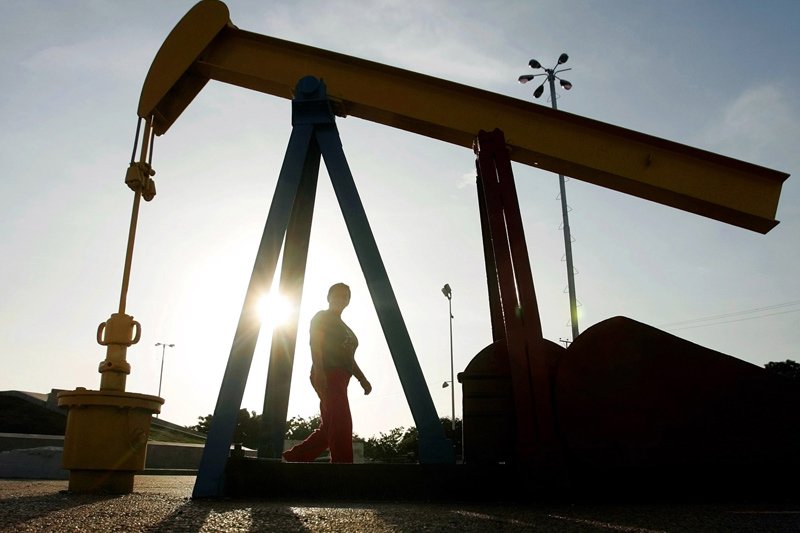
Halliburton CEO Jeffrey A. Miller sold 158,455 HAL shares on March 27, 2026 at $40.00 for $6.34M while retaining 1,013,027.02 shares and holding options for 128,500 shares at $43.38 (exp. 12/06/2027) and 69,500 shares at $53.54 (exp. 12/07/2026) under a Rule 10b5-1 plan. The stock is trading near its 52-week high of $40.43 after a 66% year-over-year surge; Evercore ISI upgraded HAL to Outperform and raised its PT to $42 (from $36) and BMO raised its PT to $42 (from $39, Market Perform). Halliburton reported a technical milestone — the industry’s first fully automated geological well placement offshore Guyana with partners including ExxonMobil — while oil topped $115 amid renewed threats to Iran’s energy infrastructure, supporting positive sector demand outlook.
Halliburton’s technology push (automated offshore well placement) is a structural differentiator that will compress unit costs and shorten cycle times for complex offshore jobs, shifting value from pure labor/rig hours toward systems and proprietary tooling. That makes HAL less vulnerable to commodity-driven margin oscillations versus smaller, labor-heavy OFS peers and increases the payoff to scale: every sustained $10/bbl rally should translate into outsized cash conversion for HAL relative to mid-cap service providers, not just headline revenue gains.
Near-term catalysts are binary and headline-driven: oil price volatility and geopolitical shock headlines will move the stock in days-to-weeks, while the onshore activity rebound and commercialization of automation play out over 3–12 months. Key execution risks are (1) slower-than-expected customer adoption of automation (sales cycles and contracting frictions), (2) demand destruction if Brent >$110 triggers macro responses or SPR releases, and (3) capital allocation missteps that dilute the operational leverage the technology creates.
A practical implementation is to own HAL exposure but skew payoff toward defined risk, monetize near-term option premiums, and size for a multi-month reflation trade. Complementary exposure to rig contractors (Helmerich & Payne) captures the recovery onshore, but recognize both names can decouple: HP benefits directly from rig count increases, HAL benefits more from services and higher-margin digital/automation sales, so stagger entries and use pairs to isolate the tech vs. activity components.
AI-powered research, real-time alerts, and portfolio analytics for institutional investors.
Request DemoOverall Sentiment
moderately positive
Sentiment Score
0.40
Ticker Sentiment
