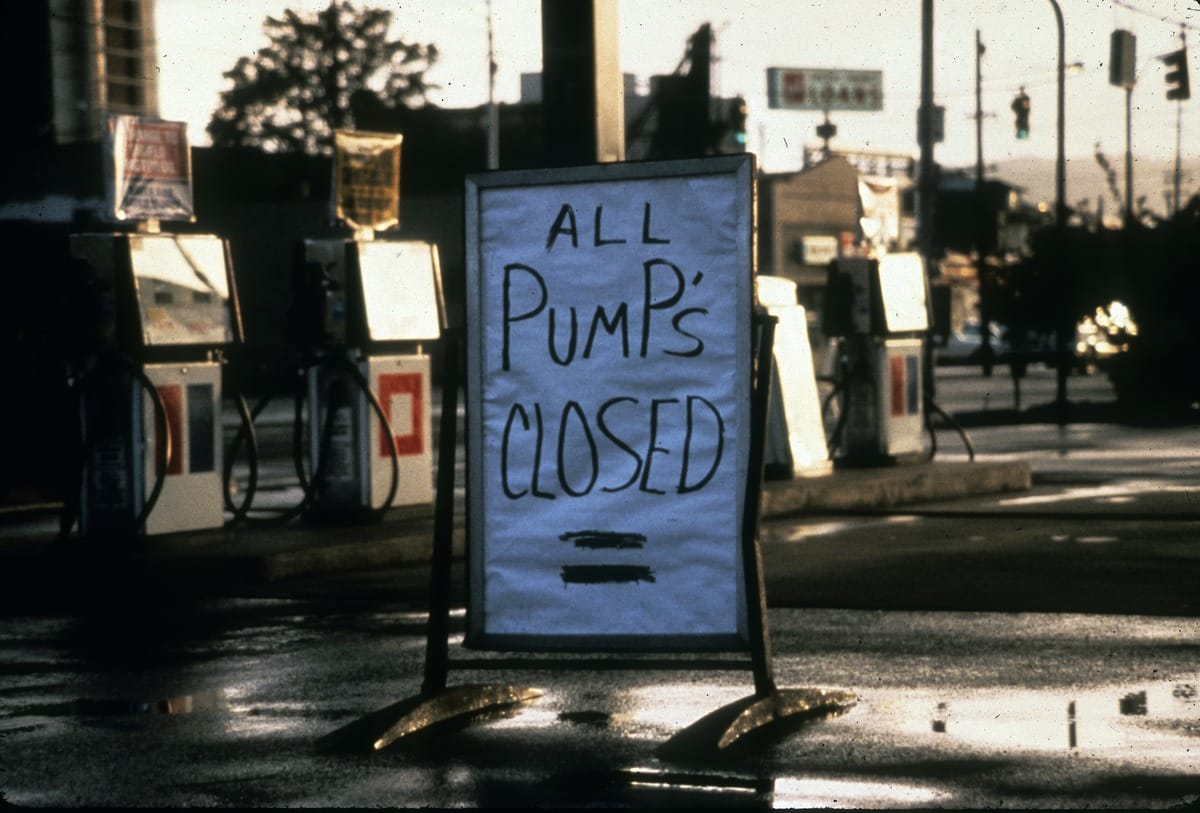
About 20% of global oil and gas transits the Strait of Hormuz; the article warns the current Iranian blockade and attacks have generated a supply shock exceeding ~18% (more than double the 1973 ~9% cut), risking permanent capacity losses. United Airlines expects oil at ~$175/barrel through 2027, Qatar supplies ~1/3 of global helium (impacting chips and MRIs), and Gulf disruptions to phosphates and natural gas threaten fertilizer and food supply chains; repairs may take 3–5 years. The piece flags accelerating capital flight, stalled Gulf tech/AI funding, and potential protracted financial stress—implying market-wide, multi-year downside risk.
The systemic risk is not a classical oil-price shock but a multi-commodity, finance-and-capital-flow shock that simultaneously tightens industrial inputs, squeezes working capital, and removes a key source of external financing for high-growth sectors. Expect inflationary impulses to show up first in producer prices and input-heavy sectors (transport, agriculture, chip fabs) within 1–3 months, then propagate to headline inflation and consumer demand over 3–12 months as real disposable income is reallocated to energy and food.
Second-order channel: sovereign/corporate capital flight from energy-exporting states will create an acute liquidity vacuum for venture-backed technology and AI infrastructure projects that rely on petrodollar recycling; that will compress private valuations and slow capex in cutting-edge nodes, lengthening lead times for the next wave of compute capacity by 6–24 months. Simultaneously, fertilizer and specialty-gas shortages act as supply-side multipliers: agricultural yield and semiconductor output both decline, amplifying price moves in food and electronics and raising default risk in mid-cap supply-chain vendors.
Timing and asymmetry matter. Days–weeks: tradeable volatility and directional hedges in airlines and freight. Months: rerouting and inventory rebuilding favour companies with domestic feedstocks and vertically integrated supply chains. Years: permanent capacity destruction in certain exporting regions would structurally reprice risk premia across energy, FX reserves of regional banks, and long-duration tech investments — creating durable winners among integrated producers and industrial gas suppliers while leaving airlines, non-integrated fertilizer processors, and capital-hungry tech firms exposed.
AI-powered research, real-time alerts, and portfolio analytics for institutional investors.
Request DemoOverall Sentiment
extremely negative
Sentiment Score
-0.90
Ticker Sentiment
