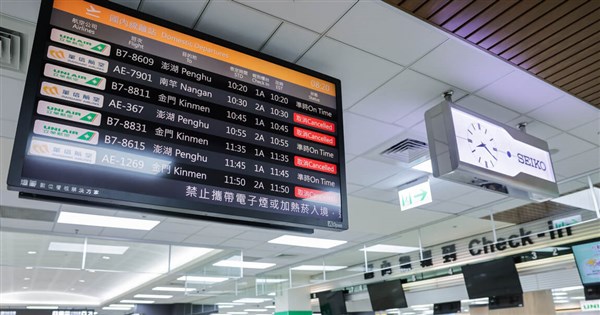
China's Dec. 30 live-fire drills produced a roughly 10-hour 'quasi-blockade' that disrupted 941 flights (857 international, 84 domestic) and affected more than 100,000 travelers, with Taiwan's Civil Aviation Administration cancelling services to Kinmen and Matsu and rerouting or delaying hundreds of flights. INDSR analysts say the drills tested 'joint domain control' and simulated humanitarian corridors (keeping routes M750, G587 and R583 open) while violating advance-notice aviation norms, raising heightened regional navigational, logistical and political risk that could pressure Taiwan-focused travel, transport and defense-sensitive assets.
Market structure: Immediate winners are defense primes (LMT, RTX) and freight/express carriers (UPS, FDX) and specialty insurers as air/sea chokepoints increase pricing power; losers are commercial airlines and travel-related equities (U.S. Global JETS ETF - JETS, regional Taiwan carriers) due to cancellations and higher route costs. Air-cargo capacity tightness will push spot rates up 10–30% in the first 2–6 weeks, benefiting forwarders but squeezing importers and time-sensitive high-value supply chains (semiconductor inputs).
Risk assessment: Tail risks include a temporary quasi-blockade escalating into a multi-day port/fab access disruption; model a 10–30% revenue hit to Taiwan-dependent manufacturers over a 1–3 month window if air/sea routes close. Near-term (days) volatility spike in FX (TWD down 1–3%) and oil (+1–3%); medium-term (weeks–months) expect supply-chain rerouting costs and inventory building; long-term (12–36 months) favors onshoring/duplication capex.
Trade implications: Direct plays: selectively overweight TSM (TSM) as a 1–3% portfolio position given secular demand but hedge operational tail-risk with short-dated puts; long defense exposure (ITA or LMT/RTX) for 3–12 months; short JETS (1–2%) for immediate downside. Use options: buy 3-month put spreads on Taiwan/Asia travel and buy 6–12 month calls on defense to express asymmetric views while capping premium outlay.
Contrarian angles: Consensus exaggerates permanent relocation cost — historical drills produced transient disruptions (weeks) while capex cycles resumed; a 5–12% pullback in TSM could be a buying opportunity, not a structural sell signal. Conversely, defense equities may be priced for prolonged escalation; watch diplomatic/leverage catalysts (U.S. military movements, sanctions) that would re-rate either side quickly.
AI-powered research, real-time alerts, and portfolio analytics for institutional investors.
Request DemoOverall Sentiment
moderately negative
Sentiment Score
-0.45
Ticker Sentiment
