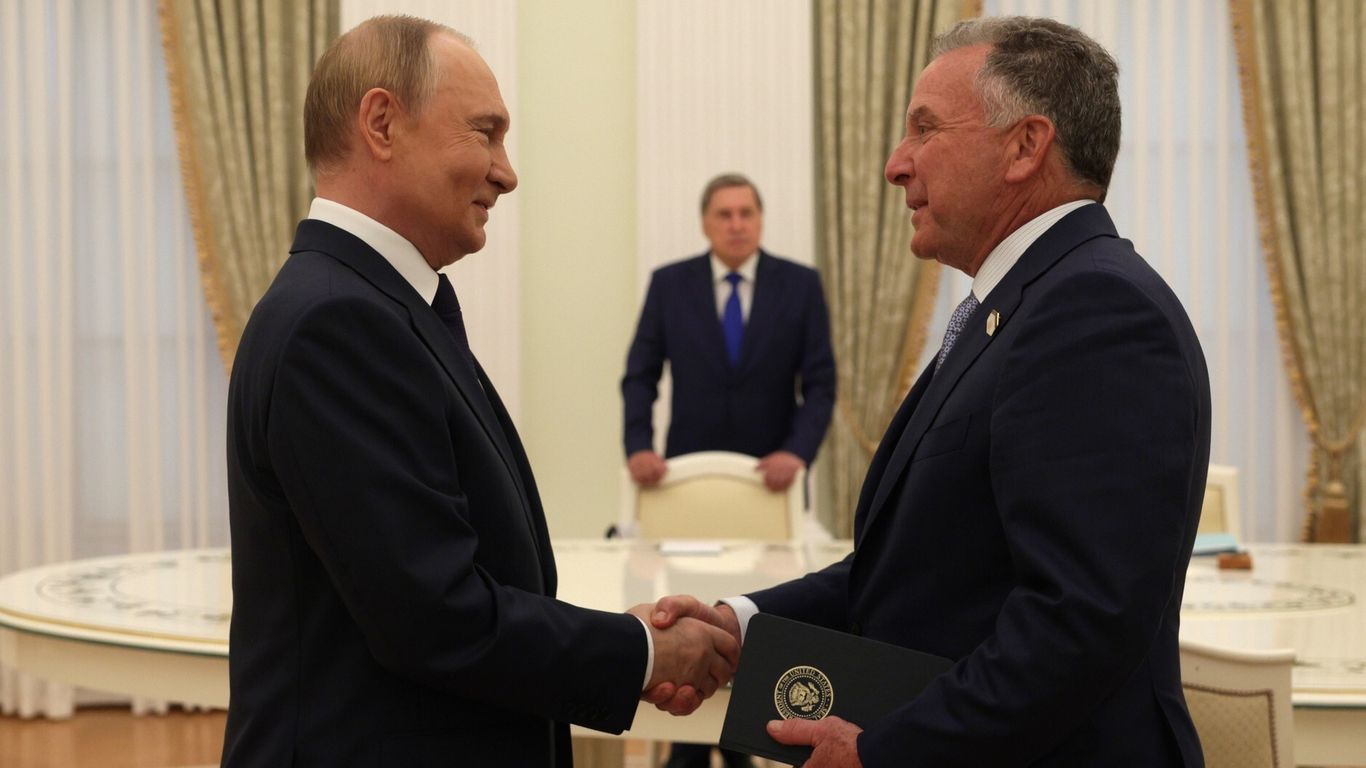
President Trump's envoys Steve Witkoff and Jared Kushner met with Vladimir Putin in the Kremlin to present a revised U.S. peace plan for Ukraine that was pared from 28 points to 19 after talks with Kyiv, part of an intensive diplomatic push involving meetings with Ukraine's delegation and leaders including Macron. The talks center on the contested Donbas border and potential, politically fraught territorial concessions that Putin has signaled he may still demand; Zelensky is poised to brief and potentially meet Trump if Moscow talks show progress. For investors, the development is a meaningful geopolitical negotiation that could sway risk sentiment and security- and defense-related assets if it materially alters war dynamics, but outcomes remain highly uncertain.
Market structure: A credible ceasefire/negotiated settlement would reduce risk premia in oil/gas and defense demand; expect Brent downside of $5–$15 (5–15%) within 2–8 weeks if talks produce verifiable progress, press releases or a 72h truce. Winners: energy consumers, European industrials, airlines (fuel cost relief); losers: US/European defense primes (LMT, RTX, NOC) and oil services (HAL, SLB) if capex is re-priced lower. Russia-specific asset flows could re-enter gradually but require sanction changes (binary, months+).
Risk assessment: Tail risks include a breakdown leading to rapid escalation (Brent +$15 in days, ruble -10%, risk-off equity drop 5–10%), unexpected sanction re-tightening, or political backlash in the U.S. that freezes any deal; probability <30% but P&L impact large. Immediate horizon (days): headlines/FX and oil volatility spikes; short-term (weeks–months): positioning and sector rotations; long-term (quarters+): structural rebalancing only if sanctions/laws change.
Trade implications: Tactical sizing should be small and trigger-driven: favor nimble option-based trades to capture volatility asymmetry. Use pair trades: long airlines vs short defense or short oil majors vs long industrials, with clear stop-losses tied to Brent moves (+/- $5) or Putin public statements. Liquidity and sanctions/legal risk make direct Russia exposure unsuitable for most funds.
Contrarian angles: Consensus underweights the political friction risk—markets may prematurely price a peace dividend; conversely, a fragile “ceasefire illusion” could reverse quickly. Historical parallel: 1990s ceasefire hopes around regional wars often produced a short-lived risk-on that reversed when implementation failed. Action should exploit short windows (1–3 months) and avoid buy-and-hold on geopolitically contingent normalization.
AI-powered research, real-time alerts, and portfolio analytics for institutional investors.
Request DemoOverall Sentiment
mixed
Sentiment Score
0.05
